Wilf Malcolm Institute of Educational Research
Waikato HomeWaikato Home  >  WMIER  >  Our Research  >  Research Networks  >  Language, Literacy & Arts Education
Staff + Students Login | - Logout

Language, Literacy and Arts Education

Network Leader: Terry Locke

The Language, Literacy and Arts Education research network has close but not exclusive links with the Arts and Language Education Department. It is concerned with research into language, literacy and arts education in a range of educational contexts. There are a number of strong and emerging strands encompassed by this network: technology and literacy; literacy in the secondary school setting; indigenous, bilingual and multicultural education and literacy policy; reading acquisition and comprehension; developing literature-related literacies; teaching writing; research into arts education; and practice-based research in the arts.

Research Strands

Additional language teaching: Investigates ways in which additional language teaching takes place in primary, secondary and tertiary settings. Topics include the experience of pre-service language teachers in the primary sector.

Participating staff: Nicola Daly, Margaret Franken.

Adult literacy: This strand is concerned with ways in which adult literacy is enhanced and fostered in a range of settings, includind communities, families, workplaces and tertiary institutions. Topics include workplace needs assessment; working with migrants in the workplace; addressing deficit discourses in the workplace setting and sector related adult literacy initiatives.

Participating staff: Judy Hunter, Margaret Franken, Sue Dymock.

Developing literature-related literacies: Investigates changing conceptions of literature and how the engagement with literary texts can be enhanced in classroom settings. Topics include critical literacy as an approach to literary texts; engaging with multimodal literary texts; motivating the reading of literary texts and the role of conversation in this; New Zealand and children’s literature; and language use in children’s literature.

Participating staff: David Whitehead, Noeline Wright.

Literacy policy and practice in bicultural and multicultural settings: Begins with a broad investigation of educational policy and its impact on and relationship with practice. Specific topics include discursive constructions of literacy/English; issues of educational critique and self-reflexivity; diversity in education (including language education); indigenous (Māori), bilingual and multicultural education and the politics of multiculturalism; teacher identity and professionalism, and biliteracy.

Participating staff: Richard Hill, Margaret Franken, Gail Cawkwell, Ted Glynn, Terry Locke.

Practice-based research in the arts: This strand is concerned with investigating arts practice as a form of research, that is, as a creative enterprise generating new forms and new knowledge. Topics include elemental composition as research; visual arts-based practice and embodied ways of knowing in arts research.

Participating staff: Sue Cheesman, Christoph Maubach, Donn Ratana, Karen Barbour.

Research into reading: Investigates the nature of reading, how reading/viewing competencies are acquired and effective pedagogies in relation to reading in a range of settings. Topics include reading acquisition; strategies for enhancing reading comprehension; addressing reading difficulties; critical literacy; the place of text structure in reading and writing; the neuropsychology of the reading process; literacy and thinking; the place of talk around the teaching and learning of language literacy; and enhancing the reading competence of adult learners.

Participating staff: Sue Dymock, David Whitehead, Sheilpa Patel, Stephanie Dix, Wendy Carss, Gail Cawkwell, Marilyn Blakeney-Williams.

Research into arts education: This strand is concerned with research into arts education, either as separate disciplines or as integrated or as transformed into pedagogical tools. Topics include integration and cross-curricula arts pedagogy; Mantle of the Expert (drama as pedagogy); drama and intellectual disability (process and devised performance); effective pedagogies for developing ideas in the arts.

Participating staff: Viv Aitken, Graham Price, Sue Cheesman, Christoph Maubach, Karen Barbour, Deborah Fraser.

Teaching writing: Investigates the writing/composing process and how to improve both the teaching of writing/composing and student motivation in relation to writing. Topics include: the relationship between teachers-as-writers and classroom practice; self-efficacy and its impact on writing; genre-based approaches to writing (including text structure); writing as an element in adult and academic literacy; and the role of “new technologies” in composing.

Participating staff: Stephanie Dix, Sue Dymock, Terry Locke, David Whitehead, Rosemary De Luca, Sheilpa Patel, Gail Cawkwell.

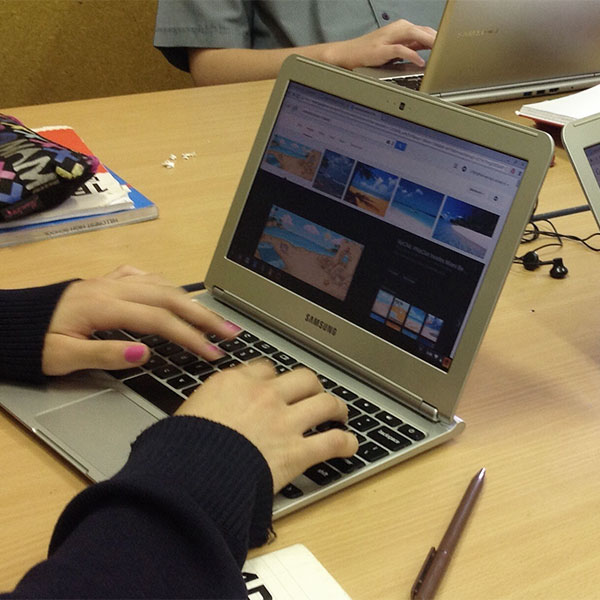
"New" technologies and literacy: Investigates the implications of (mainly) digitally mediated changes in textual practices (including reading/viewing, writing/composing and dissemination) for literacy and literacy/literary education. Topics include reading practices around online and multimodal texts; the use of online forums to enhance and motivate textual engagement; and computer-mediated language learning.

Participating staff: Wendy Carss, Marilyn Blakeney-Williams, Terry Locke, Margaret Franken, David Whitehead, Noeline Wright, Nic Vanderschantz, Claire Timpany.

Faculty of Education

WMIER is the research institute in the Faculty of Education

Order Publications

Page Generated: Sunday, 27 of May 2012 at 1:46 pm NZST
URL: http://www.waikato.ac.nz/wmier/research/research-networks/language-literacy-and-arts-education
This page has been reformatted for printing