The University of Waikato - Te Whare Wananga o WaikatoThe University of Waikato - Te Whare Wananga o Waikato

Student & Academic Services Division

   
ENROLMENTACCOMMODATIONFINANCIALHEALTHCAREERSCONTACT US
To The University of Waikato Homepage Waikato Home > SASD > Careers > Articles
Site Index | Text Only
Waikcookie logout image


How to write a great Curriculum Vitae

For students & graduates looking for full-time employment


Next   Overview

A Curriculum Vitae (CV) is a marketing document with the key role of helping you get an interview with an employer. As with any aspect of marketing, there is no one winning template for writing a CV that is guaranteed to work in all situations.

Your goal in the recruitment process is to show yourself as being one of the best candidates for the role. Employers receive dozens or even hundreds of applications for a particular job so you need to put a bit of extra effort into your application to make your CV stand out.  Almost everyone who applies for a particular job is capable of doing it but an employer doesn’t just want “anyone”, they want those who are the best.

Avoid the easy option of looking for a CV template and simply filling in the basic categories so you have “something” to send away, take the time and effort to stand out to an employer. This will help you make it to the interview stage where you have the opportunity to sell your skills and abilities to an employer in person.

Next   What are the different types of CV?

There are several types of CV. They can be conventional, functional, professional, or a combination of all of these. 

Conventional:
A chronological history of employment and education (most recent first), it has limited marketing value unless you have been in the same profession for a while and intend staying there.

Functional:
Focuses on the skills you have acquired from employment, education, and other activities that are relevant to the position you are applying for.

Professional:
Highlights relevant employment with detail on responsibilities and achievements

Hybrid:
Your CV can be a combination of any of the above depending on what will present you and your skills most effectively to a particular employer.

Functional CV’s usually provide an employer with the clearest information on the skills of a new graduate. Graduates with substantial relevant work experience may find a combination of functional and professional the most effective.

Some industries may also expect different types of CV’s. For example Teaching CV’s are often longer and contain sections such as Teaching Philosophies and Curriculum Experience. The key is to ensure that your CV meets the needs of each specific role that you apply for.

Next   Presentation, Length and layout

An employer’s decision to interview you (or not) is based on the quality of your Cover Letter and CV. First impressions are very resistant to change and will be made in 10- 30 seconds. Therefore first impressions need to be positive in order to increase your opportunity for an interview.

Two to four pages is the standard CV length in NZ so you should be succinct and concise. However, rather than just focusing on the number of pages in your CV, focus on how relevant your CV is to each specific employer. Two pages can be too long if the content is irrelevant and poorly presented. Four pages may be fine if the information you provide is relevant, interesting and helpful to a prospective employer.

Your CV must be well organised, use headings, subheadings and make sure the layout is easy to read with effective use of blank space – not too much or too little! Use single line spacing only for your paragraphs, unlike lecturers marking assignments, employers do not wish to write comments between the lines! Be consistent with your layout, use the same size font and style for each of your headings. Some things to consider are:

Arms length test:
Print out your CV and hold it at arms length. What does your CV look like? Can an employer find the information they want quickly and easily? Is your layout consistent and does it look professional?

Templates:
Templates such as those in Microsoft Word or on the www.seek.co.nz website are useful as a guide to get you started… but the drawback is that your CV will look like hundreds of others that the recruiter has seen before! If you use a template, make sure you change at least something about the look of it, such as the font.

Spelling:
Proof read through your CV yourself, don’t just rely on your spell checker. Common mistakes that can arise from just relying on a spell checker are:

  • A word is used in an incorrect context but it is spelt correctly so the spell checker does not pick it up. A common example of this is in CV’s is the use of the word “form” instead of “from”
  • Spell checkers often default to American spelling.
  • Spell checkers are usually set by default to ignore CAPITALISED words, assuming they are usually acronyms. If you put your titles in capitals, check that your headings don’t contain glaring spelling errors leaping off the page at an employer!  

Binding/stapling:
Some companies will want more than one person to look at your CV so will photocopy it. Make it easy for them by using one staple in the top left corner. Expensive binders often end up in the rubbish.

Paper:
Good quality white paper is usually fine. Coloured or textured paper does have the advantage of making your CV stand out in a pile, but make sure that it photocopies clearly!  Be careful with the colour you choose, for example grey is considered to be a cold colour!

Including Photos:
Read the requirements of the position and follow instructions - if they ask for one include one, if not, then don’t. If you are including a photo make sure it is appropriate to the position. Professional organizations can expect jackets and ties for men and business dress for women, not you on a surf board or at Christmas dinner!

Cover pages:
Cover pages that only include contact details can be seen as a waste of paper, this information can just as effectively be placed at the top of your first page.

Next   Should you customise your CV?

A CV that relates to the specific vacancy that you are applying for will always elicit a more positive response from an employer. It shows the employer that you are genuinely interested in their job and have taken time to read and analyse the position description and respond specifically.

Initially write a detailed generic CV. From that starting point it is easy to customise your CV for specific applications. Ensure that your most important information is simple to find.

Next   What should you include in your CV?

Personal Information:

Contact information: Make it easy for employers to contact you. Include your phone number, mailing address, and email.  Ensure that your answer messages and email addresses are professional!

Age/date of birth/marital status: These are not relevant to your ability to do the job.

Health: A statement that your health is excellent just takes up valuable space and proves little, likewise a statement that you are a non-smoker is irrelevant. No-one includes statements such as "Poor health, smoker" in their CV!

Nationality, residency: Not necessary to include. However you should include these details if they are needed to clarify your eligibility to work in a particular country.

Education:

All information should be organised in reverse chronological order – i.e. your most recent achievements first.

University: Name your University, your degree/s in full (not acronyms), and your major(s). If you have completed a double major specify that it is indeed a double major. Some employers may not have been to University themselves so if you do not fully explain your qualifications they will not fully appreciate them. If you have completed specific major pieces of research you should also include the titles of the research.

Don’t include a full list of your courses and grades. If the employer requests them, then attach a verified (by a JP) copy of your academic transcript. A copy of your transcript can take up to 4 days to be processed. You will need to request it from Student and Academic Services Division (SASD) in the Gateway.

Secondary school education: While your secondary education is superseded by your university qualifications, a summary of your secondary schooling can help to paint a picture of your abilities, especially if it differs from your degree and you have limited work experience. Include any outstanding achievements and also involvement in activities that reflect specific skills such as leadership. Limit details to years 11, 12 and 13.

Skills:

Every CV should have a section that reflects your skills and abilities. While the rest of your CV will tend to reflect what you have done, a skills section is vital because it tells employers what you can do for them now!

Skills can come from all areas of your life not just university, consider four broad areas:

  • The major subjects in your degree
  • The generic skills that you have acquired from your degree e.g. research, computer skills etc
  • Previous work and voluntary experience
  • Outside interests and activities

Use short sentences and bullet points. You may also wish to group skills by subheadings. When outlining your skills, be sure to back up what you are saying with short but specific examples, or give your skills a context. Some examples are:

  • Regular experience giving presentations to tutorial groups of approximately 20.
  • Well developed customer service skills from work experience in retail stores and a café.
  • Experienced user of Microsoft Word and PowerPoint, basic user of Microsoft Excel.

Work History:

Work history should be listed in reverse chronological order. If you have a large number of similar short- term jobs they can be grouped together (e.g. hospitality or casual jobs while traveling).

If you have written your skills section well your work history can be brief in a functional CV, simply listing the job, the period you were employed, the employer and the location.

If you intend to use the Professional CV format you need to specify the responsibilities and the achievements for each relevant position, do not simply list the tasks of the job.

Hobbies & Interests:

The jury is out on the whether you should include this section. Some employers like it as it gives them an opportunity to get a better picture of you as a person. Others see it as irrelevant to the job and a waste of space. Use your judgment on what it might add for you and your CV and how it links to the skills you now have.

This section can be useful for an employer as a conversation starter, and in general recruiters at a graduate level are in favour of you including it. This section can also show employers that you are more than just your degree and work experience. Rather than using bullet points, describe your interests and hobbies in a couple of sentences as this allows you to give some context to them.

Referees:

You need to provide at least 2 referees for an employer. Your referees must be people who can speak knowledgeably about your abilities and about you as a person. Do ask them if they are willing to be a referee first, and give them a copy of your CV so that they know what you have said about yourself to employers. List in your CV their name, job title, current employer, contact phone number(s), and email address.

Referees based outside New Zealand are unlikely to be contacted so use local referees unless you have no other options. If you spend time working internationally, obtain a written reference from your employer before you leave.

Written references may be useful if you have worked internationally or in positions where you made a significant contribution to a particular project, but where you are no longer in contact with the people you worked with. However, these will not fully replace the need for verbal referees.

Next   Other Sections:

Other sections that you might include in your CV are:

Achievements:
Significant achievements are an important means of providing a more complete picture of you as a potential employee. Consider achievements from all areas of your life – academic, sporting, within the community etc. You need to make a judgment call about how far back to include your achievements, taking into account how relevant or interesting an achievement will be to an employer. If you have demonstrated a pattern of achievement over time, make this clear.

Publications, Conferences, Presentations:
If you are applying for an academic position this is very important. They can provide a significant point of difference between you and other candidates for positions where such skills are both valued and relevant.

Career objective:
If you are going to state a career objective make sure it is focused to the particular type of position and the type of company you are applying for, general or vague objectives will add nothing to your CV.

Personal statements:
There are fashions in CV’s and these were in vogue a few years ago. However, they have limited value as everyone tends to say the same thing “I am a hard working, team player who is honest, reliable and punctual…” You will get better results from being more specific about your skills to an employer, rather than taking up space with a personal statement.  Personal statements often repeat some information that should instead be in a covering letter.

Next   What if I’m applying online?

Most employers prefer to receive CV’s in Microsoft Word format. Alternatively you may create a PDF document to use when e-mailing or attaching your CV to on-line application forms. However, Microsoft Word is preferred as most business run a version of it and it is easy for employers to scan for keywords.  

Keywords are important. Large organisations often require online applications as a time-saving method for them. They may receive hundreds of applications so their first part of the selection process may involve a keyword search. Therefore you need to be familiar with the company, the position description and any key requirements for the position, and to include relevant key words in your application so that you are not excluded before anyone even looks at your CV.

Online applications can sometimes lose formatting. Try to make sure that when sent to another computer that your application, CV and covering letter still retain the layout you intended, or that if they do lose the formatting, that they will still look acceptable.


Next   When is a “different” CV appropriate?

Teaching:
Good teaching CV’s have a different format. Talk to staff at the Careers and Employment Centre about this.

Computer graphic design, marketing, “creative roles”:
This is the one time when you should be creative with your CV, particularly if that is a significant component of the position. Do make sure that the information is still clear and readable. However clever the graphics, if the message isn’t obvious you have wasted a lot of time and effort.

Anyone seeking to work in the area of graphic design will have their skills judged immediately by the standard of their CV. Likewise if you are applying for a role in sales, advertising, marketing or similar and your CV and covering letter is not persuasive, you will not get an interview. Use the skills gained in your degree to your advantage.

In all areas a creative CV can sometimes make you stand out from others and helps you display genuine enthusiasm for a role.

Next   Do I still need a covering letter?

Always include a cover letter or e-mail that responds specifically to the advertisement and the position requirements directly.

A cover letter or e-mail is a formal document and is your opportunity to demonstrate your written skills. Where possible address it to a person. There should be no spelling or grammatical mistakes and it should not be longer than one page. Some employers won’t read any further than your covering letter if it is generic.

For more information you can pick up a copy of our handout on covering letters.

Next   Other hints & tips

Your CV and cover letter is all that an employer has to decide if they want to interview you. They will not contact you if your CV paints an unclear picture of you so you will miss out. Make it easy for employers to know who you are, what you have done, and how you can contribute to their organisation.

Research the companies you apply to so that you can be confident and articulate about them in your application.

If an employer has received a significant number of applications their first look through the pile is likely to be brief and they may only scan each CV for 10-30 seconds, sorting them into piles of “definitely interview”, “maybe interview”, and “no”. Your CV needs to be easy to scan quickly for key information, as well as standing up strongly to an in-depth perusal as the employer gets further into reviewing the “maybe interview” pile.

Spelling and grammar is crucial. Mistakes indicate a lack of attention to detail and give employers an easy reason to put your CV in the “no” pile – something they are looking for any excuse to do if they have to sort through a hundred or more applications.

Next   Further assistance

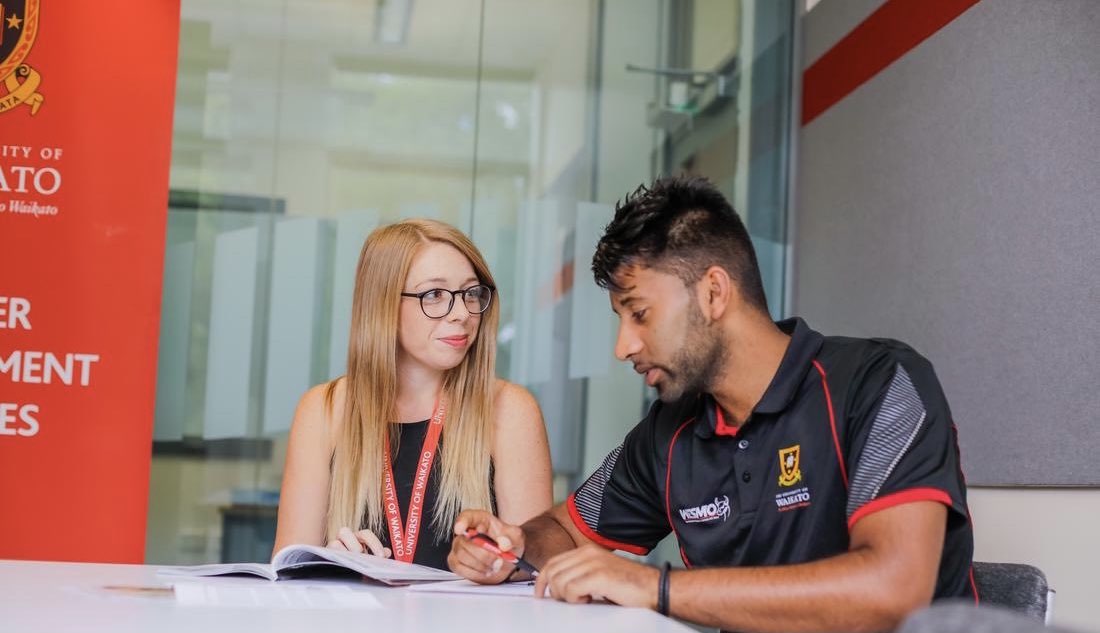
Once you have completed a draft of your CV, bring it to a drop-in CV clinic at the Careers & Employment Centre for one of our staff to help you further.

Student & Academic Services Division - Wāhanga Ratonga Mātauranga Ākonga
The University of Waikato - Te Whare Wananga o Waikato
Last modified: Thu Jun 14 16:30:01 2007

Page Generated: Thu Mar 18 23:11:30 2010
URL: http://www.waikato.ac.nz/sasd/careers/articles/cv.shtml
This page has been reformatted for printing