
Sylvia Wharewera
Bachelor of Social Sciences
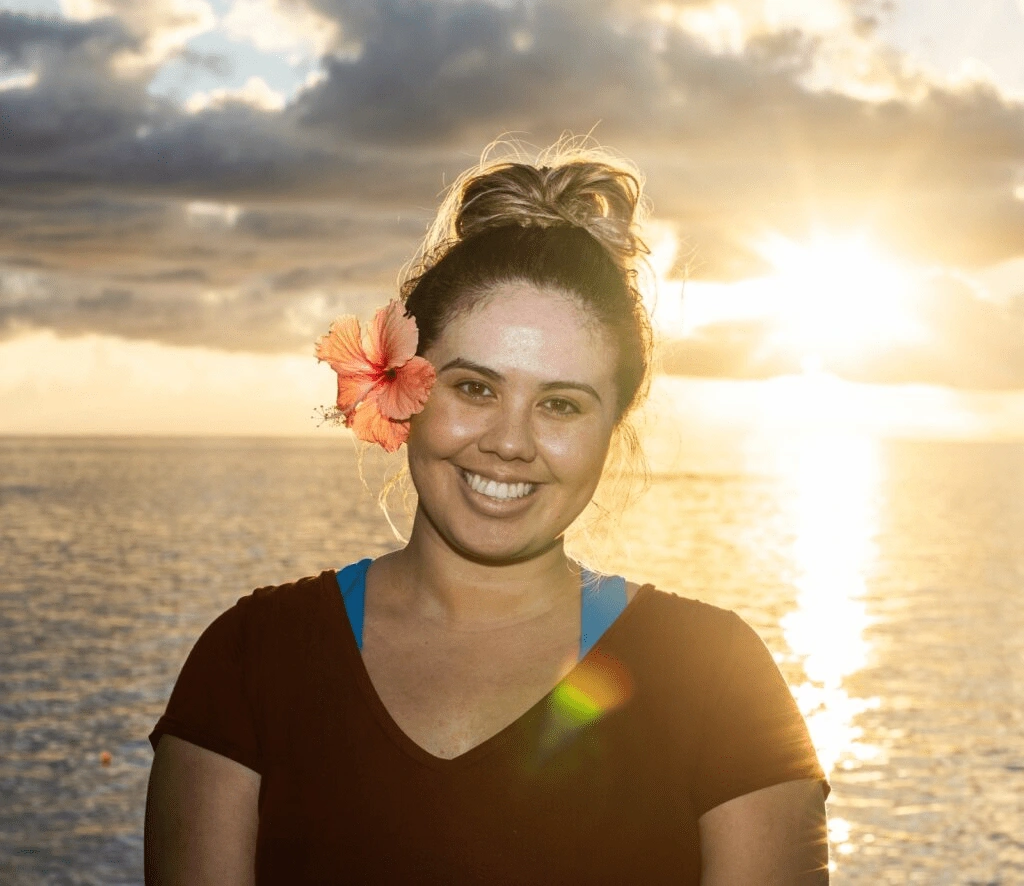
Waikato-Tainui, Ngāi Tai, Houma, Kolomotu’a, Vailoa, Toamua
By weaving Kaupapa Māori Psychology into her studies, Elletta Morrissey gained a deeper, more holistic understanding of psychology, discovered new ways of thinking, and strengthened her connection to her own culture.
Waikato
Hamilton
Elletta Morrissey (Waikato-Tainui, Ngāi Tai, Houma, Kolomotu’a, Vailoa, Toamua) was determined to make the most of her study towards a Bachelor of Social Sciences majoring in Psychology at Waikato, both academically and personally.
She carefully chose papers that aligned with her values and, in her second year, found herself drawn to a minor in Kaupapa Māori Psychology.
Already on a personal journey to reconnect with her culture and te reo Māori, Elletta saw the minor as an opportunity to weave that journey into her academic studies.
“I wanted to broaden my perspectives on psychology, especially as it relates to my own culture,” she says.
Kaupapa Māori Psychology integrates Māori worldviews with psychological theories, methods, and models, applying them to real-world situations where Māori are impacted.
Elletta says studying both Western and Kaupapa Māori psychologies gave her a more holistic understanding of the field.
“In my first year, I gained an understanding of methods and theories from a Western perspective, which often focused on the individual and their needs,” she explains. “Kaupapa Māori Psychology expanded on that by exploring how wider factors like culture, environment and whānau shape how people experience the world.”
Exposure to new perspectives also sharpened her critical thinking skills.
I’ve learned to question my own biases, examine why I think something and be open to seeing it in a different way – or at least understand another perspective.
Elletta now finds she can draw from both knowledge systems, and believes that while each takes a different approach, “they ultimately work toward the same goal”.
As Indigenous psychologies become more commonplace, Elletta is hopeful that more people will be able to access support that acknowledges and respects their cultural identities.
“Traditional psychological support generally hasn’t worked well for Māori because it fails to address the unique challenges that face them,” she says. “Indigenous psychology provides a way for people to connect with what is inherently familiar to them.”
She credits the “grounded” nature of te ao Māori with inspiring her to shift her focus from clinical psychology to a more community-focused path.
“I want to be out in the community, supporting people directly,” she says. “That's where I know I will find the most fulfilment and make the most impact.”
You are currently viewing the website as an international visitor, you might want to change to domestic.
You're an international student if you are:
You're a domestic student if you are: