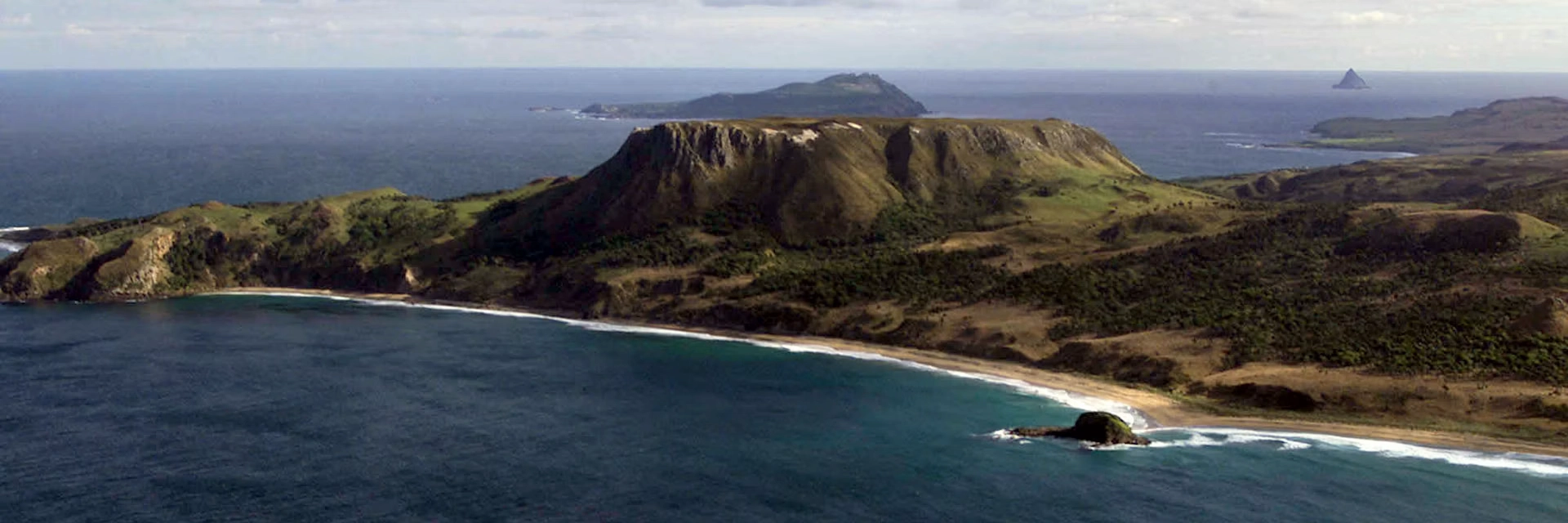
Lead researcher, Dr Hamish Lewis from the University of Waikato
Up to three billion more people living in cities across the globe could face heat extremes unprecedented in the current climate if current emissions reduction efforts remain unchanged, research from the University of Waikato has found.
Researchers Dr Hamish Lewis and Dr Luke Harrington (opens in a new tab) are calling for stronger climate action by governments worldwide, warning that future exposure to extreme heat will depend heavily on how well countries follow through on their emission reduction commitments.
Published in Climatic Change (opens in a new tab), their study compared population exposure at different policy-relevant warming levels and found that without urgent action, billions more urban residents will frequently face heat extremes beyond anything seen today – many throughout their lifetime.
Lead author Dr Lewis says globally, an additional 2.5 billion people could be exposed to unprecedented heat extremes for each degree of global warming, with events occurring as often as once a decade.
“This research highlights how important it is for countries to work together on emission reductions,” Dr Lewis says.
Using state-of-the-art population and climate projections, Dr Lewis and Dr Harrington analysed warming scenarios ranging from 1.9°C to 3.1°C, estimating how many people in cities would be exposed to heat extremes in each scenario, linking extreme heat exposure to global policy decisions.
“Exposure to intense heat extremes is naturally greater in densely populated areas,” Dr Lewis says. “This is compounded by urban heat islands, which contribute significantly to mortality during heat waves."
In 2024, Auckland Council identified parts of the city (opens in a new tab) as an “urban heat island”, where heat is intensified by buildings, roads and limited green space. Similarly, in 2025 Hamilton City Council identified urban hotspots (opens in a new tab) up to 5°C warmer than cooler areas of the city.
New Zealand lags internationally when it comes to planning for extreme heat, with Australia, the United Kingdom, and many other countries making more progress.
“Globally, highly populated areas like South and Southeast Asia will be among the first to be exposed to these unprecedented heat extremes."
The results show that stronger climate action – such as fully implementing commitments under the 2021 Glasgow Climate Pact – could dramatically reduce the number of people exposed to dangerous heat, particularly in rapidly growing cities.
Dr Lewis, a lecturer at the University, says decisions made now will shape future outcomes.
“While individuals can make changes, much of the responsibility sits with those making policy. We elect the people who make those decisions, and holding governments to account is critical.”
Even small increases in warming can have large impacts, he says.
“These impacts happen everywhere, and they emerge quickly. If each degree of warming exposes an extra 2.5 billion people, avoiding even small increases in future warming can have significant benefits.”
The research project was funded through the Marsden Fund, administered by the Royal Society Te Apārangi and the Ministry of Business, Innovation and Employment’s Endeavour Smart Ideas Fund.