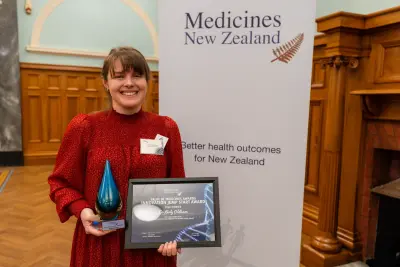
Dr Keely Oldham.
Antibiotics are often described as the backbone of modern medicine – and for good reason.
They transformed medicine, allowing us to treat infections that were once life-threatening and making everything from routine surgery to cancer treatment much safer.
But as bacteria continue to evolve, their effectiveness is under increasing threat.
One bacterium causing particular concern is Neisseria gonorrhoeae, which causes the sexually transmitted infection, gonorrhoea.
It is estimated that there are more than 80 million gonorrhoea infections globally each year, making it one of the world's most common bacterial sexually transmitted infections.
While the infection has been treatable with antibiotics for decades, N. gonorrhoeae has developed resistance to almost every antibiotic used against it.
As our treatment options become more limited, we need to find new ways to attack the bacteria – or we risk losing one of the most important tools in medicine.
The research at the University of Waikato has focused on finding one of its potential weak spots.
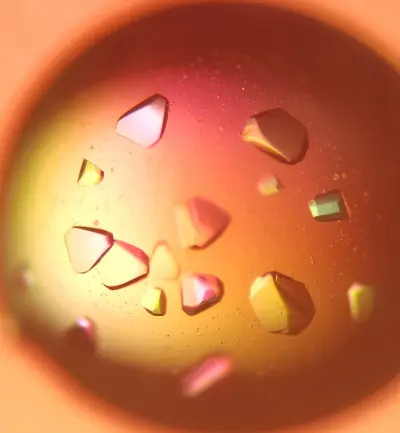
Protein crystals of the enzyme, CysE. These crystals were used to determine the three-dimensional structure of CysE.
Like all living things, bacteria need to carry out certain processes to survive. If we can identify a process they depend on and find a way to disrupt it, we may have the beginnings of a new treatment.
I focused on how N. gonorrhoeae makes cysteine, an amino acid that helps bacteria grow and protect itself from some of the stresses it encounters inside the human body.
An enzyme called CysE plays an important role in that process. You can think of enzymes as tiny pieces of biological machinery, each performing a particular job. CysE helps start the chain of reactions the bacteria use to make cysteine.
My question was: could we stop that machinery from working?
Using X-ray crystallography, we were able to determine the three-dimensional structure of CysE in considerable detail. This gave us an atomic-level view of the enzyme, including the areas it uses to bind to other molecules and perform its job.
Once we understood its structure, we used computer modelling to search for compounds that might bind to the enzyme and potentially stop it from working.
From that virtual screening, we identified some promising compounds and tested them in the lab.
One stood out.
It was able to inhibit CysE at relatively low concentrations and, as far as we know, is the first reported inhibitor of CysE from the bacterium that causes gonorrhoea.
That doesn't mean we've discovered a new antibiotic. There is a long way to go between finding a compound that can inhibit an enzyme in the lab and developing a medicine that can safely and effectively treat people.
But we now have a starting point.
The next step is to investigate whether targeting CysE can stop N. gonorrhoeae from growing or surviving, and whether we can develop compounds that inhibit the enzyme more effectively.
There could also be potential beyond gonorrhoea. The research found different forms of CysE across other groups of bacteria, opening the possibility of exploring it as a target in other bacterial infections.
The work on gonorrhoea has also led me to think more broadly about what we can do when our existing antibiotics stop working.
Now, as a postdoctoral fellow, I'm exploring another approach: bacteriophages, or phages, which are naturally occurring viruses that infect and kill bacteria.
I'm investigating whether we can engineer phages to overcome the natural defences of Pseudomonas aeruginosa, another bacterium that can cause serious infections and can be particularly difficult to treat because of antibiotic resistance.
Last month, I received Medicines New Zealand's 2026 Innovation Jump Start Award, providing up to $30,000 in research and career support to continue developing this work.
As an early-career researcher, the support gives me the opportunity to explore new ways of tackling infections that are becoming harder to treat.
Antibiotics have transformed medicine over the past century, but we can't assume they will always work as they do today.
Whether it's finding an overlooked weak spot in the bacterium that causes gonorrhoea or exploring completely different approaches to treating bacterial infections, we need to keep looking for new ways to stay one step ahead.
Originally published in the Sunday Star-Times Brainwaves feature. Read the original on The Post.