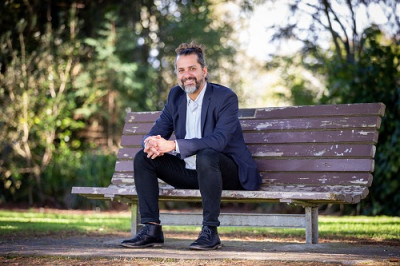
Environmental psychology researcher, Dr Taciano Milfont
University of Waikato environmental psychology researcher, Dr Taciano Milfont, was curious and set out to find the answer, leading a study investigating the attitudes of different generations of New Zealanders towards climate change.
In research just published in the prestigious Nature Communications journal, data from the New Zealand Attitudes and Values Survey (NZAVS) was analysed to investigate if climate change beliefs of individuals had decreased or increased over time.
More than 56,000 New Zealanders were divided into 12 five-year birth cohorts based on their year of birth (between 1936 to 1995).
They were asked the degree to which they agreed with two statements: that “climate change is real” and that “climate change is caused by humans” (or anthropogenic reasons).
Responses were tracked over a 10-year period, from 2009 to 2018.
While younger people started with greater concerns about climate change than older people, the research revealed that all birth cohorts increased in the strength of their beliefs that climate change was real and caused by humans, and at similar rates.
Over the 10-year period, there was a greater increase in belief about anthropogenic climate change (≈17%) than in belief in climate change reality (≈14%) across all age cohorts.
“This is perhaps due to the fact that belief levels for climate change reality were higher overall than belief levels for anthropogenic climate change, meaning there was not much room for an increase in climate reality belief.”
Dr Milfont says the findings provide some indication that climate communication is working, and that all generations are becoming much more aware of the issue, which offers a little bit of hope.
“The findings are positive in the sense they indicate people have become increasingly aware of the issue. It doesn’t necessarily mean that those concerns will translate into action, but hopefully they do. It gives some hope because to tackle climate change we need collective action across the generations.”
Dr Milfont is on the advisory board of the NZAVS, a 20-year longitudinal study which began in 2009. Led by Professor Chris Sibley from the University of Auckland, the NZAVS measures the changing social attitudes, personality and health outcomes of New Zealanders.
The climate change questions are “simple but critical questions”, says Dr Milfont, who is based in Te Kura Whatu Oho Mauri - School of Psychology at Waikato University’s Tauranga campus.
“One is about the reality of it - in the beginning some people thought climate change didn’t exist; now most people say it exists, but still a few don’t agree that it is caused by humans, or anthropogenic climate change.”
The trigger for his research was the 2019 school strikes for climate change, and the groundswell of young people stepping into the political arena.
It wasn’t only international climate change advocate Greta Thunberg. In New Zealand, young people were lobbying for change and being elected to local councils, including then 22-year-old Tamatha Paul in Wellington and 18-year-old Sophie Handford on the Kapiti Coast. In the 2020 election, then 23-year-old Chloe Swarbrick was elected MP for Auckland Central.
These young voices were expressing the frustration and sentiment of the climate change generation gap.
“Greta was quite vocal,” recalls Dr Milfont. “She said, ‘you guys are not going to be alive to experience the climate impacts yet to come, and our generation is going to suffer the consequences. You are putting the load on us to deal and solve this issue, but you have the power to do things now’.”
Dr Milfont says there is the opportunity to do further research into the psychology of climate change, including whether children are influential in sparking climate change action in their parents, and vice versa; and the extent to which climate communication should be tailored to distinct age groups within the population.