Healthy ecosystems depend on more than just having lots of species – they rely on the complex relationships between plants, prey and predators, according to new international research led by the University of Waikato.
Published today (opens in a new tab) in Nature – the world’s leading multidisciplinary science journal – the study found that ecosystems with greater diversity of species – and particularly a greater diversity of predators – function more effectively, helping maintain natural process that people rely on, such as pest control, food production and ecosystem stability.

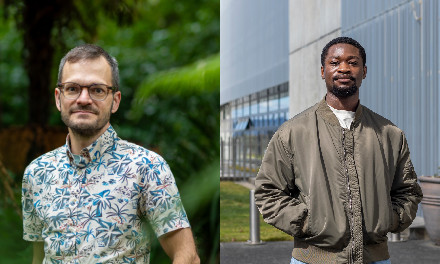
Dr Andrew Barnes
Lead author Dr Andrew Barnes (opens in a new tab) says ecosystems are powered by the relationships between species – who eats who, how energy moves through the food web and the important role predators play in keeping everything in balance.
“When predators disappear through habitat loss, pollution or climate change, those effects can ripple through an entire ecosystem and weaken important functions, including natural pest control, food production, climate regulation and ecosystem stability,” Dr Barnes says.
The research found that predators such as kārearea (NZ falcon), ruru (morepork) and sharks are vital to the functions of ecosystems, which humanity relies on, calling on greater prioritisation on conservation and environmental policy.
Working with researchers from the German Centre for Integrative Biodiversity Research (iDiv) and more than 20 institutions worldwide, the group examined more than 300 food webs from oceans, lakes, streams and soils around the world and found that there was up to 70 times more predation when ecosystems had a diverse range of species.
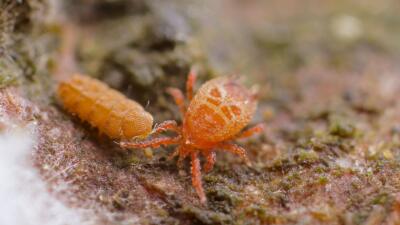
Food webs shape how ecosystems function. The photo shows a predatory soil mite and a pauropod that feeds on fungi and decaying organic matter. Photo by Andy Murray
The study is the most comprehensive to date examining how biodiversity influences ecosystem functioning across entire food webs rather than focusing on a single group of organisms.
While New Zealand has made significant progress protecting threatened species and controlling invasive predators and weeds, Dr Barnes says conservation also needs to consider the complex food webs that connect species.
Protecting biodiversity isn’t just about saving individual plants and animals. It’s also about protecting the relationships between them.
Dr Barnes says biodiversity conservation has often been more about saving individual species, New Zealand policies need to protect the complex food webs that allow ecosystems to function and understanding how these species interact with one another could help guide more effective conservation and restoration.
While the full impact of invasive predators on New Zealand's food webs is not yet fully understood, they are likely to be having significant effects on native biodiversity and ecosystem resilience.
“A better understanding of New Zealand's food webs could help strengthen conservation efforts and improve outcomes for native species.”