
Senior Lecturer

Director of Environmental Research Institute

Academic Team Leader of Ecology, Biology and Animal

Senior Lecturer

Senior Lecturer

Emeritus Professor
Dr Megan Grainger
 As an undergraduate, Megan was mentored by Peter Molan and was part of Prof Merilyn Manley-Harris’ Waikato University research team that isolated and identified methylglyoxal (MGO). For her PhD she developed the first forecast model for the conversion of dihydroxyacetone (DHA) to MGO. Forecasting is now a routine tool used in the industry. Current research interests include, investigating the chemical make-up of mānuka honey, understanding why mānuka honey fails some authenticity and quality analytical export test methods (i.e., C4 sugar adulteration testing and diastase activity), investigating phenolic compounds in mānuka honey and their changes over time and geographical region. She is also investigating the uptake of heavy metals into bee brains to determine if they pose a risk to the functioning of colonies.
She is currently supervising a growing research team and is actively engaged in public science communication (refer to the publications list for recent podcasts and articles) and stakeholder collaboration.
Megan is committed to conducting research that delivers tangible benefits to the daily lives of those involved in the Apiculture industry. Her vision for the unit is to become a hub of excellence—coordinating high-quality research, fostering innovation, and supporting the growth of industry through evidence-based insights with global collaborators and for these findings to be accessible to the wider public through the website and media channels.
Dr Megan Grainger on Orcid (opens in a new tab) and LinkedIn (opens in a new tab).
Associate Professor Charles Lee
 Charlie is a microbial ecologist with extensive experience working in unusual habitats such as deep-sea hydrothermal vents, geothermal hot springs, and ice-free areas of Antarctica to answer fundamental questions related to microbial biogeography and ecology. In its own way, the leaf surface of mānuka (i.e., the phyllosphere) represents an unusual and challenging habitat for microorganisms, and those microorganisms have been largely overlooked by researchers as an explanatory variable for physiological heterogeneity in mānuka.
Working with Anya Noble as part of her MSc and PhD research, Charlie and Anya discovered that mānuka leaves harbour a group of dominant and ubiquitous bacteria. Without exception, these bacteria were found in all mānuka plants sampled throughout the North Island.
Even more remarkably, kānuka which are ecologically and morphologically very similar to mānuka (but evolutionarily distant), in immediate vicinities did not host the same bacteria. These results challenged widely held assumptions in phyllosphere microbial ecology and significantly contributed to our understanding of microbial biogeography.
Their findings also strongly suggest that mānuka potentially interact with and influence the microorganisms on its leaves, the mechanistic details of which Charlie and his team continue to investigate.
Associate Professor Charles Lee on Orcid (opens in a new tab).
Associate Professor Mike Clearwater
 Mike is a plant biologist, with broad interests in plant functioning in natural and managed systems, and a particular focus on plant vascular transport and water relations. Mike completed an MSc(Hons) at the University of Auckland, and a PhD in tree physiology at the University of Edinburgh.
After joining the University Mike began collaborating with chemists interested in the origin of dihydroxyacetone (DHA) in mānuka floral nectar. He now leads a wider research program investigating how the environment affects flowering behaviour and nectar flow in mānuka and other species, in collaboration with other research institutes, landowners and the honey industry. Recent discoveries include the previously unrecognized effect of photosynthesis within the flower on nectar chemistry in many flowers, and identification of a key gene, unique to mānuka and its relatives, that is responsible for high levels of nectar DHA and the unusual properties of mānuka honey.
Dr Linda Peters
 Dr Linda Peters has been a Senior Lecturer in Biomedical Molecular Genetics at the University of Waikato since 2011, specialising in antimicrobial applications and infectious disease diagnostics. Her leadership in research became evident when she took over the supervision of MPhil student Julian Ketel, from retiring Professor Peter Molan, whose work focused on the sensitivity of Staphylococcus strains to a Manuka topical cream. This research was presented at both the 32nd Conference of the Infection Prevention and Control Nurses College (2015) and the 2016 Waikato Clinical Campus Biannual Research Seminar (2017).
Building on this, Dr Peters has now co-supervised five MSc students with honey specific projects. Their projects have included developing RTqPCR-based molecular diagnostic tests for American and European foulbrood in honey, and examining the antibacterial and cytotoxic activity of various honey products against clinical Staphylococcus aureus strains.
Dr Peters' laboratory expertise includes colourimetric MTT assays for cell viability and agar well diffusion assays for antimicrobial activity. Her proven track record in applied research, student mentorship, and scientific dissemination makes her a strong asset to any science group focused on biomedical innovation.
Emeritus Professor Merilyn Manley-Harris
 When Dr Merilyn Manley-Harris first joined the faculty at the University of Waikato, the Honey Research Unit was primarily focused on the biomedical aspects of honey, led by the late Professor Peter Molan. With a background in carbohydrate chemistry and expertise in isolating and characterising components of complex mixtures, she brought a new perspective to the unit by shifting focus toward the chemistry of honey.
Her first contribution involved characterising the oligosaccharide components of New Zealand beech honeydew honey—a study now frequently cited in relation to the putative prebiotic effects of these oligosaccharides.
At the time, while the bioactivity of mānuka honey was generally accepted, its chemical identity and behaviour remained unknown. Over several years and through the supervision of multiple students, her research in this area made significant strides. This included demonstrating that mānuka honey possessed non-peroxide activity rather than peroxide activity (initially unpublished, but later confirmed by others), isolating methylglyoxal and dihydroxyacetone, modelling their interconversion, and identifying the rate-determining step in the process. Additional contributions include conducting the first survey of dihydroxyacetone in mānuka nectar and developing chemical methods to quantify both methylglyoxal and dihydroxyacetone.
Dr Merilyn Manley-Harris' current research focuses on the chemical analysis of other New Zealand monofloral honeys and native New Zealand propolis.
Emeritus Professor Merilyn Manley-Harris on Orcid (opens in a new tab).
Tameryn Stringer
 Tameryn is a researcher in the field of bioinorganic chemistry, dedicated to uncovering the biological properties of novel compounds. With a focus on therapeutic potential, Tameryn’s research looks at evaluating the activity and understanding the mechanism of action of potential anticancer and antimicrobial agents. Her specific research interest related to native honeys is to evaluate the biological properties (including protective effects) of honey and honey extracts.
Tameryn Stringer on Orcid (opens in a new tab) and LinkedIn (opens in a new tab).
Our students
Current students
Amber Bell, MSc, 2019-2020; PhD, 2021-Current
 Amber is a PhD candidate at the University of Waikato, supervised by Megan Grainger. Her doctoral research focuses on two key themes. Firstly, she is investigating the prevalence of heavy metals within beehives and identifying where these metals accumulate, whether in the brood, bees, honey, bee bread, or wax. The second aspect of her research is understanding the effects of copper, cadmium, and lead on honey bee health, with a particular focus on whether these metals are taken up into the brain. This is to determine if heavy metals in the environment pose a risk to bee health, specifically their cognitive abilities.
Harmanpreet Kaur, MSc, 2024-Current
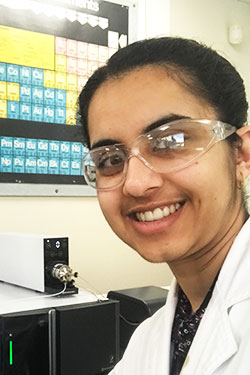 Harman is currently pursuing a Master of Science (Research) degree in chemistry at the University of Waikato under the supervision of Megan Grainger. The research project focuses on identifying the causes of low diastase activity in mānuka honey that are unrelated to heating or storage conditions. Diastase activity is an important quality control parameter for New Zealand honey exports. Previous studies have indicated that endogenous mānuka honey compounds, such as methylglyoxal (MGO) and 3-phenyllactic acid, contribute to diastase activity loss, suggesting that certain compounds in honey may inhibit the diastase enzyme.
This project aims to determine the structure of honey diastase (from Apis mellifera), identify inhibitory compounds, and pinpoint inhibition sites.
Ashwini Weerasinghe, MSc (2025 – 2026)
 Ashwini is currently pursuing a Master of Science degree in Chemistry at the University of Waikato under the supervision of Dr Megan Grainger within the Honey Research Unit. Her research project focuses on the analysis and quantification of phenolic compounds in mānuka honey using LC-MS/MS. Phenolic compounds are key bioactive constituents in honey that contribute to its antioxidant properties, authenticity, and overall quality.
This project aims to develop and apply an LC-MS/MS method for the separation and quantification of selected phenolic compounds in honey matrices. The work involves optimising sample preparation techniques and chromatographic conditions to improve sensitivity and reproducibility, enabling more accurate profiling of phenolic content in honey. The findings are expected to contribute to a better understanding of honey composition and support quality assessment within the New Zealand honey industry.
Ayeshmantha Pathirana, MSc (2025 – 2026)
 Ayesh’s research investigates the antioxidant activity of over 100 mānuka honey samples across different Unique Mānuka Factor (UMF™) grades using the DPPH radical scavenging method. A key initial component of the project involves method validation of the DPPH assay specifically for mānuka honey matrices, including assessment of essential parameters. Beyond simply measuring free radical neutralization, the study evaluates potential interference from key nonphenolic components unique to Mānuka on DPPH assay performance. Additionally, the project examines possible synergistic effects between benzoic acid derivatives and cinnamic acid derivatives, two major phenolic groups in honey, that may influence overall antioxidant capacity. To further contextualize the findings, the study also incorporates different floral types such as clover, pōhutukawa, rewarewa, citrus, kanuka, kāmahi, rata and honeydew for comparative analysis.
Liping (Sophia) Zhang, MSc (2025-2026)
 Liping Zhang is currently pursuing a Master of Science degree in Chemistry under the supervision of Megan Grainger. Her research focuses on three major themes.
Firstly, the project aims to develop a modified Folin–Ciocalteu (F–C) method using UV spectroscopy for the analysis of Total Phenolic Content (TPC) specifically in mānuka honey, with particular attention to interference effects from the complex matrix.
Secondly, the research focuses on developing a simple and rapid HPLC method for the determination of individual phenolic compounds in mānuka honey. This includes HPLC method setup, optimization of gradient conditions, integration parameters and detection wavelengths, as well as calibration curve development. The method is intended to be efficient and easily adopted by commercial laboratories.
Thirdly, the study aims to cross-validate the TPC results obtained from the modified F–C method with those generated using the HPLC method.
Nigel Tam, MSc (2025-2026)
 Nigel is completing a Master of Science degree in chemistry with Dr Megan Grainger as his project supervisor. The research project focuses on identifying the causes of false positives for C4 sugar adulteration in mānuka honey. C4 sugar adulteration is an important quality control parameter for exports, and the false positives impact the export of manuka honey significantly. A 2011/12 study showed that 33% of tested manuka honey failed the standard AOAC 998.12 C4 sugar adulteration test. Concerns around the testing of mānuka honey using this method are prevalent due to honey consisting of a high concentration of methylglyoxal (MGO, >250 mg/kg) will often fail the test. This usually leads to a negative shift in δ13Cprotein and it may be a potential false-positive fail due to a limitation in methodology.
This project aims to create a modified AOAC 998.12 method which is more suitable for the complex matrix of mānuka honey.
Juanita Vermeulen, BSc (2025 -current)
 Juanita is currently an undergraduate pursuing a Bachelor of Science majoring in Cellular & Molecular Biology and Chemistry. She is working under the supervision of Dr Megan Grainger on various projects. She previously worked on the greenhouse study in the C4 sugar adulteration project. She is currently an assistant in the laboratory gaining experience in lab procedures and methods. For her post graduate studies she will pursue a Master of Science (Research), building on the foundation of work the team are currently building and refining.
Evann Mingant (Visiting student, April – August 2026)
 Evann, an engineering student from the ECPM (École Européenne de Chimie, Polymères et Matériaux) in France, has joined the Honey Research Group at the University of Waikato for his fourth-year internship. Working under the supervision of Dr Megan Grainger, Evann’s research directly aligns with the unit’s mission to decode the complex chemical make-up of honey and deliver evidence-based insights to the industry.
His work focuses on two key areas: the extraction of phenolic compounds from honey and the quantification of its antioxidant properties. By analyzing these specific components, Evann’s research contributes to the group's broader investigation into how honey composition changes over time and across different geographical regions. His findings will help support the unit’s vision of driving innovation and ensuring the quality and authenticity of regional honeys.
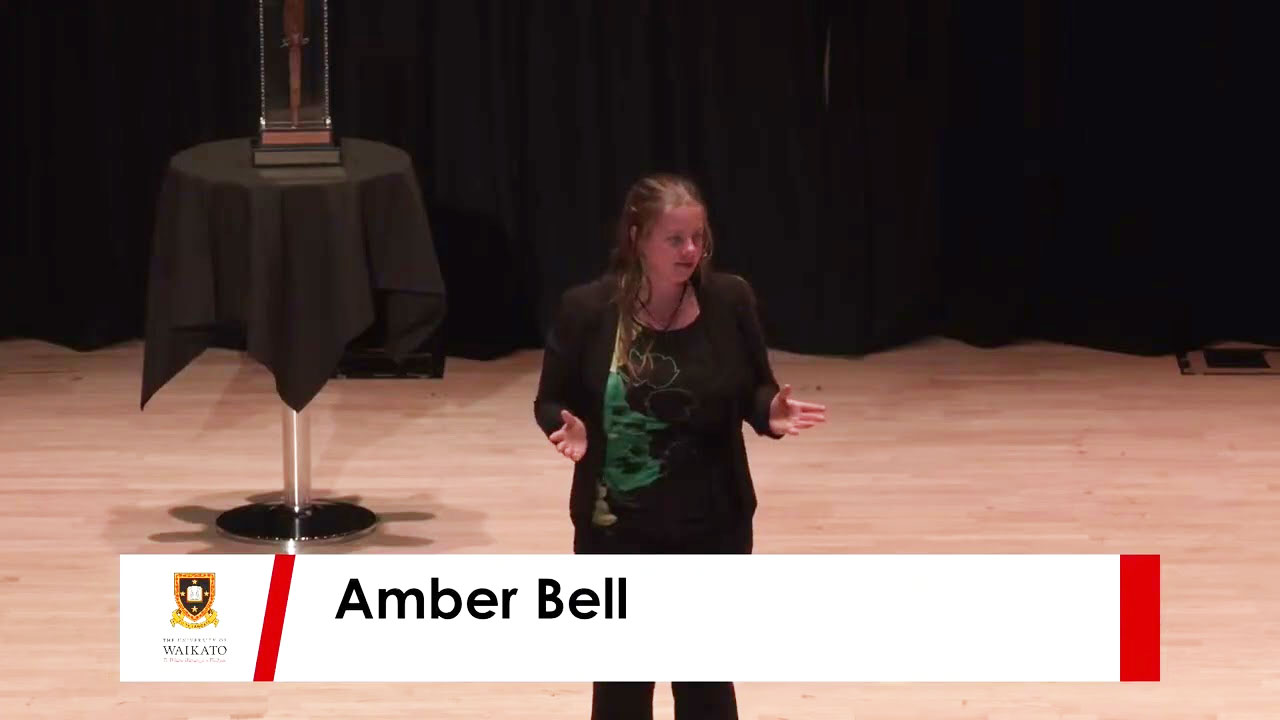
Amber Bell's 3MT
Watch PhD student Amber Bell present her thesis and its significance in just three minutes, using only one static slide, as part of the 3 Minute Thesis competition.
Contact us and connect
If you are a scientist or work in the Apiculture Industry and wish to support or collaborate with the Honey Research Unit, please get in touch to discuss future research.