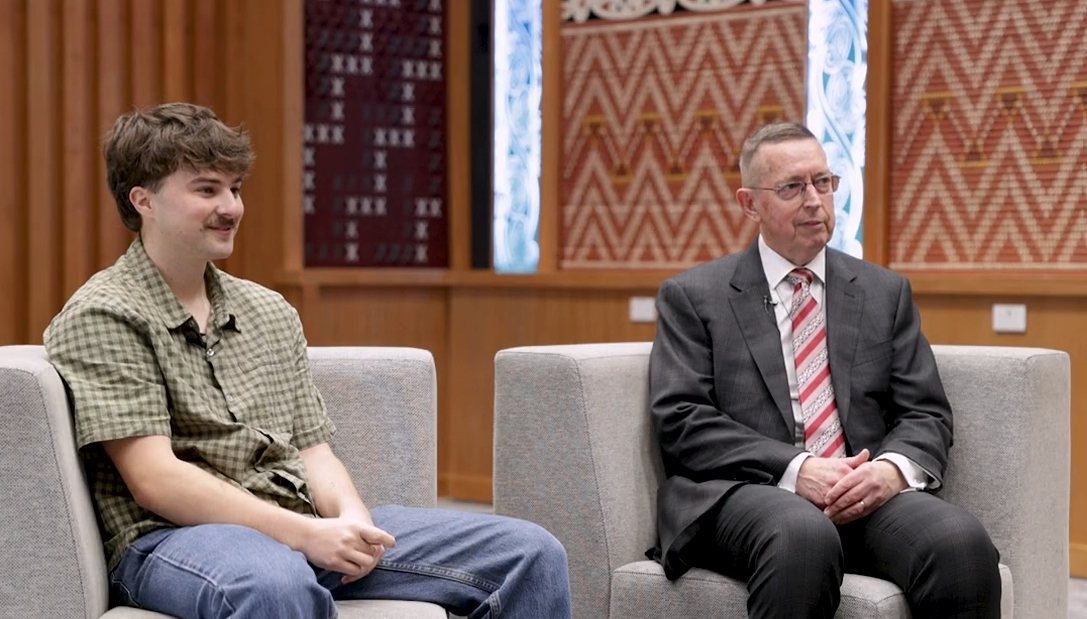
Dr Olli Hellmann and Dr Tola Amusan
The slow return of cultural artefacts taken during the colonial era may involve more than legal disputes or questions of ownership, new University of Waikato research suggests.
The number of cultural artefacts taken during this period is staggering, with estimates suggesting as much as 90% of Africa's cultural heritage is held outside the continent, while more than 15,000 Māori and Moriori cultural heritage items are thought to be held overseas.
Published today (opens in a new tab) in the International Journal of Heritage Studies (opens in a new tab), the study analysed the online backlash to the South African-made video game Relooted. The researchers found many posts opposing the return of looted African cultural objects sought to defend a positive sense of white or Western identity.
Released earlier this year, the game follows a pan-African group of activists who break into Western museums and private collections to reclaim culturally significant African artefacts.
Dr Olli Hellmann (opens in a new tab) and Dr Tola Amusan, (opens in a new tab) from the University's Te Rākau Kotahi School of Law, Politics, and Philosophy, (opens in a new tab) examined more than 6,000 anonymous posts on gaming platform Steam to understand how ordinary people respond to the idea of returning cultural objects, looking beyond the technical and legal arguments commonly heard from museums and governments.
"What we found in these online discussions is that the return of cultural artefacts – and the historical evidence of theft and looting that underpins these claims – can be seen as a threat to white or Western identity," Dr Hellmann says.
When Western people are confronted with historical wrongs committed by Europeans during the era of colonisation, some may respond defensively because they want to protect a positive image of their own group and its history.
The researchers identified four common ways people responded to calls for restitution: arguing that wrongdoing has occurred throughout history; emphasising the achievements of Western civilisation; claiming cultural objects belong to all humanity; and questioning whether communities have a legitimate right to ask for objects back.
Dr Hellmann says the findings help explain why debates about restitution can become so emotional.
"Identity is important on both sides. For communities seeking the return of cultural objects, these objects are an essential part of their history, culture and identity. But for some people in the West, acknowledging how those objects were acquired can challenge the story they tell about their own history."
The researchers say the patterns identified in the gaming forum suggest identity may also be an important factor in wider restitution debates, including negotiations involving museums and governments.
Dr Amusan says African countries have been calling for the return of cultural artefacts since at least the 1960s, both individually and collectively through organisations such as the African Union.
“A lot of those calls have fallen on deaf ears," Dr Amusan says.
Arts and culture are an important source of identity and power. There can be a feeling of incompleteness when cultural artefacts are not where they belong.
There has been some recent progress, including the return of a number of Benin Bronzes looted by British forces from present-day Nigeria in 1897.
The issue also has particular relevance in New Zealand. Thousands of taonga Māori and Moriori remain in overseas institutions, although there have been significant returns, including Hinemihi o Te Ao Tawhito, the historic wharenui taken to England in the 1890s.
Dr Amusan says cultural objects are important not only because of questions about ownership, but because they demonstrate the history, knowledge and cultural achievements of the communities that created them.
The researchers say the findings suggest identity may also help explain why Western museums and governments can be reluctant to return looted cultural heritage, alongside the legal, technical and practical issues commonly raised in restitution debates.
“Our research suggests it is not simply about technical or legal issues. Identity may also help explain resistance to the return of cultural heritage and how these debates are understood,” Dr Amusan says.
Negotiations can require institutions and countries to acknowledge that objects were acquired through theft, violence or unequal colonial relationships.
They say more open conversations about colonial history and how cultural objects were acquired are needed if restitution negotiations are to help progress restitution negotiations.
“We need to acknowledge historical injustice rather than use political or legal technicalities to avoid the fundamental question of ownership,” Dr Amusan says.
“Ultimately, we need to be honest about whether these objects belong where they are now.”