Current projects
Investigation of false-positive results in C4 sugar adulteration testing in mānuka honey
Megan Grainger
Mānuka honey is tested upon export to ensure the honey is authentic and has not had sugar syrup added. This test is known as the C4 sugar adulteration test. The honey and precipitated protein from the honey are analysed using Isotope Ratio Mass Spectrometry (IRMS) and the δ13Choney is compared to the δ13Cprotein. No more than 7% deviation between the two results is allowed for a product to be deemed authentic. However, some batches of mānuka honey show false-positive results when tested (opens in a new tab).
This may occur for one of two reasons:
- the δ13Choney is higher than expected, and
- the δ13Choney is lower than expected.
This research project aims to identify the cause of both phenomenon.
Investigation of accelerated decrease in diastase activity in mānuka honey
Megan Grainger
Diastase (α-amylase) activity is used as a freshness indicator in honey. Diastase activity naturally decreases over time and this is accelerated by heat. Fresh mānuka honey is known to fail this test due to accelerated loss of diastase activity.
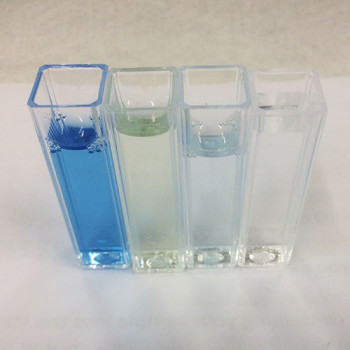
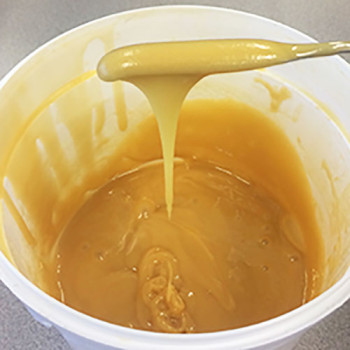
This research project aims to identify the cause of low diastase activity in fresh mānuka honey.
So far, we have reported that compounds unique to mānuka honey (MGO), or found in high concentrations (3-phenyllactic acid) accelerate the loss of diastase activity (opens in a new tab).
Investigation of phenolic compounds in mānuka honey
Megan Grainger
This project has two parts to it:
- Analysis of total phenolic compounds
- Identification and quantification of individual phenolic compounds
Phenolic compounds are known to have anti-oxidant and anti-inflammatory activity. It is known that mānuka honey contains a range of phenolic compounds at concentrations higher than other floral honeys. However, there is limited published information.
This project will determine the variation of phenolic compounds in mānuka honey.
Investigation of antioxidant activity in mānuka honey
Megan Grainger, Tameryn Stringer
Antioxidant activity in honey will be analysed by:
- Various spectroscopic methods
- Cellular assays
Differences between NZ native floral honeys and over time will be assessed.
Effect of heavy metals on bee brains
Megan Grainger
This project is investigating the elemental spatial distribution of heavy metal uptake in bees when they are exposed to difference concentrations of the metal.
The research is conducted at three tiers :
- cellular
- individual
- colony
This work will provide insight into whether bees are able to detoxify environmentally relevant concentrations of heavy metals from their diet.
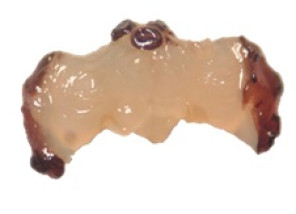
A bee brain (scale 2 mm wide).
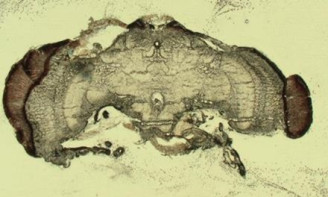
A microscope image of a slice of a bee brain.
Investigation of propolis
Megan Grainger, Merilyn Manley-Harris, Linda Peters, in collaboration with Plant and Food Research and Manawa Honey
This project (opens in a new tab) is investigating compounds found in New Zealand propolis. It builds on previous research carried out within the Honey Research Unit.
Amber Bell's 3 Minute Thesis
Watch PhD student Amber Bell present her thesis and its significance in just three minutes, using only one static slide, as part of the 3 Minute Thesis competition.

Past projects
Conversion of dihydroxyacetone to methylglyoxal
Megan Grainger, Merliyn Manley-Harris
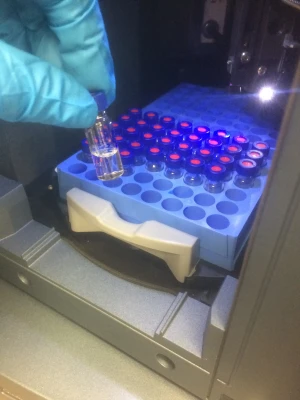 This work investigated the effect that time and temperature had on the chemical reaction of dihydroxyacetone converting to methylglyoxal. This was the first prediction model to track these changes. Forecast models are now used routinely in the industry to help honey producers with correct storage of batches of honey.
Contact us and connect
If you are a scientist or work in the Apiculture Industry and wish to support or collaborate with the Honey Research Unit, please get in touch to discuss future research.