Getting the shake just right – not too hard and not too light – could help blueberry orchards significantly reduce wastage and increase profits, thanks to a new product being developed by University of Waikato engineering students.
The technology will be showcased at Fieldays at Mystery Creek from June 10 – 13.

Mechanical engineering student Thomas Hocking
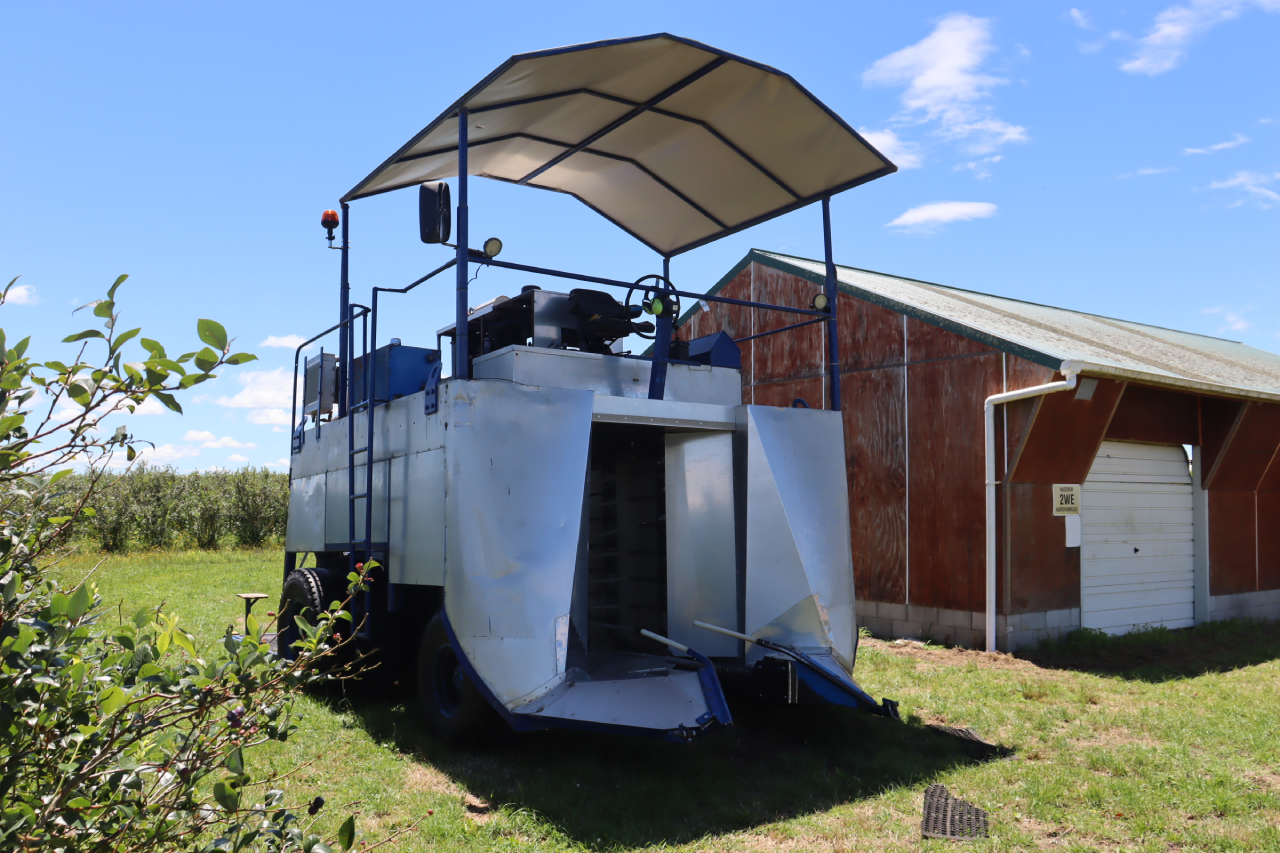
After spending several years driving blueberry harvesters, third-year mechanical engineering student Thomas Hocking noticed major inconsistencies and inefficiencies in the fruit yield with the current systems.
“So, one day after work, I went home and developed a rough sketch of an automation system for these harvesters: a better fruit checking system,” he says.
“As a driver, I’d be working 12-hour days, turning a dial every five minutes to make micro-adjustments that could affect profits each season.”
Thomas believed there had to be a more efficient way to ensure harvesters were collecting more ripe blueberries and fewer green ones.
“The fruit moves along a conveyor belt after it’s harvested. Our AI model scans each individual berry and determines its ripeness: whether it’s unripe, partially ripe, or overripe,” he says.
“That information then feeds into an algorithm which determines whether the harvester is shaking too hard and needs to slow down, or if it’s shaking too lightly and not collecting enough berries.”
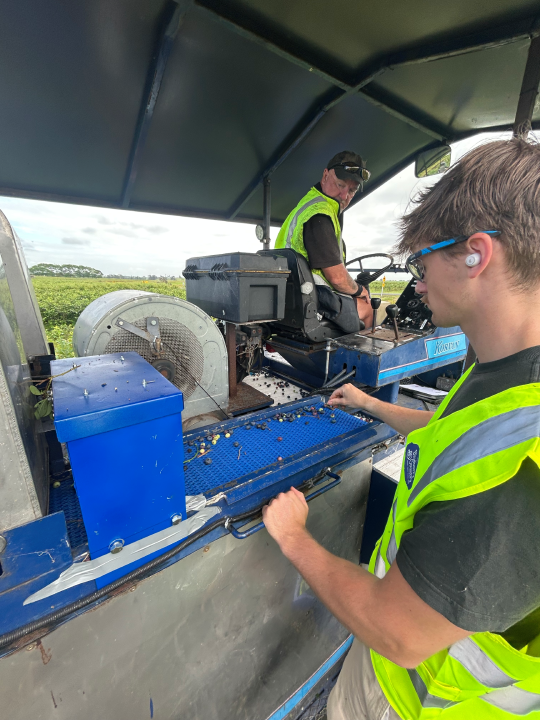
The AI model scans each individual berry and determines its ripeness
Thomas says the goal is to have around 80% ripe blue fruit on the conveyor belt. If more than 20% of the berries are green, the machine is likely damaging the plant and harvesting fruit too early.
“Our AI model is very accurate; that’s not the hard part,” he says. “The real challenge is developing the algorithm that can adjust the speed of the beaters in real time.”
Thomas says that in the current market there are either older harvesters with no automation that are cheaper, or fully automated harvesters that cost around $700,000 or more.
“A lot of farms can't afford to buy a new harvester. There are a lot of older models in New Zealand, and many farms are still using them.”
Thomas says his product can be attached to older machinery, avoiding the hefty price tag of a brand-new harvester.
The goal is to have the product ready for next season.
The hardware is expected to cost around $5,000, with software subscriptions costing approximately $20,000 a year.
“We will provide analytics, IoT services, connectivity, and a range of additional features alongside the software.”
Thomas says orchard managers currently have little visibility of how harvesters are performing in real time. If they want an update, they often need to jump on a quad bike and drive 15 minutes across the orchard to check themselves.
By installing Wi-Fi-enabled technology on harvesters, key performance data can be sent directly back to the office, allowing managers to monitor operations in real time and either instruct drivers to make adjustments or make the changes remotely themselves.
The technology could save orchards thousands of dollars while also helping to reduce mistakes caused by worker fatigue after spending up to 12 hours a day harvesting.
It also has broader agricultural applications, with the potential to be used for crops such as raspberries, olives, wine grapes, and coffee beans.
“A lot of these crops are harvested in the same way by shaking them, so the produce falls onto two centralised conveyor belts.
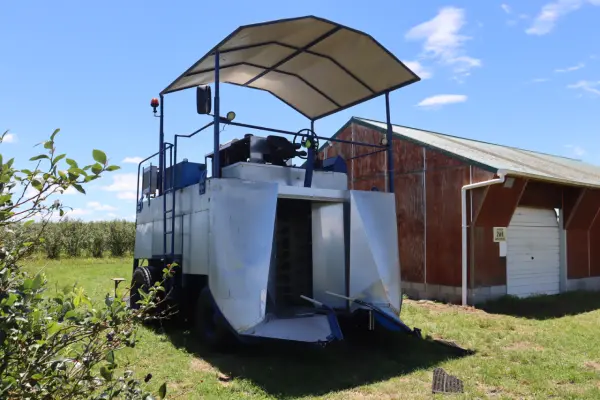
The technology can be attached to current harvesters
“We can go down that route, or we can take a more generic IT capability approach where we simply provide farms with ways to collect their data and present it in a user-friendly way.”
Thomas and his product are entered in the Prototype Award and will be at the Innovation Hub at Site IN21 at Fieldays.