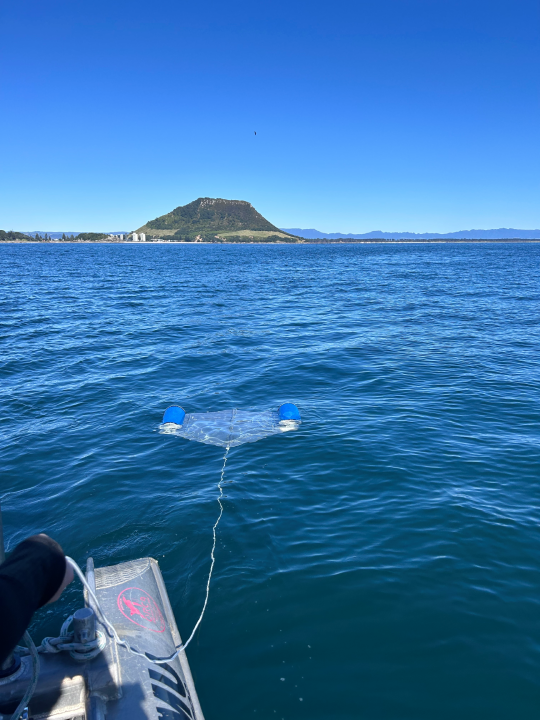
The University of Waikato’s Engineering Design Show (opens in a new tab) is diving into its 20th anniversary, with a low-cost towed underwater vehicle among the student projects making a splash.
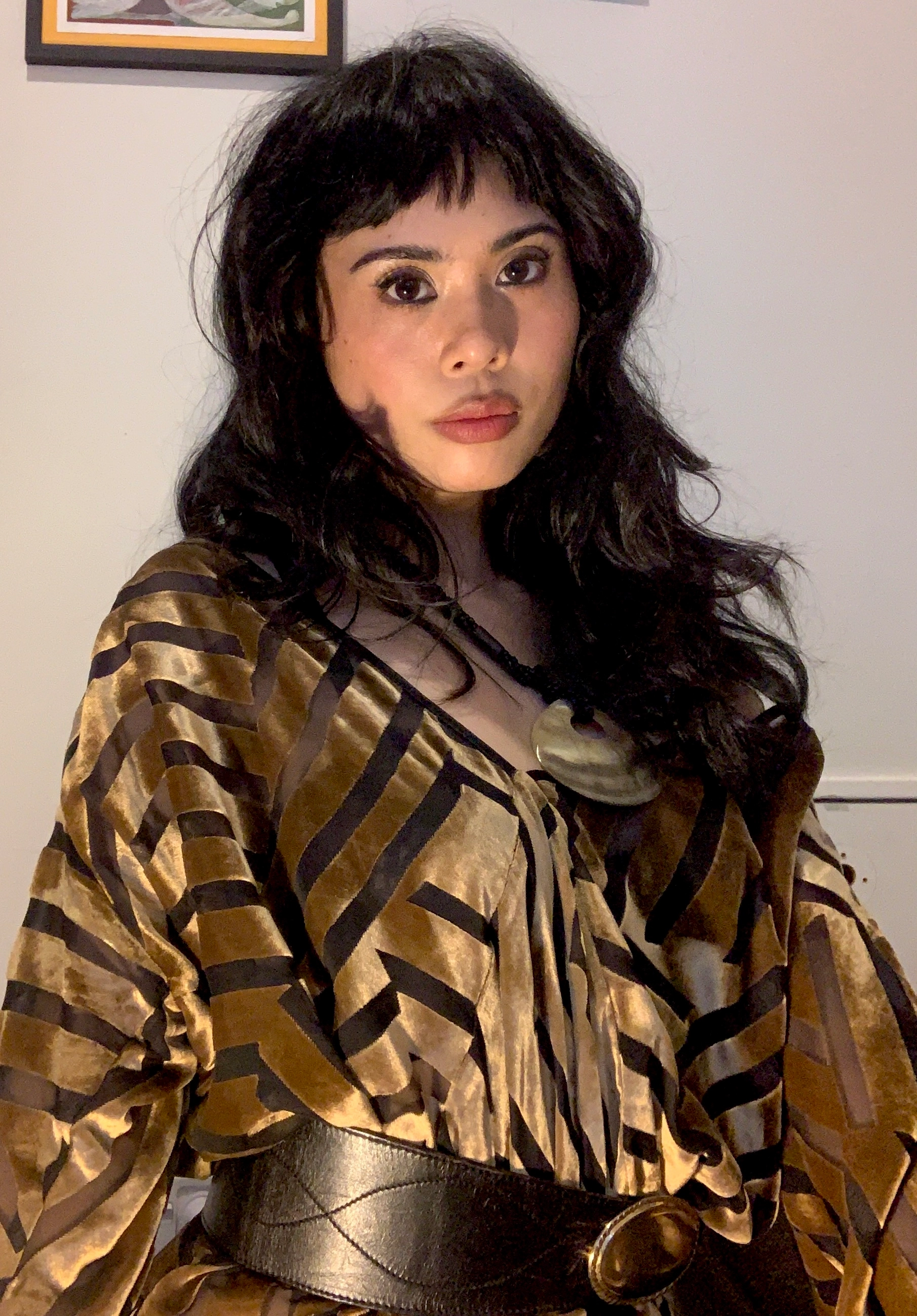
Engineering student Kahlia Cullwick’s project focuses on designing and developing the vehicle, including a model to predict its depth as it moves through the water.

Kahlia Cullwick
“The research and further development stage of my project involves understanding the vehicle’s motion in ‘flight’ and developing a depth prediction model,” Kahlia says.
“This is necessary to ensure it can safely ‘fly’ through the marine environment, where it may encounter fish, wreckage and other unexpected obstacles.”
Kahlia says future stages of the project could include developing stereovision for the vehicle, alongside other software or sensor advances tailored to users’ needs.
Developed at the University’s Tauranga campus, Kahlia’s project aims to provide a low-cost vehicle that uses AI and data processing to support marine surveying in Tauranga Harbour.
“Research and consultation with stakeholders highlighted the potential to use underwater video, photos and other sensor data to support marine surveying and research,” Kahlia says.
“Advances in AI offer opportunities to process this information quickly, but underwater vehicles with advanced surveying capabilities can be expensive.”
She says these costs can put the technology beyond the reach of smaller research facilities and communities with limited resources.
“Our towed underwater vehicle aims to make this technology more accessible through a simple, low-cost design.”
Fellow engineering student Joshua Fitzpatrick will showcase his research into fire-resistant binders made from locally sourced volcanic materials.
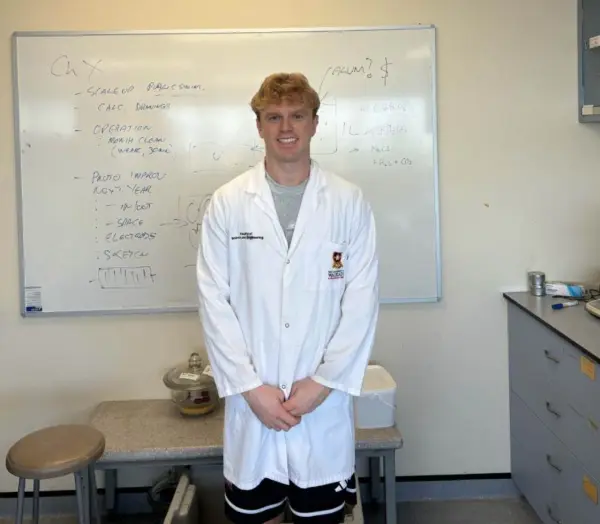
Joshua Fitzpatrick
The research explores cement alternatives known as geopolymers, made from pumice and ignimbrite – volcanic materials that are plentiful across the central North Island.
“These materials can set at room temperature, avoiding the high-temperature kiln used to produce conventional cement,” Joshua says.
Researchers tested the mixes after exposure to temperatures of 400, 600 and 800°C. Some showed slight increases in strength after exposure to 400°C.
“These early findings suggest local volcanic rock could form the basis of a lower-carbon building material with improved resistance to heat,” Joshua says.
“Next, we’ll investigate other factors affecting fire resistance and test the materials’ chemical durability.”
The University of Waikato’s Engineering Design Show celebrates its 20th anniversary this year, showcasing student projects that tackle real-world challenges.
Second, third and fourth-year students from across the School of Engineering will present their work to industry, prospective students and the public.
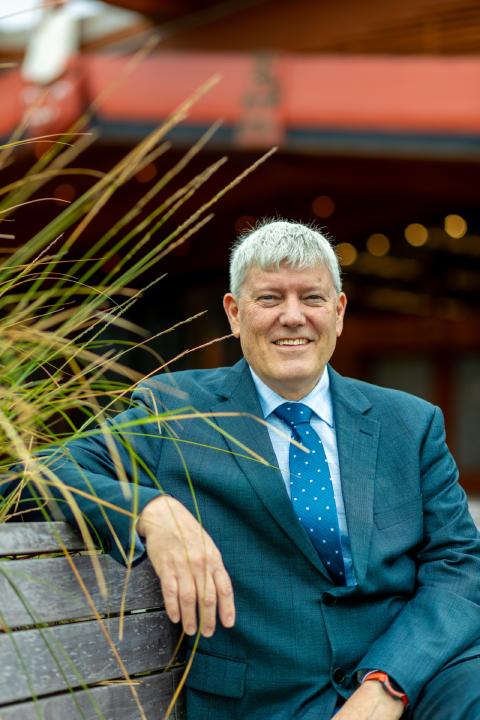
Professor Mike Duke, who established the show in 2006, says the event reflects the growth of engineering at Waikato, which now has more than 1,100 engineering students.

Professor Mike Duke
“When I first originated the show, the focus was on mechanical engineering projects, but today we are seeing cross-disciplinary projects from the eight engineering programmes, either linked to staff research, industry need or a combination of both,” he says.
“We’ve always believed that you learn engineering by doing engineering, and the show is a great way of demonstrating our ethos in practice.”
Projects from previous shows have gone on to commercial use, including Keegan Hall’s cricket box, now on the market with Cover, and Zane Whare’s robotic loading system, in full commercial operation with EC8.
Professor Duke says a Waikato engineering degree can lead anywhere, from developing autonomous vehicles alongside industry pioneers such as Robotics Plus to designing sustainable infrastructure.
“The Engineering Design Show is the launchpad for that next step. It puts our students face-to-face with industry leaders and potential employers who are actively looking for this kind of ‘hands-on, brains-on’ problem-solving capability.
“It isn’t just an exhibition; it’s a dynamic, live portfolio where the students’ hard work does the talking.”