Improving access to diabetes information and support for communities is a key focus for University of Waikato Research Officer Rebekah Crosswell (Te Whakatōhea).
As World Kidney Day is recognised globally, Ms Crosswell says raising awareness about diabetes is critical, as it remains one of the leading causes of kidney disease.
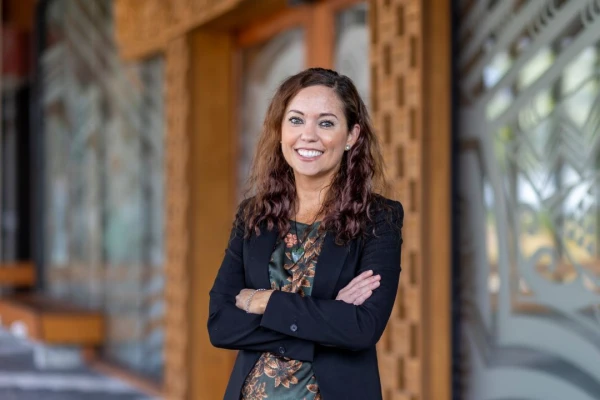
University of Waikato Research Officer Rebekah Crosswell
Improving access to knowledge and resources that help communities understand and manage diabetes is key to better health outcomes, particularly for Māori, who are three and a half times more likely to develop renal failure than non-Māori.
“It’s important that we take a by Māori, for Māori approach, with a Māori team working directly for the community,” she says.
This kaupapa sits at the centre of Ms Crosswell’s research through the Te Pou Whirinaki o Te Mate Huka project, which aims to strengthen community knowledge, support and prevention of Type 2 diabetes.
“We were fortunate to receive Health Research Funding, with the guidance of Anna Tiatia Fa’atoese Latu as supervisor, clinical support from Associate Professor Ryan Paul and Associate Professor Rawiri Keenan, and cultural support from Professor Tom Roa, and to partner with Ngā Miro Community Health in Ngāruawāhia, who were incredibly supportive.”
Through the Mate Huka diabetes programme, a community-based initiative that offers education and exercise classes, Ms Crosswell brought together people living with type 2 diabetes and their whānau to learn, share experiences and support one another. She also asked participants what resources they felt were missing.
What we heard was clear: people wanted better access to practical information, but they also wanted to hear real stories from people like them.
That led to the idea of creating a website that combines trusted resources with lived experiences from the community, because sometimes the most powerful support comes from hearing from someone who understands the disease, Ms Crosswell says.
The website brings together a range of resources, from recipes and information on medications and apps, to videos sharing the lived experiences of people living with diabetes, including one community member undergoing dialysis treatment. It also features practical guidance on managing medications, addresses common misinformation, and includes pūrākau – cultural storytelling and analogies – that help explain type 2 diabetes in simple and meaningful ways.
The community response to the Mate Huka Momo Rua website shows a clear demand for health tools that “look and sound like us”. Participants celebrated the platform’s interactive videos and intuitive design, noting that it provides a sense of cultural belonging that is often missing in mainstream diabetes education.
This year’s theme for World Kidney Day is Kidney Health for All: caring for people, protecting the planet.
Kidney Health NZ says 1 in 10 Kiwis have kidney disease, a lot without even knowing they have it.
Ms Crosswell says that effective self-management from the beginning can help prevent serious complications later on, which is why culturally responsive, empowering education is so vital. Kidney damage progresses slowly once it starts, so having the right information early is critical.
Ms Crosswell acknowledges that diabetes can be hard on the kidneys.
“This is referred to as diabetic nephropathy and many in our community have faced the reality of dialysis, but it doesn’t have to be that way. Our mahi is focused on providing the tools and knowledge that empower people to manage their health early, effectively, and on their terms.
“By understanding that diabetic kidney health can have silent symptoms, we can encourage one another to prioritise regular check-ins with your healthcare professional. This proactive approach ensures we stay strong and present for our tamariki and whānau for years to come.”

The website helps with a variety of information from medication to app suggestions
The next resource Ms Crosswell and the team are looking at adding to the website is an audiobook to complement the pukapuka already published, to ensure further accessibility.
Ms Crosswell feels it’s essential to ground acknowledgments for the project in the University's guiding principle: “Ko te tangata” – for the people.
“This research was fundamentally about the community, and they remain at the absolute heart of everything we have achieved. It is important to me and the research team that the final outputs reflected that this work was done by the people, and ultimately, remains for the people.”