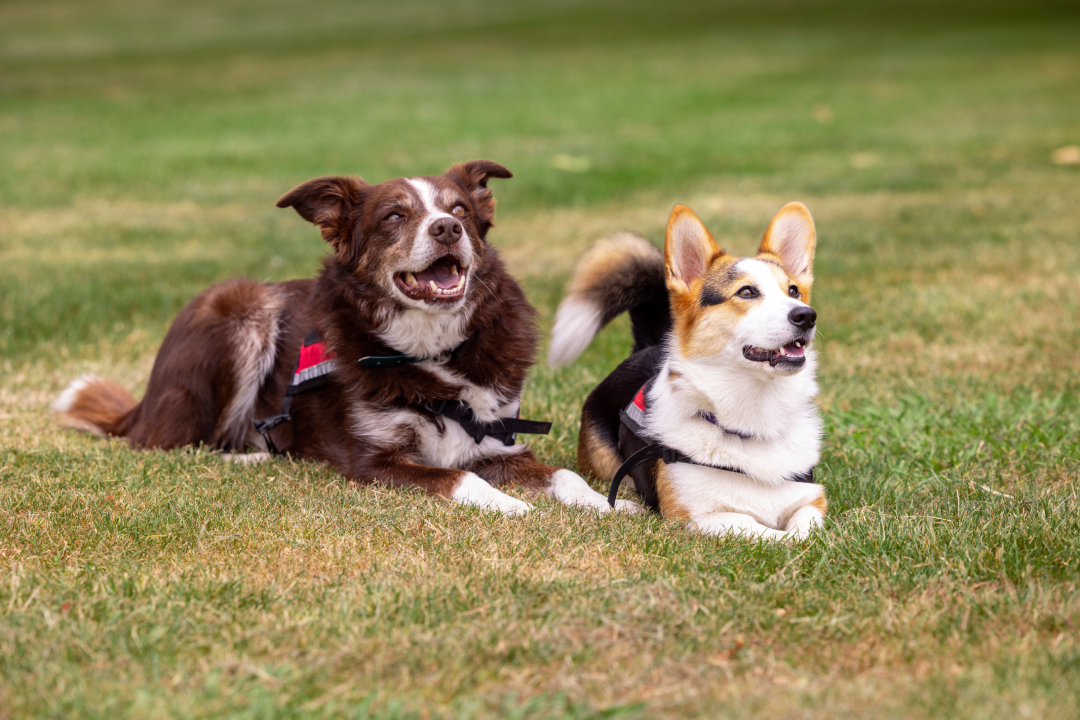
University of Waikato scent dogs Cino and Lilli are learning to sniff out gold clams, with the aim of supporting measures to control the spread of this invasive shellfish species.
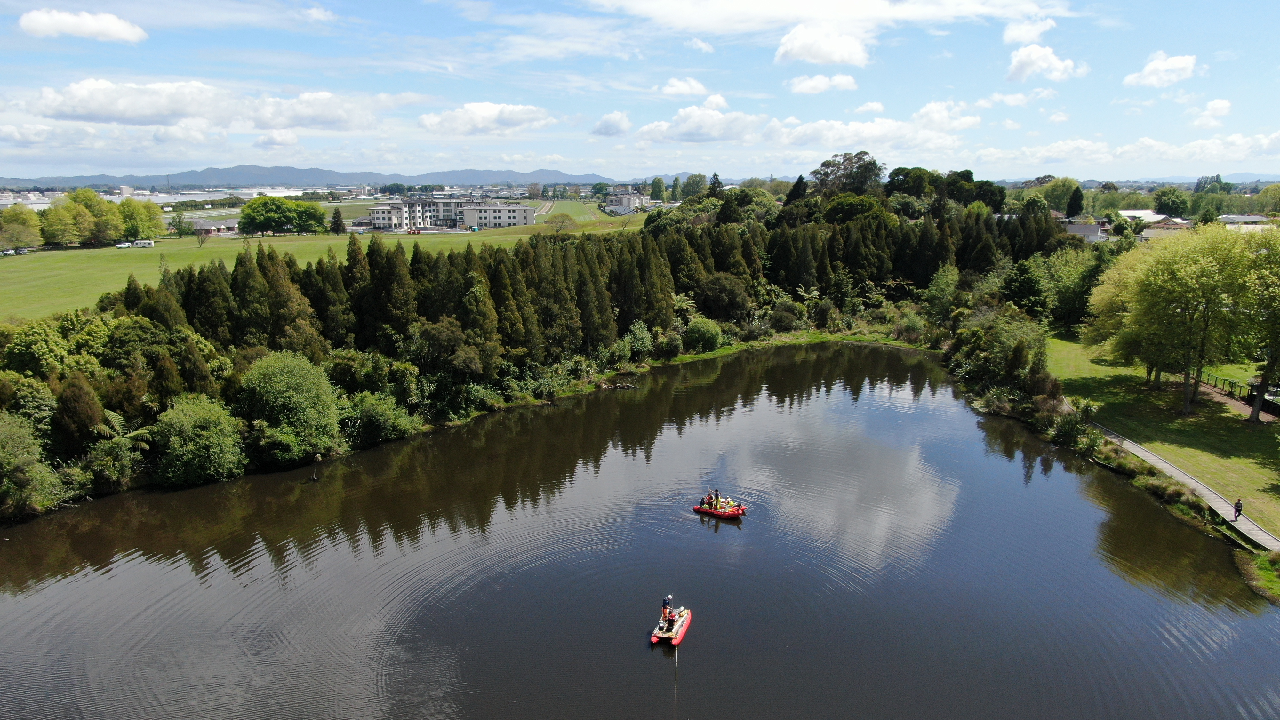
The introduced pest shellfish were first detected at Bob’s Landing, Lake Karapiro, in May 2023, and have since been found in Lake Rotomanu in Taranaki.
They pose a serious risk to the local ecosystem by outcompeting native species for food and habitat, leading to disruptions in ecological balance and declines in native populations. In particular, they threaten freshwater mussels (kākahi) and can also clog water-based infrastructure.
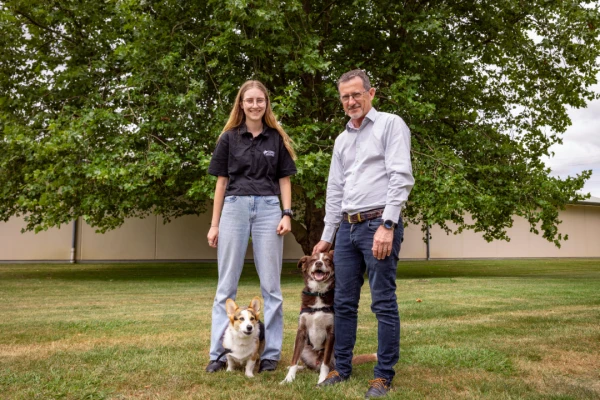
University of Waikato Research Assistant Lucy Tannahill, Lilli, Cino and Associate Professor of Biodiversity and Ecology Nick Ling
That’s where Cino, a 10-year-old Border Collie Heading dog cross, and Lilli, a 1.5-year-old Pembroke Corgi, come in, working alongside their owner and handler University of Waikato Research Assistant Lucy Tannahill.
“They started their journey at University searching for whitebait nests, so that's their main role, but due to those being out of season over summer we've moved to hopefully helping in the detection of the gold clams.
“They'll be trained to search boats, trailers, vehicles: anything that's been in contact with infected water before it enters uninfected lakes.”
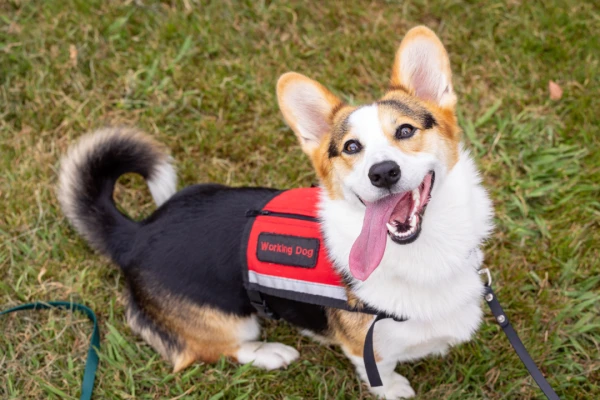
Scent detector dog Lilli is a Pembroke Corgi
“Trained dogs can be another measure of security, making sure that nothing's entering uninfected waterways.”
Miss Tannahill explains that the dogs are trained by pairing the odour of the clam with something that they really like, for example, toys or treats.
“You start with a jar with clams in it and whenever the dog goes and investigates, they get rewarded. They then start to pair the odour with their reward and are then taught to indicate the odour by lying down before being rewarded.”
Their training progresses through to being able to smell the clam scent on vehicles or other equipment and indicating that for a reward.
“It's more effective than humans searching the vehicle because the juvenile clams are pretty hard to see with the naked human eye.”
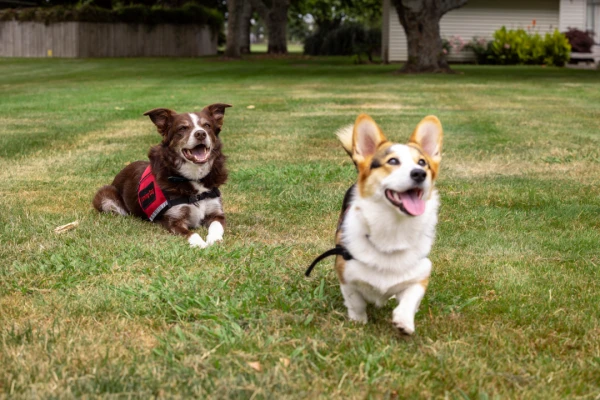
Cino and Lilli belong to research assistant Lucy Tannahill
Miss Tannahill also notes studies have shown that people are pretty welcoming to having dogs search their boats at boat ramps.
“I guess it feels less pressured than if the staff or people come out, and they start going through all your stuff.”
The dogs also enjoy having a job.
"They get so excited when they get there. They've got their working vests, I put them on, and they know that they're working. It's their favourite thing.”
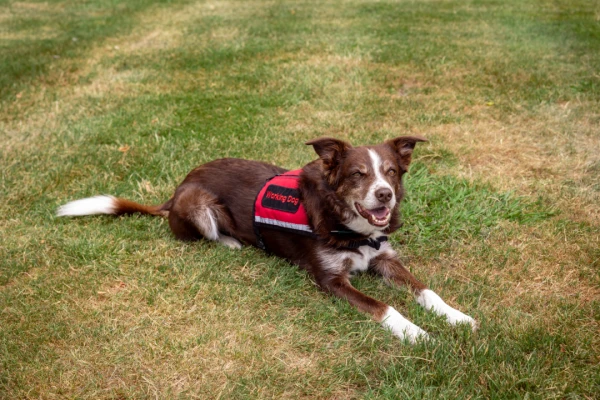
Ten-year-old Cino has been scent training for a number of years
Miss Tannahill first started doing Scent Sports for fun with Cino, which is where dogs are judged while hunting for essential oils.
“It’s growing in popularity in New Zealand, and having a background in Scent Sports has been pretty beneficial coming into this job. The dogs already understood how to hunt for things, so it was just introducing initially the whitebait odour and now the golden clam odour.”
Miss Tannahill is enjoying being part of something new – with this being the first time that dogs have been used to detect the unwanted clams. While dogs have been trained to detect invasive quagga and zebra mussels in the USA, as far as the team knows this is the first time that dogs have been deployed to detect golden clam which is also invasive in Australia, America and Europe.
"I think it's really interesting to be part of a project at this stage when we're trying to prevent it becoming a bigger issue in our country. It's nice to be part of something and also trying to make a difference in that.”
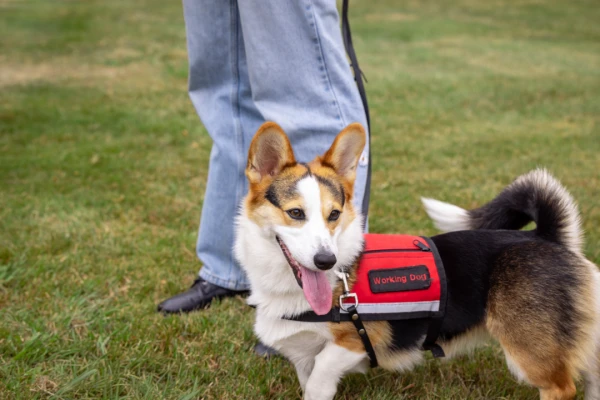
The dogs know it's time to work when the vest goes on
Associate Professor of Biodiversity and Ecology Nick Ling says the project is an excellent opportunity to contribute to the clam response.
“This work builds on our previous research into invasive species such as bullhead catfish and koi carp, particularly through our scent-detection programme.”
Dr Ling says working with Earth Sciences New Zealand is key as the organisation already has an active clam project and holds the necessary biosecurity clearances to work with both live and dead clams.
“Early detection is absolutely critical to any eradication effort. If we’re serious about controlling clams at a national level, we need reliable ways to detect them as early as possible.
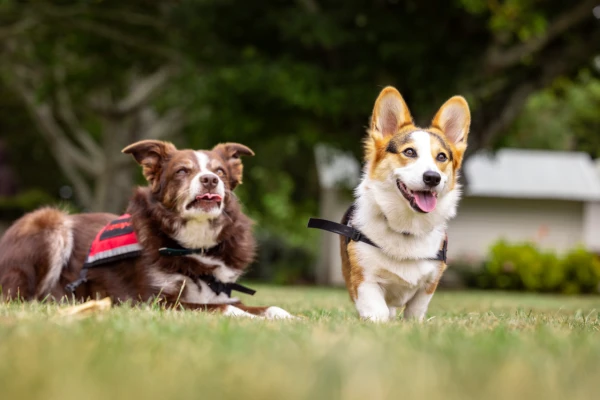
The team says it’s the first-time dogs have ever been trained to detect the golden clam.
“Scent detection dogs are one promising option, as they are incredibly sensitive and highly effective at locating these kinds of targets.”
Dr Ling says New Zealand has some of the strictest biosecurity regulations in the world, particularly at its borders, but occasionally pests still slip through.
“Sometimes this happens unintentionally, for example, through ship fouling or items carried in luggage without people realising. In other cases, the introduction is deliberate.”
The project not only provides valuable opportunities for students and researchers, but also actively involves the wider community.
“While the two dogs Lucy is using on the clam project are her own, another project she’s just starting which focuses on invasive red-eared slider turtles has recruited three dogs from the community,” Dr Ling says. “In fact, most of the dogs involved in our scent-detection research group are community-recruited.”
Members of the public volunteer their dogs, dropping them off during the day and picking them up again in the evening.
Dr Ling says that while it’s rewarding for owners to know their dogs are contributing to meaningful research, the projects also help shift perceptions about animal-based research.
“Research involving animals doesn’t have to be invasive or harmful,” he says. “It’s not all about cruel procedures or testing cosmetics and new drugs. This work is genuinely beneficial not just for the science, but for the animals involved as well.”