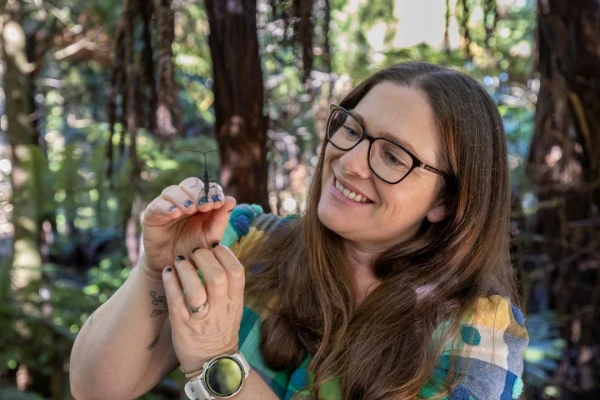
Dr Chrissie Painting
Famous for their oversized necks and dramatic battles, giraffe weevils pepeke nguturoa now face a less visible threat: climate change. University of Waikato researcher Dr Chrissie Painting is investigating whether they can adapt quickly enough to survive a rapidly changing environment.
Dr Painting acknowledges that insect numbers are starting to decline worldwide. She says there are a lot of different reasons for this, including habitat loss, invasive predators and disease, with climate change a major contributor.
Dr Painting was awarded a New Zealand Mana Tūānuku Research Leader Fellowship by the Royal Society Te Apārangi to study how insects are coping with climate change.
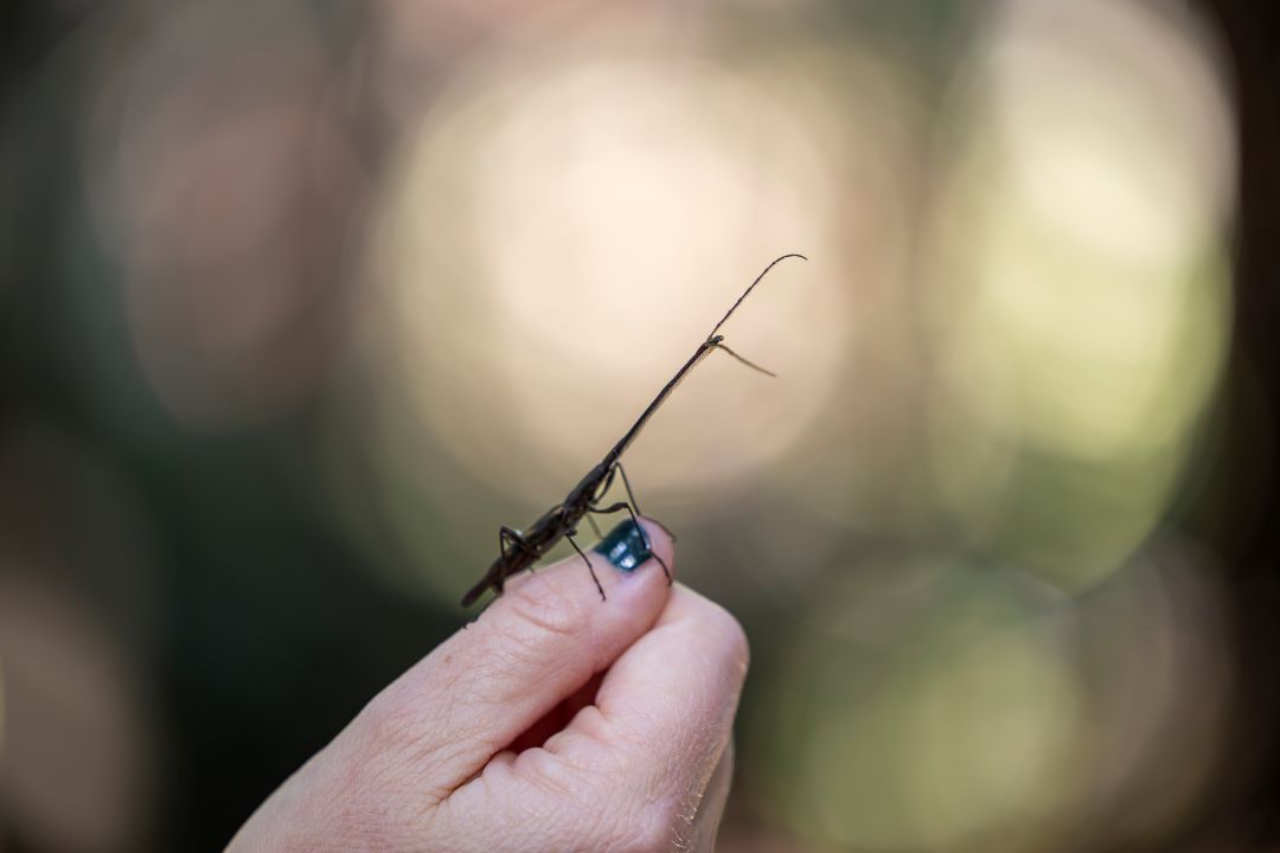
Giraffe weevils are unique to New Zealand
“Insects are coated in a waxy layer called cuticular hydrocarbons, which acts as a waterproof barrier to stop them from drying out, especially in hot conditions. This layer is essential for surviving heatwaves and temperature changes, and it can also help protect against parasites and disease.
“These chemicals are flexible, meaning insects can adjust them in response to temperature. But with climate change happening so quickly, they may not be able to adapt fast enough. Understanding how this protective system responds to rising temperatures is a key part of the research,” she says.
The cuticular hydrocarbons play another crucial role: they help insects communicate with each other.
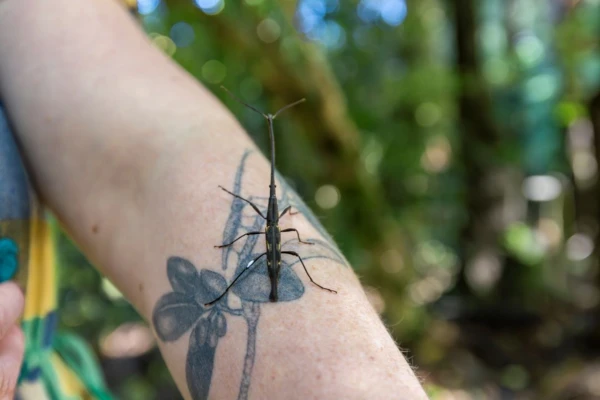
Dr Painting has been researching giraffe weevils since 2009
Insects can’t often speak, so they rely heavily on chemical communication. Cuticular hydrocarbons are a key part of that “language” because they can change quickly and carry important signals.
“They help insects recognise nest mates, identify members of their own species, and distinguish males from females, ensuring they find the right mate.”
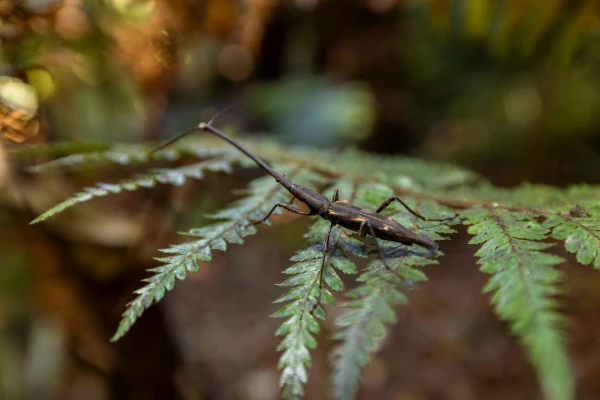
Giraffe weevils are endemic to New Zealand and are known for their dramatic size differences. Males can range from just 15 millimetres to an impressive 90 millimetres long. Females vary in size too, and the species is famous for its unusual mating behaviour.
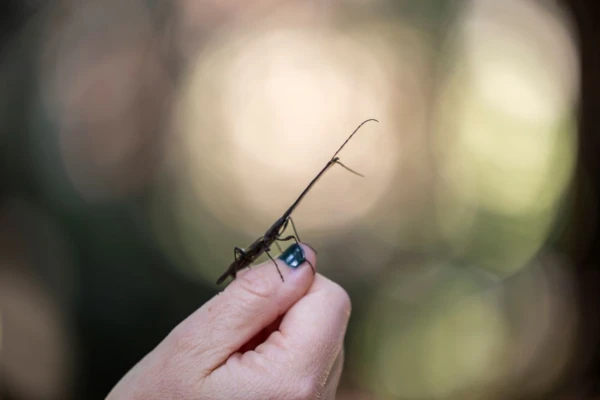
Giraffe weevils have a waxy layer which stops them drying out
“They have an elongated snout, or rostrum, which males use as a weapon to fight rivals, sometimes even pushing them off fallen trees. In summer, males and females gather on recently fallen logs, where females lay their eggs in the wood. While females prepare egg-laying sites, males battle for the chance to mate, a behaviour that has driven the evolution of their extraordinary long snouts.”
Dr Painting, who is a Senior Lecturer in Te Aka Mātuatua School of Science, and a Principal Investigator at Te Pūnaha Matatini Centre of Research Excellence, said her PhD student Lucy Southwell-Hambly will test a number of ideas including if rising temperatures affect the giraffe weevils' chemical signals.
“Using controlled lab incubators, Lucy will expose weevils to different temperatures and humidity conditions to see how quickly their chemical profiles change. This will help determine how flexible and how resilient they may be in the face of climate change.”

Dr Painting says that insect numbers are starting to decline worldwide
The research will also ask whether changes that help weevils cope with heat could interfere with their ability to communicate, potentially affecting mating and competition.
Giraffe weevils can be found in the Waikato, although not commonly in Hamilton but are easy to spot “once you know what you are looking for” says Dr Painting, who has been researching this insect for nearly two decades.
“They prefer mature forests, where large fallen trees provide the decaying wood they need. They would almost certainly have been present before widespread forest clearance,” she says.
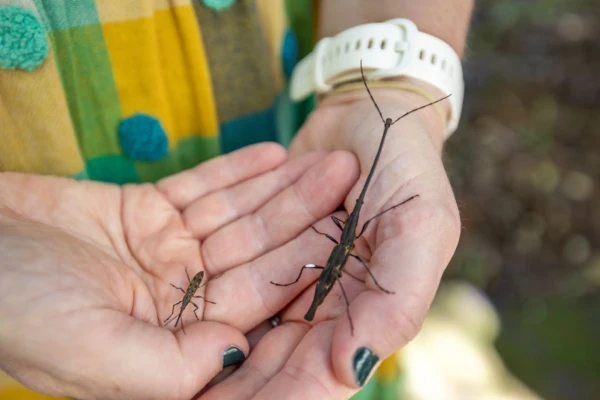
A female and male giraffe weevil
“I’d love to see them return to the city as gully systems continue to be restored.”
Giraffe weevils have several important ecological roles to play.
“As larvae, they tunnel through dead or decaying wood, helping to break it down and recycle nutrients back into the ecosystem. As adults, they are also likely food for insectivorous birds such as ruru, as well as large spiders and other predatory insects.”
It means if they were to become extinct then our forests would be missing an important decomposer as well as the loss of a large-bodied potential prey species in our forests.
“I think importantly though, we'd lose a unique species, the only one of its kind in Aotearoa - the giraffe weevil is the only representative of its subfamily in New Zealand. Most related species are found in the tropics.
“It's also the longest of the entire brentidae weevil subfamily, of which there are over 1700 species. So, their decline would be a big loss to our biodiversity.”