A University of Waikato Tauranga graduate has received international recognition for research exploring how communities can co-design smart city technology. Developed in partnership with Tauranga City Council and the local community, the study has been published as an Association for Computing Machinery (ACM) long paper and will be presented at the OzCHI 2025 conference in Sydney on 3 December, one of Australasia’s leading forums on human–computer interaction and design.
Ben Jones, who is from Pāpāmoa, completed his Bachelor of Science degree earlier this year and now works as a Graduate Assistant in the University’s Au Reikura School of Computing and Mathematical Sciences while completing a Master of Science (Research) in Computer Science. He collaborated with Dr Jessica Turner, Senior Lecturer in Software Engineering, on research exploring how residents, students, council staff and community members can co-design technology that responds to the needs of their city.

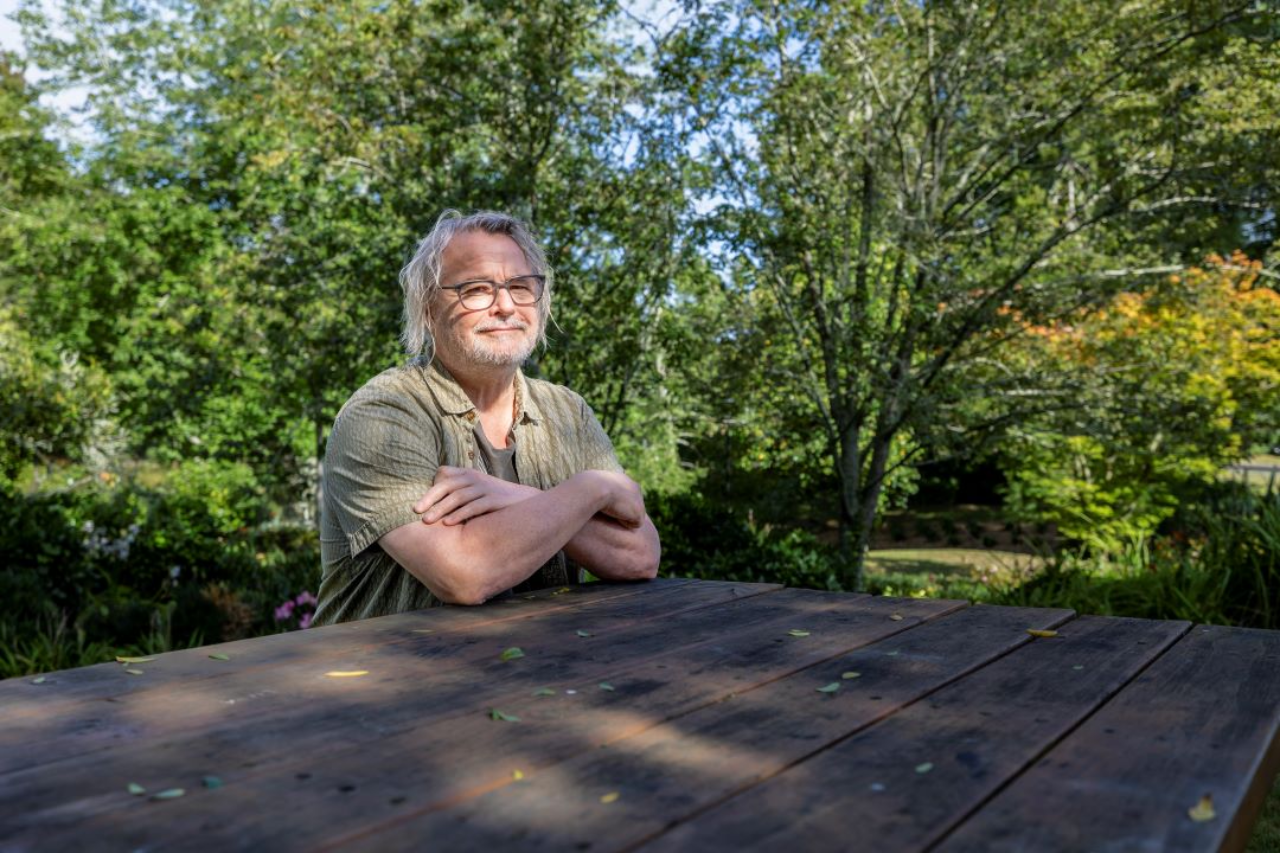
Ben Jones, Graduate Assistant in the University of Waikato's Au Reikura School of Computing and Mathematical Sciences
Their study, Co-designing Smart Cities, is among the first of its kind in New Zealand to investigate how co-design can guide the development of smart city technology in an Australasian context.
Ben says the experience has been both rewarding and exciting. “It has been amazing seeing research we started in Tauranga recognised internationally,” he says. “The project began as part of my Summer Research Scholarship with the University, which gave me the chance to explore how technology can support real community needs. It showed how collaboration between students, researchers and the Council can create ideas that are both innovative and grounded in what people actually want.”
“Seeing how a large organisation like Tauranga City Council operates was a valuable learning experience, and I really appreciated their openness to exploring what technology could make life better for our city.”
The project explored what Tauranga residents value most about their city and how technology could enhance everyday life. Using an interactive design toolkit aligned with the United Nations Sustainable Development Goals, the research team surveyed 248 residents and ran a co-design workshop with 13 participants. Traffic congestion, environmental monitoring and public safety emerged as top priorities, forming the foundation for ideas that combine innovation with Tauranga’s strong sense of place.
To make complex technology accessible, the team used two international toolkits, the Tiles IoT Inventor Toolkit developed in Norway and the Futurice IoT Service Kit, which turn technical problem-solving into hands-on creative play. These tools helped participants of all ages and backgrounds explore how smart technologies could support community wellbeing, environmental care and connection.
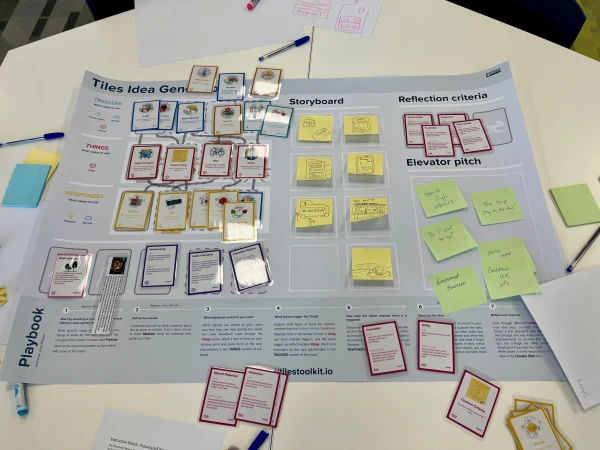
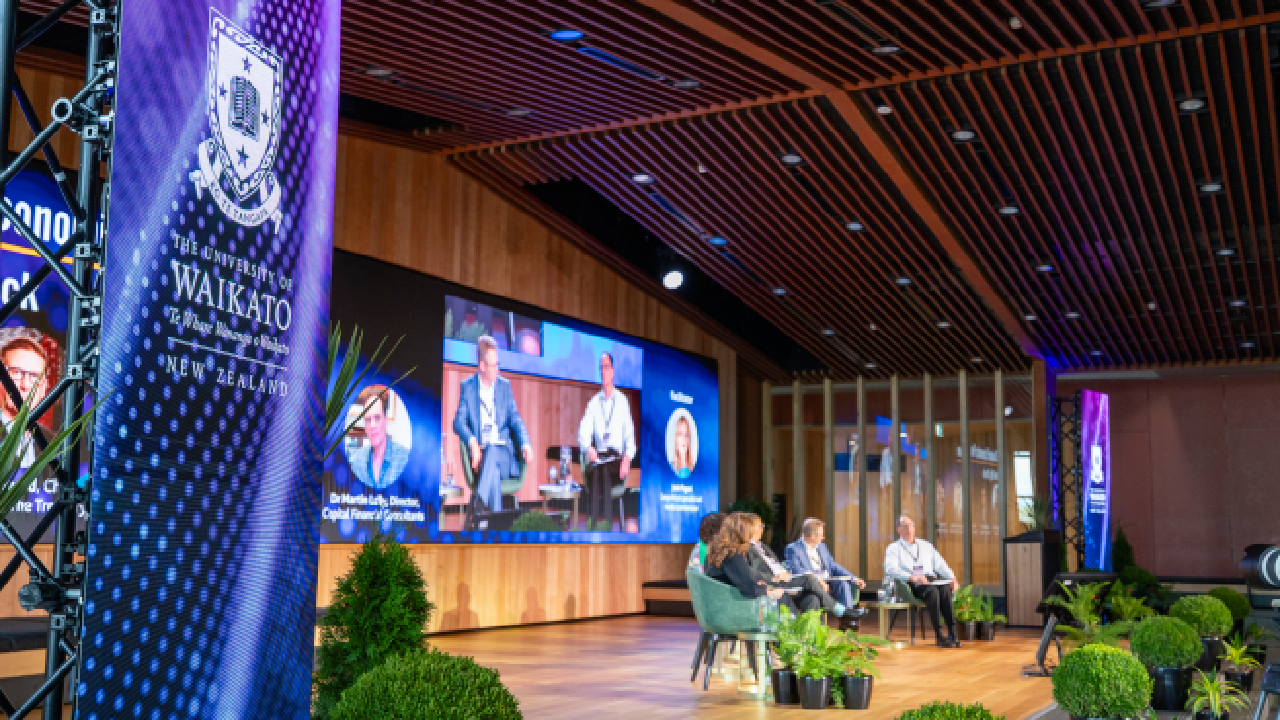
Tiles Idea Generator brainstorming session with local community members
“This research is about designing with people, ensuring they’re not just consulted, but shaping the technologies that impact their lives,” says Dr Turner. “When residents and students collaborate with council, you get solutions that are both innovative and realistic for the city.”
The research collaboration with the Council is exploratory in nature, with the Council’s role focused on supporting research and community engagement rather than implementation.
“Partnering with the University of Waikato on the Summer Research Programme has been incredibly rewarding,” says Dave Parsons, Senior Programme Manager at Tauranga City Council. “A year on, we’re excited to prototype one of last year’s concepts and explore how local partnerships can help bring these ideas to life.”
“This research demonstrates the value of human-centred design,” says Holly Simons, Innovation Lead at Tauranga City Council. “It can help the public sector design solutions that respond to real community needs to create meaningful value in people’s daily lives.”
The project also highlights growing international interest in how co-design approaches can ensure smart city initiatives genuinely reflect local priorities and cultural identity. Concepts developed through the workshop were later assessed against a council ranking framework, considering feasibility, community benefit and innovation, to identify those with the strongest potential for development.
The findings have since inspired two new summer research scholarships with Tauranga City Council. Software Engineering student Jack Unsworth and Computer Science student Blake Smith will work together to develop a prototype of the Manu Meter, a concept first imagined through the co-design workshops.
The Manu Meter uses artificial intelligence and environmental sensors to celebrate the fun of manu splash-jumping on Tauranga’s waterfront while promoting greater awareness of water safety and water quality. One student will focus on environmental factors such as water clarity, depth and tidal conditions, while the other will explore computer-vision technology to measure splash height using cameras and sensors. It is a distinctly Tauranga mix of creativity, community and care for the environment.
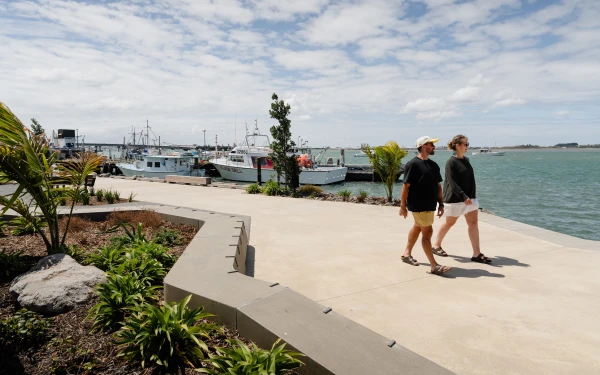
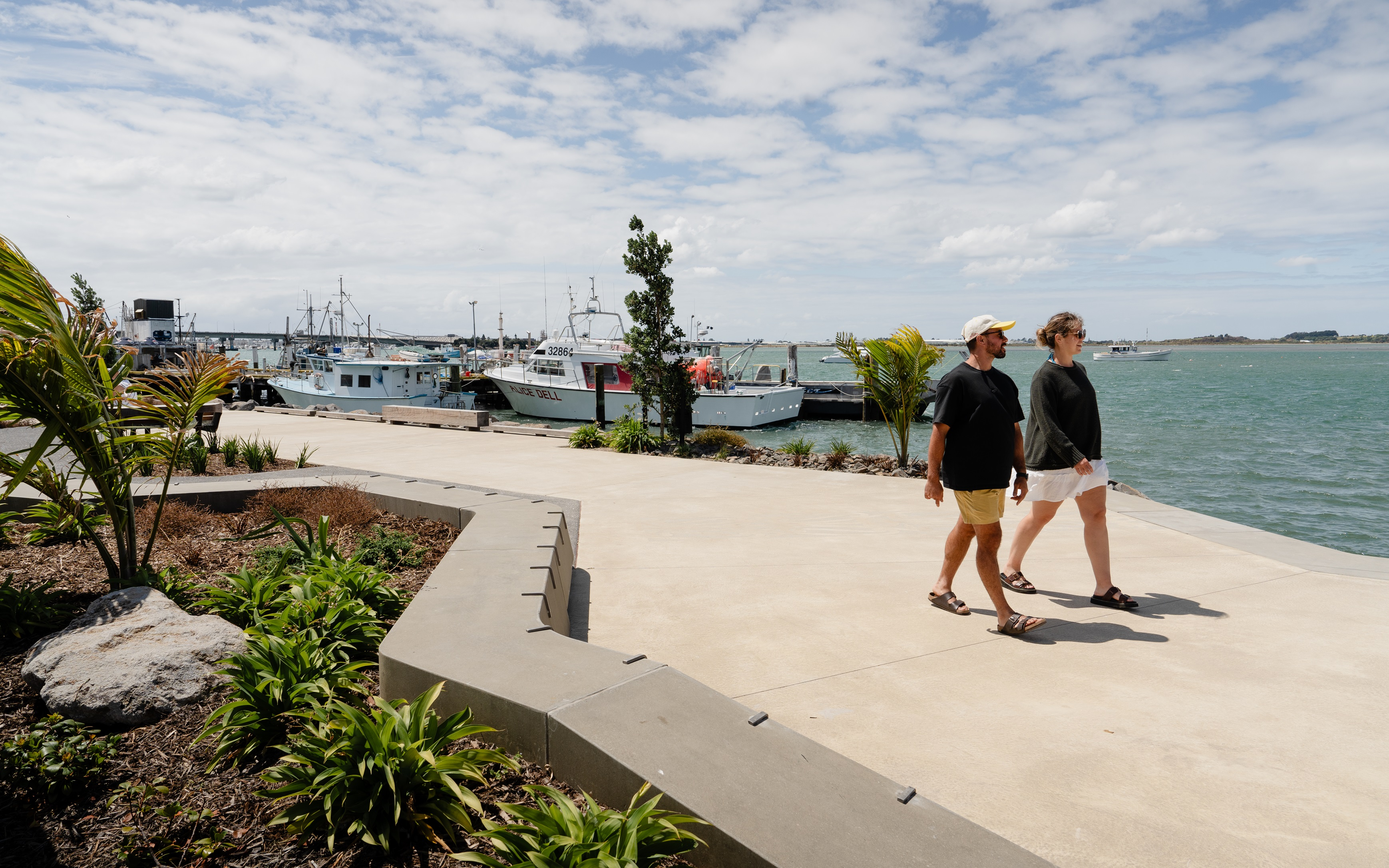
Tauranga waterfront boardwalk. Credit: Roady. Tourism Bay of Plenty.
Dr Turner says projects like this demonstrate the real-world impact of collaboration between the University and Council.
“We’re giving students the opportunity to see their research make an immediate difference,” she says. “It shows how universities can act as connectors between community, industry and local government to co-create ideas that matter.”
As Tauranga continues to grow as a hub for innovation and research, the project highlights how the University’s city campus helps nurture local talent and strengthen partnerships across education, industry and community.