
Getty Images
Authors
- Alexander Gillespie (opens in a new tab),
Professor of Law, University of Waikato (opens in a new tab) - Claire Breen (opens in a new tab),
Professor of Law, University of Waikato (opens in a new tab)
With only six days left for submissions to the select committee examining the Aotearoa New Zealand Public Media Bill (opens in a new tab), it is becoming clear this crucial piece of legislation has some significant shortcomings. These will need attention before it passes into law.
The eventual act of parliament will officially merge Radio New Zealand (RNZ) and Television New Zealand (TVNZ) into a new non-profit, autonomous Crown entity. Supporters, including Broadcasting Minister Willie Jackson (opens in a new tab), argue the new organisation will help strengthen public media. Others have expressed concerns (opens in a new tab) about the new entity’s likely independence, given its reliance on government funding.
TVNZ chief executive Simon Power echoed those concerns earlier this week. He strongly criticised (opens in a new tab) the bill’s current provisions for statutory and editorial independence:
I am not worried about that kind of influence from this government or the next government. I just think if the legislation is to endure it has to be robust enough to withstand different types of governments over time.
Power is right to warn against complacency about media freedom. While New Zealand still ranks highly in the World Press Freedom Index (opens in a new tab) (11th out of 180 countries), there have been times in the past when governments have manipulated or directly censored local news media to suit their own political agendas.
In the current age of “fake news” and disinformation, we need to be especially vigilant. While there are good aspects to the proposed law, it fails to adequately deal with several pressing contemporary issues.
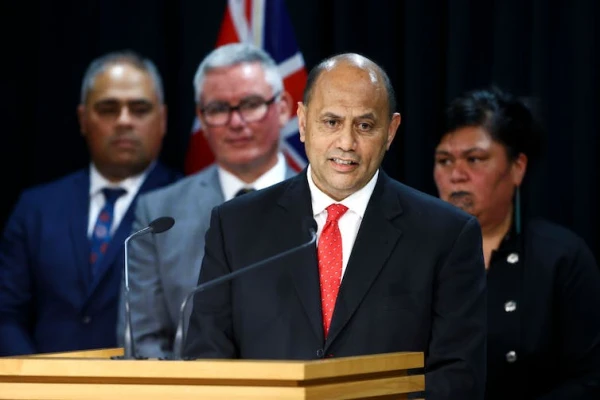
Broadcasting and Media Minister Willie Jackson says the Aotearoa New Zealand Public Media Bill will strengthen public media. Hagen Hopkins/Getty Images (opens in a new tab)
Trust in government and media
As last year’s Sustaining Aotearoa as a Cohesive Society report highlighted, trust in government and media, and the social cohesion it creates, is a fragile thing. What can take decades to build can fragment if it isn’t nurtured.
According to some global measures, this trust is declining (opens in a new tab). New Zealand still ranks higher than the OECD average, but distrust is growing here. The Auckland University of Technology’s Journalism, Media and Democracy (JMAD (opens in a new tab)) research centre reports that people’s trust in the news they consume dropped by 10% (opens in a new tab) between 2020 and 2022.
At the same time, the speed and reach of propaganda, misinformation and disinformation have increased dramatically (opens in a new tab), as witnessed during the COVID pandemic. New Zealand was not immune, as the Disinformation Project has shown. Unreliable and untrustworthy information spread almost as quickly as the virus itself, with an unprecedented spike during the protest at parliament earlier this year.
Finally, journalism continues to be a dangerous profession. Over 1,200 media professionals worldwide were killed for doing their jobs (opens in a new tab) between 2006 and 2020. Online violence against women journalists (opens in a new tab) in particular is on the rise. New Zealand journalists have also found themselves the target of increased levels of animosity (opens in a new tab).
What the new law needs
Rebuilding trust in the public media starts with firmly enshrining their independence in law. The proposed charter promises the new entity will demonstrate editorial independence, impartiality and balance. This is a good start, but it is only one of ten principles.
This key principle (and ways to measure it) should stand alone in the new law to create a bulwark against any rising fear that governments, either directly or by manipulating budgets and appointments, have undue influence.
The commitment to independence should also be reinforced by ensuring some seats on the proposed entity’s board are reserved for representatives of parliamentary opposition parties. Independent annual review of the entity’s independence and integrity should also be required.
Second, there needs to be a clearer commitment to integrity of information, beyond the existing standards of the news being reliable, accurate, comprehensive, balanced and impartial. Recognising the threat of misinformation and disinformation, and developing ways to counter it, should be a core part of the new entity’s remit. As the bill stands, it is only part of four considerations related to one of several “objectives”.
And thirdly, the law must recognise the independence of journalists and the need to protect them. It’s something of an anomaly that a bill to protect journalists’ sources (opens in a new tab) was put before parliament (although subsequently withdrawn), while journalists themselves don’t enjoy similar protections.
The new public media entity could lead the way in lobbying on behalf of all journalists to ensure those protections, and the tools journalists require to be an effective fourth estate, are consistent with best international practice.
If the law in its final form reflects these fundamental principles, it will go a long way to allaying legitimate concerns about the future independence and integrity of public media in Aotearoa New Zealand.
Alexander Gillespie (opens in a new tab), Professor of Law, University of Waikato (opens in a new tab) and Claire Breen (opens in a new tab), Professor of Law, University of Waikato (opens in a new tab)
This article is republished from The Conversation (opens in a new tab) under a Creative Commons license. Read the original article (opens in a new tab).