Getty Images
Authors
- Alexander Gillespie,
Professor of Law, University of Waikato - Claire Breen,
Professor of Law, University of Waikato
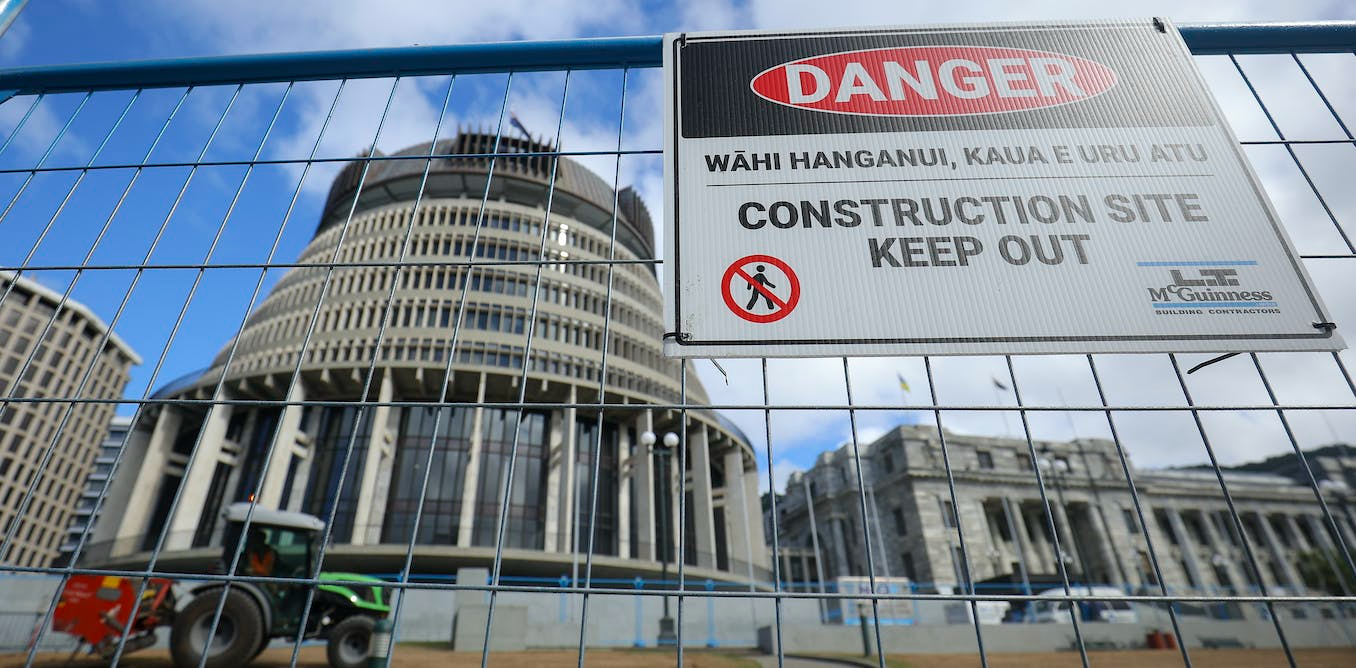
New Zealand is no stranger to protest, or protest violence. But what happened in the grounds of parliament over 23 days in February and March was unique – and, in the end, extreme.
A country that grinds its teeth at unruly freedom camping by tourists ended up with an unapproved campsite in one of the least appropriate places imaginable. And it ended violently.
How the government and parliament responds to what happened is important for both the future of legitimate protests and for the security of parliament itself.
A review of security arrangements for parliament has already been signalled, but the nature and funding of the protest itself also demands scrutiny. Overall, it may be that a law change, specific to the parliamentary precinct, is needed.
Keeping the grounds open
There is no specific legal right to protest. Rather, it is a manifestation of the wider rights to freedom of movement, association and peaceful assembly. Internationally, these are protected by the Universal Declaration of Human Rights and its related framework of human rights treaties, and domestically by the New Zealand Bill of Rights Act.
In practice, the right to protest is evident in the country’s history. Events that shaped generations and made New Zealand one of the freest and most liberal democracies occurred outside on the parliamentary grounds as much as within the legislative chamber.
From women’s rights and redress for injustices done to Māori, to workers’ rights and foreign policy reform, parliament grounds have been a forum for dissent. Indeed, if there was room for another sculpture in the grounds, it should be of ordinary people delivering a petition to lawmakers.
Keeping the grounds as open and unfenced as possible is therefore critical. A new, bespoke law for the parliamentary precinct – including clear pathways for lawful and orderly protest – should be created.
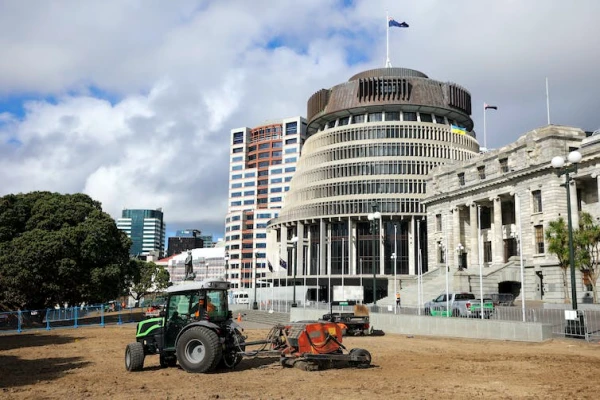
Parliament grounds are undergoing repairs after damage caused during the 23-day occupation by anti-government protesters. GettyImages
Rules with consequences
It’s important to remember that the right to protest is not absolute. There is no right to violent or unlawful protest. But while existing laws for prosecuting lawbreakers are adequate, there are clear gaps.
Firstly, New Zealand has more laws about respecting the flag than about protecting the epicentre of its democracy. Even at a symbolic level, this needs to change.
A starting point would be to place parliament alongside Te Pitowhenua, the Waitangi Treaty Grounds, as a national historic landmark. Citizens should be encouraged to look at the capital of the nation’s political and legal history with the same respect.
Currently, parliament grounds are vested in the Queen under the effective control of the Speaker of the House, whose job it is to allow and moderate protests. The rules prohibit a variety of actions, including:
- damaging lawns and flower beds
- interfering with traffic flows and driving onto the grounds
- mounting the main steps of parliament or interfering with the use of parliament buildings
- excessive amplified sound and erecting structures such as tents
- general breaches of the peace and protests lasting more than eight hours or into the night.
To enforce the rules, the speaker can issue a notice under the Trespass Act. But the ineffectual nature of these powers was laid bare during the occupation, with protesters largely indifferent to the weak penalties.
Any new law specific to the parliamentary precinct should uphold the existing right and ability to lawfully and peacefully protest, but increase the penalties for non-compliance.
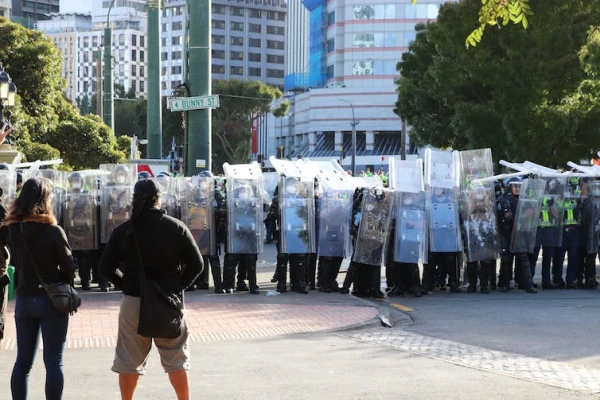
Riot police move in to end the occupation of parliament’s grounds and surrounding streets. GettyImages
Funding and foreign interference
Beyond the behaviour of protesters, their ideological origins and funding need to be better understood. Similar “anti-mandate” protests elsewhere are suspected of having received foreign funding. Did this happen in New Zealand?
It’s an important and difficult question. The flow of charitable support across borders for lawful purposes is a good thing. But charitable or other financial support may not always be benign.
There are already laws to protect New Zealand elections from foreign interference by banning foreign donations to political parties and candidates. That concern needs to extend to foreign interests trying to foster lawless or extremist behaviour within New Zealand protest movements.
Such transparency will necessarily involve examining the events at Parliament (and other protest locations) as a starting point, to see whether groups and individuals, either here and/or overseas, attempted to “incite, procure, or encourage violence, lawlessness, or disorder” under the Crimes Act, or breached broadcasting standards and advertising codes. There are also civil law questions, such as whether there was any wrongdoing by registered charities.
And beyond the legal considerations, there is the vexed question of how misinformation has spread as fast as the COVID virus itself.
Defending dissent
None of this is simple. And in the past, New Zealand has sometimes responded to protest or dissent heavy-handedly – for example after the hunger marches in 1932 and the waterfront lockout of 1951.
At other times, wiser counsel prevailed when it came to mending the fabric of society. An example of this was the creation of Independent Police Conduct Authority in the decade after the 1981 Springbok tour protests.
The challenge for lawmakers this time is to reach for deeper solutions t*hat address the importance of protest, but also fix the problem of how poorly the epicentre of our democracy was respected and defended. At the same time, understanding how this protest was different will be important.*
Clamping down on future protests is not the answer. Equally, preventing another episode such as the country has just witnessed is urgent.
Alexander Gillespie, Professor of Law, University of Waikato and Claire Breen, Professor of Law, University of Waikato
This article is republished from The Conversation under a Creative Commons license. Read the original article.
