Building sustainable and inclusive economic systems for high-value growth
At the University of Waikato, we recognise that both sustainable development and the generation of decent¹ jobs depend on how economic systems are designed, regulated and connected.
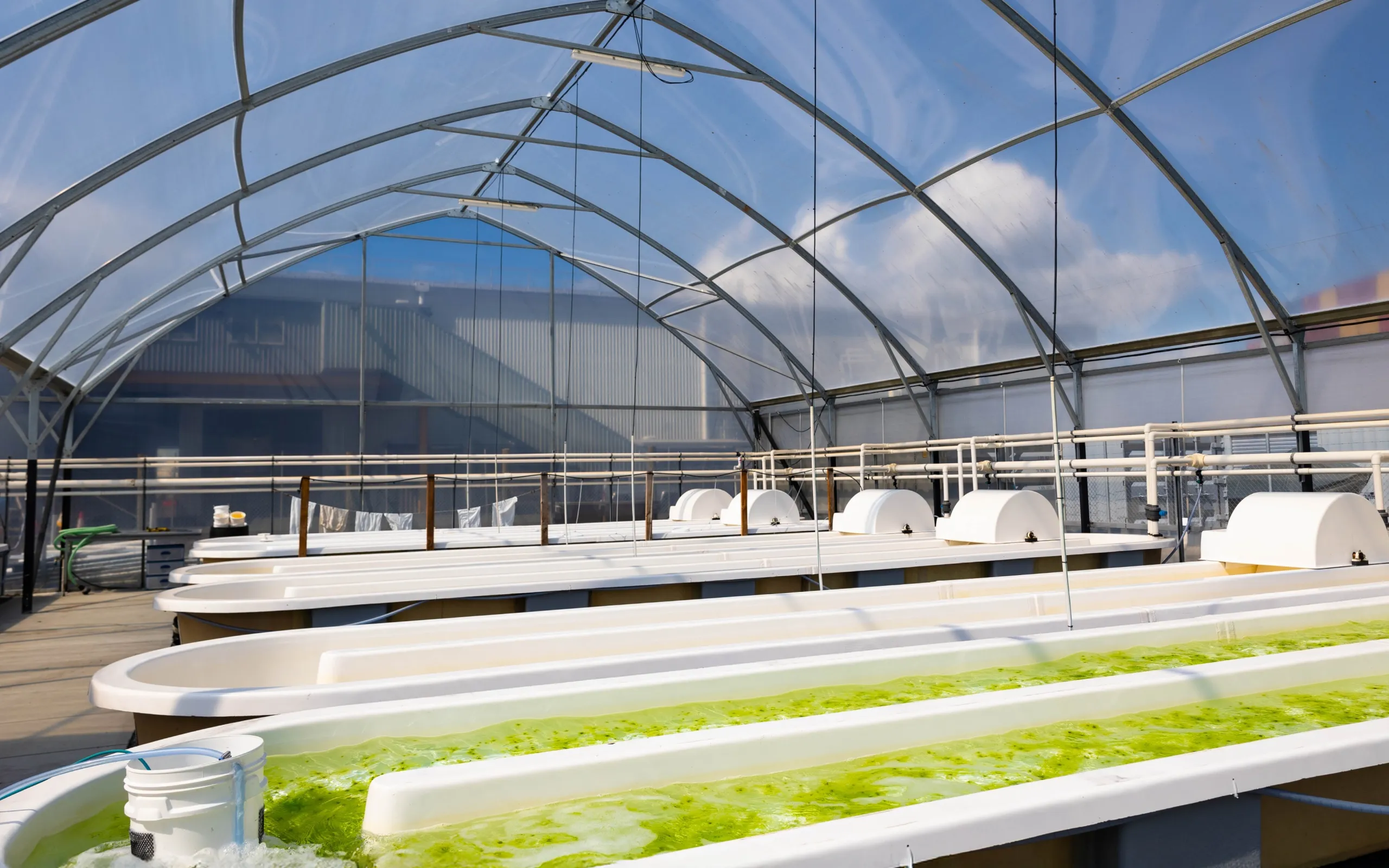
From global trade and finance to Indigenous enterprise, labour mobility and circular economies, we’re building evidence to inform policy that promotes inclusive and robust economic systems.
Agribusiness, the bioeconomy and financial systems are drivers for the New Zealand economy and emerging economies globally. The design of new enterprise development and financial systems opens opportunities to embed sustainability, broaden inclusivity and improve wellbeing, productivity and resilience.
The University of Waikato is a leader in Indigenous enterprise development. Te Kotahi Research Institute has developed a framework to guide entrepreneurial development and the commercialisation of genomic research using knowledge and values from a Māori world view. With support from Genomics Aotearoa (opens in a new tab), an alliance of universities and public research organisations, researchers designed Te Pūtahitanga. The framework is an Indigenous moral view to map how Indigenous led enterprise can commercialise research while protecting rights in data and knowledge and ensuring benefit sharing.
Our work to grow the Māori economy addresses the long-standing exclusion of Indigenous peoples from high-value innovation sectors. We show how Indigenous-led biotechnology can advance economic inclusivity and reshape entrepreneurship with a focus on responsibility, reciprocity and collective wellbeing.
Inclusive growth also depends on education, skills development and effective regulation. Our research shows that supportive institutions, targeted training and smart policy settings are essential to agribusiness entrepreneurship and regional growth.
We’re also looking at the finance systems that underpin development and shape how economies respond to global shocks. Our research shows that while bank competition can improve access to credit and lower costs, it can also increase financial mismatches that make economies more vulnerable during downturns.
Our work also highlights how policy and the balance of payments including trade, investment and financial flows shape economic outcomes across low- to high-income economies. We examine the factors that cause deficits and vulnerabilities for low-income countries and find that healthy banking competition must be paired with robust regulation to support sustainable growth, reduce poverty and aid stability.
Our research has policy implications for both global and local contexts: sustainable economic progress is strongest when it is inclusive, well governed, and grounded in social responsibility.
¹Decent work as defined by the International Labour Organisation (opens in a new tab), is productive employment that delivers a fair income; security in the workplace and social protection for all; better prospects for personal development and social integration; freedom for people to express their concerns, organise and participate in the decisions that affect their lives; and equality of opportunity and treatment for all women and men.

2025 Highlights
The University of Waikato is exploring future-focused, resilient finance and trade systems to protect against geopolitical shocks, resource scarcity and infrastructure shifts. We’re demonstrating how good design and smart strategy can support both environmental and economic sustainability.
Trade and economic resilience
Geopolitical change and conflict have far-reaching impacts on markets and trade.
Our research underscores how evidence-based policy can protect industries, support sustainable growth, and strengthen economic resilience in an increasingly uncertain global environment.
Research on global natural gas markets shows how conflicts such as the Russia–Ukraine war can rapidly disrupt energy supply and prices across interconnected economies, underscoring the risks of over-reliance on concentrated supply chains.
Complementary work on trade policy highlights that retreating into economic isolation is neither realistic nor sustainable. Instead, we point to diversification, strategic partnerships, and targeted domestic investment as smarter responses.
Transition to a circular economy
Growing a circular economy helps reduce waste, lower emissions, and protect ecosystems. It also creates new jobs, supports innovation, and reduces costs for households and businesses while aiding resilience to global shocks and resource scarcity.
We looked at statements issued by the Ministry for the Environment (opens in a new tab) and the Ministry for Business, Innovation and Employment (opens in a new tab) to understand how current policy in New Zealand supports the transition to a circular economy and how policy can support sustainability while building a more equitable, future-focused economy.
Sustainable food systems
Sustainable agricultural and food systems are important to realise global objectives of food security, ending hunger, reducing emissions, and responsible production and consumption.
Our research shows that implementing adequately targeted policies based on market measures requires a clear understanding of how consumer preferences and their understanding of environmentally friendly food act as consumption drivers. Understanding regional and global variations will encourage wider adoption of sustainable food practices.
Maritime connectivity and trade
The geographic remoteness of New Zealand is a recognised trading challenge. Using multiple data sets including an extensive industry consultation by the Ministry of Transport (opens in a new tab), we undertook an in-depth analysis of maritime connectivity, market connections, and how they strengthen, weaken or shift as shipping routes and global trade patterns evolve.
By moving beyond simple static indicators, we’re helping policymakers respond to economic, logistical and regional development challenges, enabling better responses to build resilience.
Citations
Bai, M. (2025). Bank competition and financial mismatches. SSRN. http://dx.doi.org/10.2139/ssrn.5084722 (opens in a new tab)
Bai, M. (2025). Entrepreneurship in agribusiness. SSRN. https://doi.org/10.2139/ssrn.5089013 (opens in a new tab)
Bedford, C., & Bedford, R. (2025). New Zealand’s Recognised Seasonal Employer scheme: Pathways and prospects. Asia & the Pacific Policy Studies, 12(3), e70034. https://doi.org/10.1002/app5.70034 (opens in a new tab)
Hodge, S., Barrett, P., & Kurian, P. (2025). The circular economy in Aotearoa New Zealand: A critical evaluation of policy and its current prospects. Kōtuitui, 20(4), 1069–1088. https://doi.org/10.1080/1177083X.2025.2504489 (opens in a new tab)
Iqbal, A., Bai, M., & Mukherjee, A. (2025). Economic policies and balance of payments across global income groups. Journal of Economic Analysis, 4(2), 104. https://doi.org/10.58567/jea04020007 (opens in a new tab)
Lv, X., Liu, L., & Bai, M. (2025). Geopolitical challenges and natural gas supply. Economic Analysis Letters, 4(1), 77. https://doi.org/10.58567/eal04010006 (opens in a new tab)
Mika, J. P., Brooks, R. T., & Hudson, M. (2024). Te pūtahitanga: Commercialising genomic research through Indigenous enterprise. International Journal of Entrepreneurship and Innovation. https://doi.org/10.1177/14657503241293284 (opens in a new tab)
Pellegrini, A., Scarpa, R., & Lombardi, G. V. (2025). Consumers’ heterogeneity estimates for sustainable food attributes: Evidence from three European countries. European Review of Agricultural Economics, 52(4), 912–945. https://doi.org/10.1093/erae/jbaf027 (opens in a new tab)
Trent, N. M., Joubert, J. W., & Kieu, M. (2025). The policy potential of monitoring market proximal maritime connectivity over time: The case of Aotearoa New Zealand. Networks and Spatial Economics, 25, 67–94. https://doi.org/10.1007/s11067-024-09651-1 (opens in a new tab)
Van Dyk, G. C. (2025). America First trade policy is pushing economic self-sufficiency – but history shows this is harder than it seems. The Conversation. https://theconversation.com/america-first-trade-policy-is-pushing-economic-self-sufficiency-but-history-shows-this-is-harder-thanit-seems-248530 (opens in a new tab)