How did early Māori society develop? New research reveals a clearer timeline
Archaeologists have traditionally divided early Māori history into three broad periods.
End hunger, achieve food security and improved nutrition and promote sustainable agriculture


We help staff and students experiencing food insecurity access free groceries, fresh produce and other food assistance.
We provide healthy and sustainable food choices across our campuses, with options for different dietary needs.

We work with researchers, farmers and industry partners to develop technologies and knowledge for more sustainable food production.
Staff and students experiencing food insecurity during tough times have access to a range of support services.
Through the Waikato Students' Union (WSU) (opens in a new tab), students at the Hamilton campus can access free grocery packs from the Kai Cupboard. WSU also provides food parcels and hardship grants to support students experiencing financial difficulties, alongside confidential advocacy and financial support (opens in a new tab).
The Hamilton campus is also home to community gardens (opens in a new tab), run by members of the Free Food Club. This club is open to students, staff and members of the public. Members who maintain the garden can harvest produce for themselves as they need it. Produce from the garden can also be used to make homemade soups, free for students.
At our Tauranga campus, staff and students benefit from a weekly supply of surplus food donated by businesses from around the region, courtesy of Good Neighbour (opens in a new tab).
Together, these initiatives provide practical food assistance and help people experiencing financial hardship access groceries, fresh produce and prepared food.
The University of Waikato provides sustainable, healthy, and affordable food choices through its campus food outlets and catering services.
Our onsite caterer, Kahurangi (opens in a new tab), operates the kitchens for our Halls of Residence, runs campus cafés, and provides catering for University events. The University's campus food outlets offer vegetarian and vegan options, providing alternatives to meat-based meals.
Kahurangi's sustainability practices include prioritising fresh ingredients from local suppliers wherever possible, supporting regional businesses and purchasing sustainably sourced products. Its supply chain includes locally grown fruit and vegetables and Marine Stewardship Council (MSC)-certified hoki. These purchasing practices support local food producers and promote more sustainable food supply chains. Kahurangi also works to reduce food waste and disposable packaging through careful food planning, food redistribution and compostable takeaway packaging. 100% of coffee grounds produced by Kahurangi are recycled by the university landscaping team all food waste is diverted from the landfill and recovered as animal feed.
To support healthy eating, Kahurangi employs an in-house dietitian who reviews its food offerings and identifies opportunities to improve nutrition. Its nutrition and food safety programme (opens in a new tab) also addresses special dietary requirements and allergen management. Students living in the fully catered Halls of Residence receive nourishing meals every day, with menus updated each semester.
The University's Procurement Policy also supports environmentally and socially sustainable procurement, including consideration of local economic and environmental benefits when purchasing goods and services. This provides an institutional framework for considering sustainability in purchasing decisions.
The University also supports access to free fresh produce through initiatives such as the WSU community garden (opens in a new tab).
The University of Waikato works with local growers, agricultural businesses and food producers to develop and share knowledge and technologies that support productive and sustainable food systems.
Through its Blue/Green Tech Lab in Tauranga (opens in a new tab), the University collaborates with local companies on research and development in horticulture and aquaculture. The Lab brings together expertise in robotics, automation, artificial intelligence and biotechnology to address practical challenges facing primary industries.
The University also works with AgriSea (opens in a new tab) to develop sustainable aquaculture and seaweed-based innovations. This partnership builds on research into native seaweed applications, including environmental restoration and the production of algal biomass for commercial products such as agricultural biostimulants.
The University shares agricultural technology with industry through initiatives such as Fieldays (opens in a new tab), where researchers have demonstrated robotic harvesting, pruning and navigation technologies designed to reduce crop losses, improve efficiency and address labour shortages in horticulture.
Through these research partnerships, technology demonstrations and industry-focused activities, the University contributes knowledge and innovation that can help local food producers improve productivity and develop more sustainable agricultural and aquaculture practices.
The University of Waikato participates in events that bring agricultural and horticultural industries together with researchers and technology developers to share knowledge and explore practical solutions for food production.
At Fieldays 2025 (opens in a new tab), the University showcased robotic horticulture technology in the Innovation Hub and supported the Fieldays Tent Talks programme. The talks provided expert-led sessions lasting 20 to 40 minutes, with no booking required, giving farmers, growers and other industry professionals opportunities to learn about new technologies, industry developments and emerging challenges.
The University also demonstrated horticultural innovations at Fieldays, including robotic technologies designed to handle fruit more gently and reduce damage during harvesting and packing. These demonstrations connected University research with the practical needs of the horticulture sector.
Through its participation in agricultural events, the University helps connect researchers, industry professionals and food producers, supporting the exchange of knowledge about technology and innovation in primary production.
The University of Waikato maintains research facilities and technology capabilities relevant to sustainable food production, horticulture and aquaculture.
The University's Coastal Marine Field Station (opens in a new tab) in Tauranga provides specialist laboratory and research aquarium facilities for marine science, environmental monitoring and aquaculture research. Its research activities include the development of knowledge and technologies that support marine ecosystem resilience and a sustainable blue economy.
The University also operates a Blue/Green Tech Lab (opens in a new tab) that brings together research expertise and specialised facilities to support projects with local companies in horticulture and marine industries. Its work includes robotics, automation, artificial intelligence and biotechnology.
These facilities provide a research and technology base relevant to the challenges faced by agricultural, horticultural and aquaculture producers. The University works with industry partners to develop applied research and innovation for these sectors.
Associate Professor Kura Paul-Burke (opens in a new tab) is a passionate marine scientist based at our Tauranga campus. One of her key research projects in 2021 involved helping restore mussel populations in Ōhiwa Harbour using a blend of Māori knowledge and western science.
New mussel lines made of woven, natural materials were developed and are now laden with mussels. The lines are far kinder to the harbour than the plastic lines preferred by commercial mussel farmers. In 2021 she was nominated for the second year in a row for the Kudos Science Trust Awards in both the Environmental Science and Vision Mātauranga categories.

We have a large and growing team of researchers dedicated to macroalgal research, developing innovative ways to use seaweed which is accumulating in our harbours. We are exploring many new opportunities for seaweed as a source of food and as a potential way to protect New Zealand's broader horticultural industry. (opens in a new tab)

How did early Māori society develop? New research reveals a clearer timeline
Archaeologists have traditionally divided early Māori history into three broad periods.
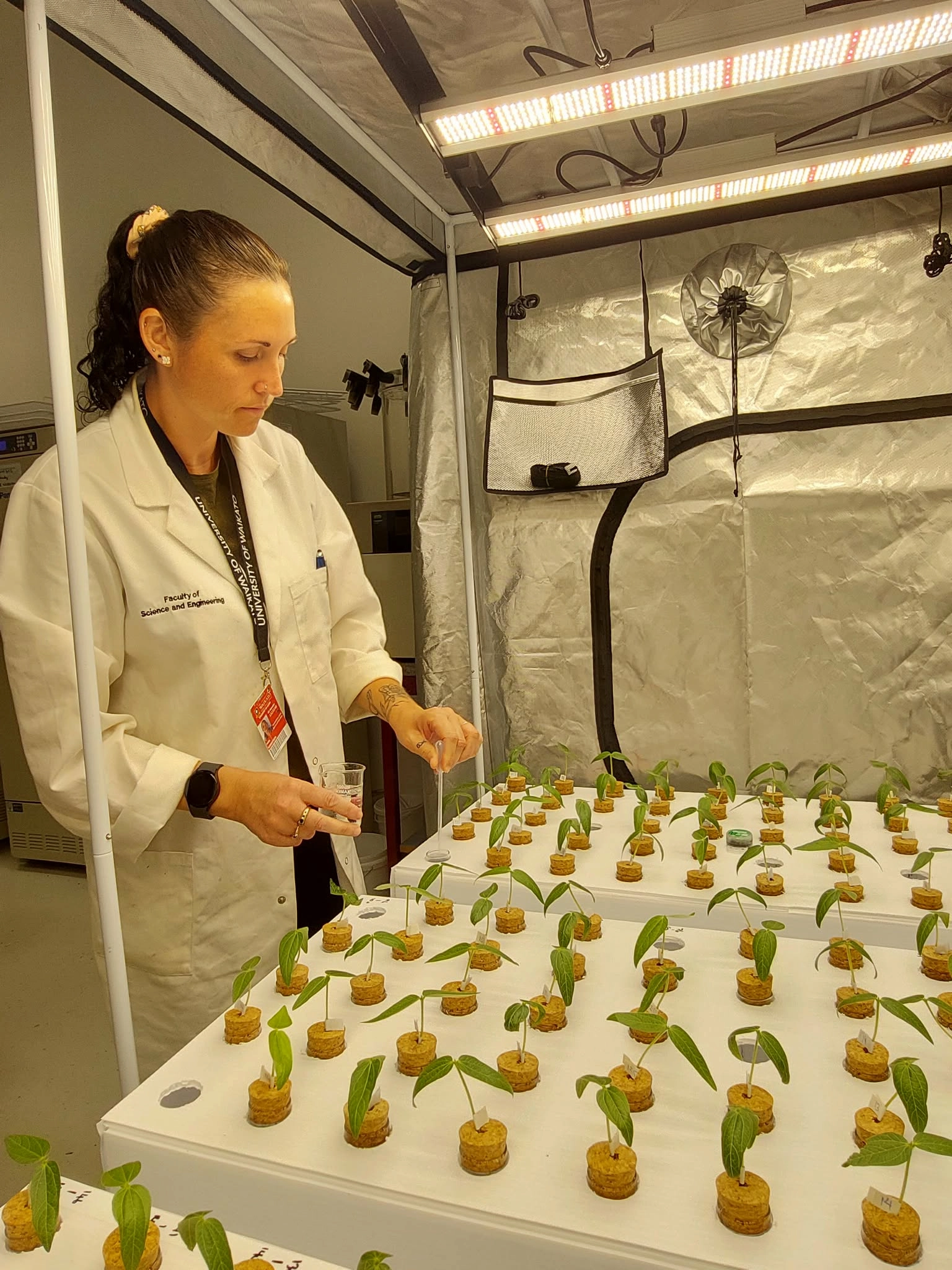
Brainwaves: I spent years brewing seaweed to help grow tomorrow's food
What if the future of sustainable farming was hidden in ordinary green seaweed? A University of Waikato researcher explains how fermenting seaweed could help grow healthier crops while reducing agriculture's environmental footprint.

How would NZ’s vital freight system handle a big earthquake? Our study sounds a warning
Research shows a major earthquake could cripple New Zealand’s freight network, exposing infrastructure weak points and underscoring the need for resilient planning to keep supplies moving...

Instant ramen: a short history of a long noodle
Instant noodles are a global commodity. But when were they invented, and has ramen always been a “struggle meal”?

Waikato researchers at the frontier of New Zealand’s high-tech robotics industry
Developing a high-tech robotics industry in New Zealand to grow and support a horticulture sector facing dire labour shortages is the focus for researchers at the University of Waikato.

Robots to the rescue
Waikato researchers are developing robots to revolutionise agriculture. These robots can harvest asparagus, prune vines, thin apples, and survey kiwifruit orchards.
You’re currently viewing the website as a domestic student, you might want to change to international.
You're a domestic student if you are:
You're an International student if you are: