Authors
- Ben Clarke (opens in a new tab), DPhil Candidate in Environmental Research,University of Oxford (opens in a new tab)
- Friederike Otto (opens in a new tab), Associate Director, Environmental Change Institute,Imperial College London (opens in a new tab)
- Luke Harrington (opens in a new tab), Senior Lecturer in Climate Change,University of Waikato (opens in a new tab)
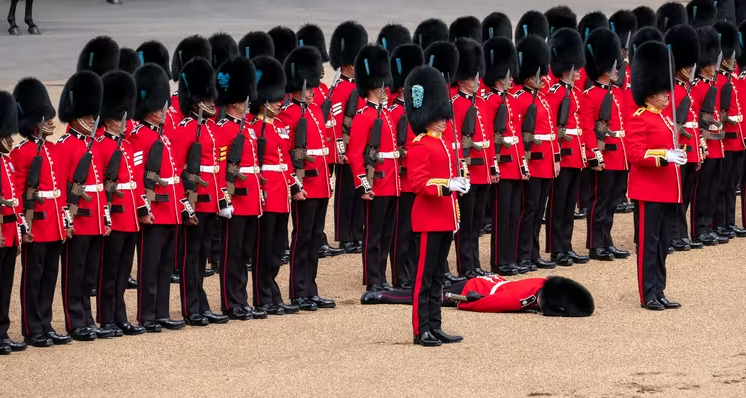
Every heatwave occurring today is made more likely and intense (opens in a new tab) by human-caused climate change. Early estimates by the UK Met Office suggest that days over 40°C have become ten times more likely to happen in the UK as a result of the rising global temperature.
But even this may be a significant underestimate, as models have underrated (opens in a new tab) increases in the occurrence of extreme heat events before. And we know that climate change (opens in a new tab) has increased the likelihood of new high-temperature records more than any other (opens in a new tab) extreme weather phenomenon.
July 2022 would have had a few hot days without climate change. But with it, those days were several degrees hotter (opens in a new tab), which brought 40°C within reach for England for the first time.
Not-so-great British bake off
The heatwave was caused by a low pressure system (opens in a new tab) over the North Atlantic that produced a slingshot effect, firing a plume of hot, dry Saharan air northwards. With little moisture to evaporate and no clouds to block the sun’s rays, the land baked.
There is growing evidence (opens in a new tab) to suggest that these hot weather-generating pressure systems are becoming more frequent for Europe. But even if they continued occurring at the same rate, the air itself is certainly getting hotter.
On a warming planet everywhere gets hotter, but not at the same rate. The land heats up faster (opens in a new tab) than the ocean, especially the driest areas (opens in a new tab) such as the Sahara. The approximately 1.2°C of global warming already experienced has added at least 2°C onto the average UK heatwave day, and even more on to night-time (opens in a new tab) temperatures.
The UK is not prepared for these Mediterranean temperatures. Buildings are poorly insulated and lack air conditioning. Much of the infrastructure cannot cope (opens in a new tab): train lines are built from steel that is only stress-tested to 27°C (opens in a new tab). Beyond that, the lines are prone to buckling.
Extreme heat is a killer. Heatwaves in Europe in 2003 (opens in a new tab) and in western Russia in 2010 (opens in a new tab) killed around 70,000 and 55,000 people respectively – two of the deadliest weather disasters in history.
Extremely high temperatures are especially dangerous for the elderly, those with chronic medical conditions, people in cities and pets. That’s partly because it takes a heavy toll on the heart and lungs, especially when a warm night (opens in a new tab) offers little respite. And partly because hot, stagnant air concentrates dangerous pollution like ozone, especially in cities (opens in a new tab).
Nearly 2,000 (opens in a new tab) excess deaths have already been reported from the beginning of the mid-July heatwave in Spain and Portugal, which also experienced this Saharan plume of hot air. For every person killed, several more require hospital treatment (opens in a new tab) for heat-related illness (opens in a new tab).
Heat on the rise
An international team of attribution scientists has conducted several studies on recent heatwaves. The March-May 2022 heatwave in India and Pakistan (opens in a new tab), which destroyed much of the wheat harvest and is contributing, alongside the Ukraine conflict, to global food price rises, was made 30 times more likely by climate change. Canada’s (opens in a new tab) extreme heat in June 2021 and Siberia’s (opens in a new tab) high temperatures in the first half of 2020 each would have been virtually impossible without it.
The recent heatwave was relatively short, but it was also widespread across western Europe, and very intense. We are confident that climate change made it much more likely because the event stands out in bold against natural variation in the climate, which normally averages out to be unremarkable over such a wide area.
Though there aren’t yet estimates, we know that disruption to travel and the slowing down of work during the heatwave cost European economies (opens in a new tab) dearly. Unprecedented water demand put a heavy strain on systems already running dry (opens in a new tab). A combination of extreme heat and dryness (opens in a new tab) created exceptional (opens in a new tab) conditions for wildfires to spread rapidly.
This released carbon (opens in a new tab) held in vegetation, warming the planet further. The resulting smoke is also toxic (opens in a new tab). As the days and nights were several degrees hotter, the effect of climate change (opens in a new tab) cost society (opens in a new tab) on all of these fronts.
The amount by which previous temperature records were smashed is directly linked to the rate of greenhouse gas emissions (opens in a new tab). The faster carbon dioxide (CO₂) is dumped into the atmosphere, the faster the planet warms and the more regularly new records will be exceeded.
While this crisis plays out, the contest to replace Boris Johnson as Conservative Party leader and UK prime minister has barely covered (opens in a new tab) climate change, and former contenders even pledged to scrap the country’s commitment to reach net zero by 2050.
This is the opposite of what is needed to prevent heatwaves becoming ever hotter and deadlier, which can only be achieved by urgently reducing long-lived greenhouse gas emissions such as CO₂ to zero. Economists widely favour (opens in a new tab) action on climate change as a far cheaper alternative to enduring broken weather records year after year.
Get a weekly roundup in your inbox instead. (opens in a new tab) Every Wednesday, The Conversation’s environment editor writes Imagine, a short email that goes a little deeper into just one climate issue. Join the 10,000+ readers who’ve subscribed so far. (opens in a new tab)

Ben Clarke (opens in a new tab), DPhil Candidate in Environmental Research, University of Oxford (opens in a new tab); Friederike Otto (opens in a new tab), Associate Director, Environmental Change Institute, Imperial College London (opens in a new tab), and Luke Harrington (opens in a new tab), Senior Lecturer in Climate Change, University of Waikato (opens in a new tab)
This article is republished from The Conversation (opens in a new tab) under a Creative Commons license. Read the original article (opens in a new tab).