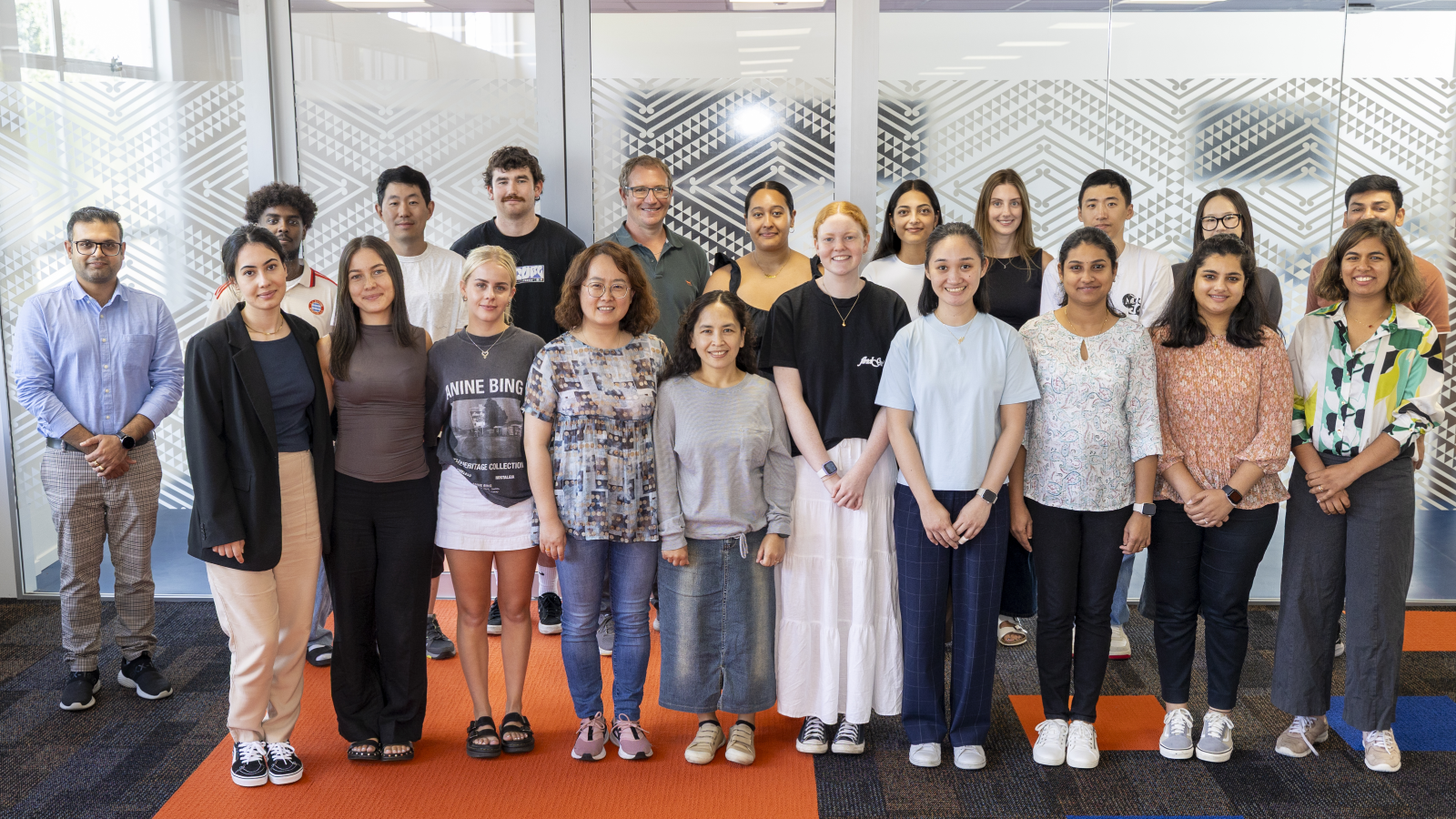
The University of Waikato’s new graduate-entry pharmacy programme will help ease the “incredible stress” New Zealand’s pharmacy workforce is under, its head says.
The University this week welcomed the first cohort of students to its new two-year Master of Pharmacy Practice, developed in response to stakeholder requests to address the chronic shortage of pharmacists in the region.
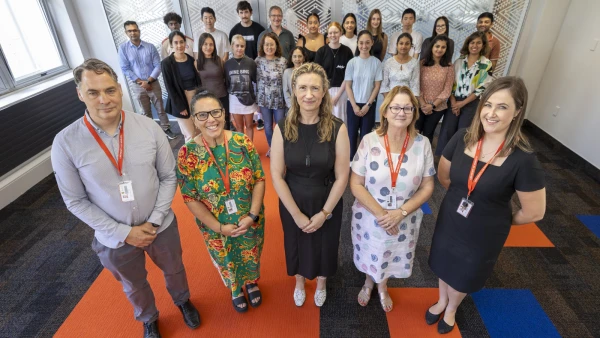
Professor Rhiannon Braund (front row, centre) with the Master of Pharmacy Practice faculty and students.
Head of the School of Pharmacy & Biomedical Sciences Professor Rhiannon Braund says the new programme will grow the profession by creating a new pipeline of pharmacists.
“We need to do something new to increase our pharmacy workforce,” she says.
“By offering a graduate-entry programme, we’re opening up to a new pool of potential pharmacists who wouldn’t have considered taking a traditional undergraduate degree.”
The new programme is an accelerated pathway to becoming a pharmacist for students with a bachelor’s degree with a major in one of the molecular sciences, such as biochemistry, biomedical science, chemistry, molecular biology or pharmacology.
“We’re fortunate that a lot of our students will come in with a background in fundamental science, so we can hit the ground running,” Professor Braund says.

Students Rhea Roy, Teres Siby and Gabby Allerby
Gabby Allerby is set to graduate with a Bachelor of Science (Technology) this April and is excited to be part of the master’s programme’s first cohort.
“I think this programme will combine my passion for science with hands on, practical experience. I’m really looking forward to the clinical placements,” she says.
Miss Allerby says she loves that pharmacists have the ability to help people.
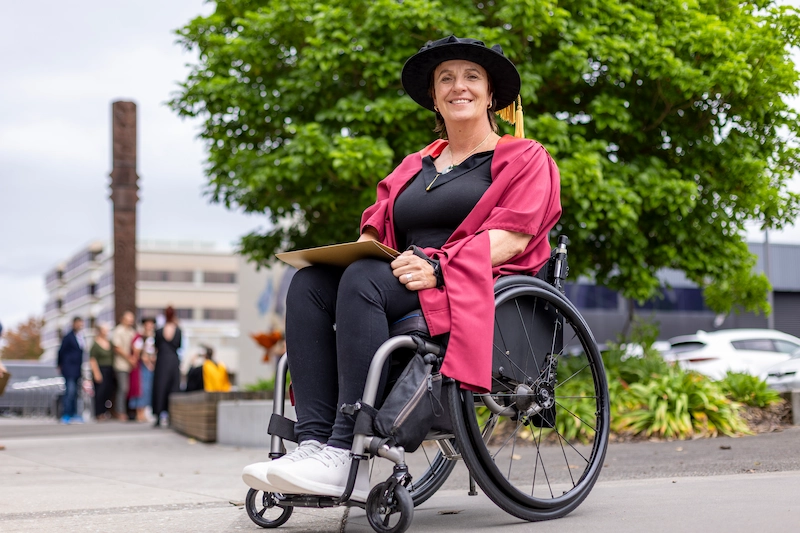
For Teres Siby, who moved to New Zealand from India in 2019, the programme is a pathway towards being able to register and practise as a pharmacist here, having already achieved a qualification in pharmacy from a university in India.
“The two-year master’s is a really amazing option for me – I studied pharmacy for six years to get my qualification in India, so I didn’t want to have to study another four-year undergraduate degree to be able to practise here,” she says.
“I’m eager to contribute to New Zealand’s healthcare system.”
Miss Siby encouraged her friend Rhea Roy to apply too, and the pair has started the programme together.
Miss Roy has qualifications in biomedical science and molecular genetics and is glad to be able to add the clinical skills she needs to become a pharmacist.
“I want to make a tangible difference in people’s lives through the safe and effective use of medication,” she says.
With students joining from a variety of backgrounds, Professor Braund says she can see lots of opportunities for the cohort to learn from each other.
“Each student will have a particular knowledge base that they can share, which I think is an important experience to have when we think of their future work in healthcare teams.
“As healthcare professionals, we’re all trying to do the same things but coming from different base knowledge. I think it’s good to understand the things you bring and what you can learn from others.”
Professor Braund says the course is filled with exciting content and has been created with input from pharmacy sector stakeholders including Ngā Kaitiaki o te Puna Rongoā o Aotearoa – the Māori Pharmacists’ Association, the Pharmaceutical Society, the Pharmacy Guild, hospital pharmacists, Chemist Warehouse, primary healthcare organisations and Green Cross Health.
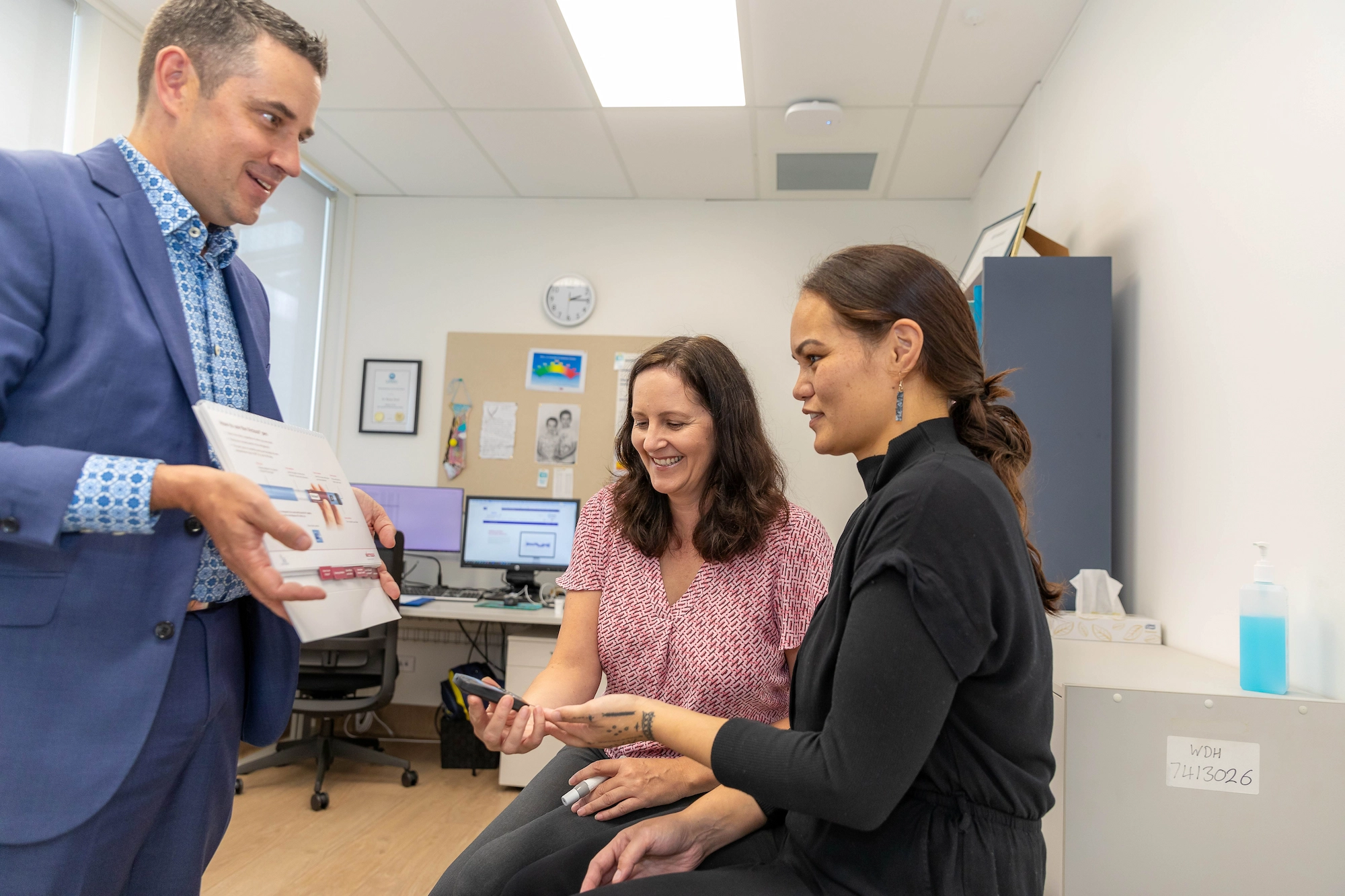
Students will put their learnings into practice in a new teaching space which includes a model pharmacy, kitted out with support from Chemist Warehouse, Green Cross Health and independent pharmacies. Chemist Warehouse will also offer up to four scholarships per year to Master of Pharmacy Practice students.
“We’re excited to be underway in our new teaching space and creating something special,” Professor Braund says.
“Pharmacy has been under incredible workforce stress for a while, but it hasn’t always been seen,” she says.
“People might have noticed their pharmacy changing its hours, or small pharmacies closing, but I don’t think that most people are aware of the shortage of pharmacists.”
Professor Jo Lane, Pro Vice-Chancellor of the Division of Health, says the University of Waikato is committed to working in collaboration with local health stakeholders to meet the health workforce needs of its region.
“After the success of our Nursing and Midwifery programmes, we’re proud to have developed another innovative programme that will contribute to addressing the country’s health workforce challenges,” he says.