Sharing food production and sustainable agriculture knowledge
The University of Waikato works with local growers, agricultural businesses and food producers to develop and share knowledge and technologies that support productive and sustainable food systems.
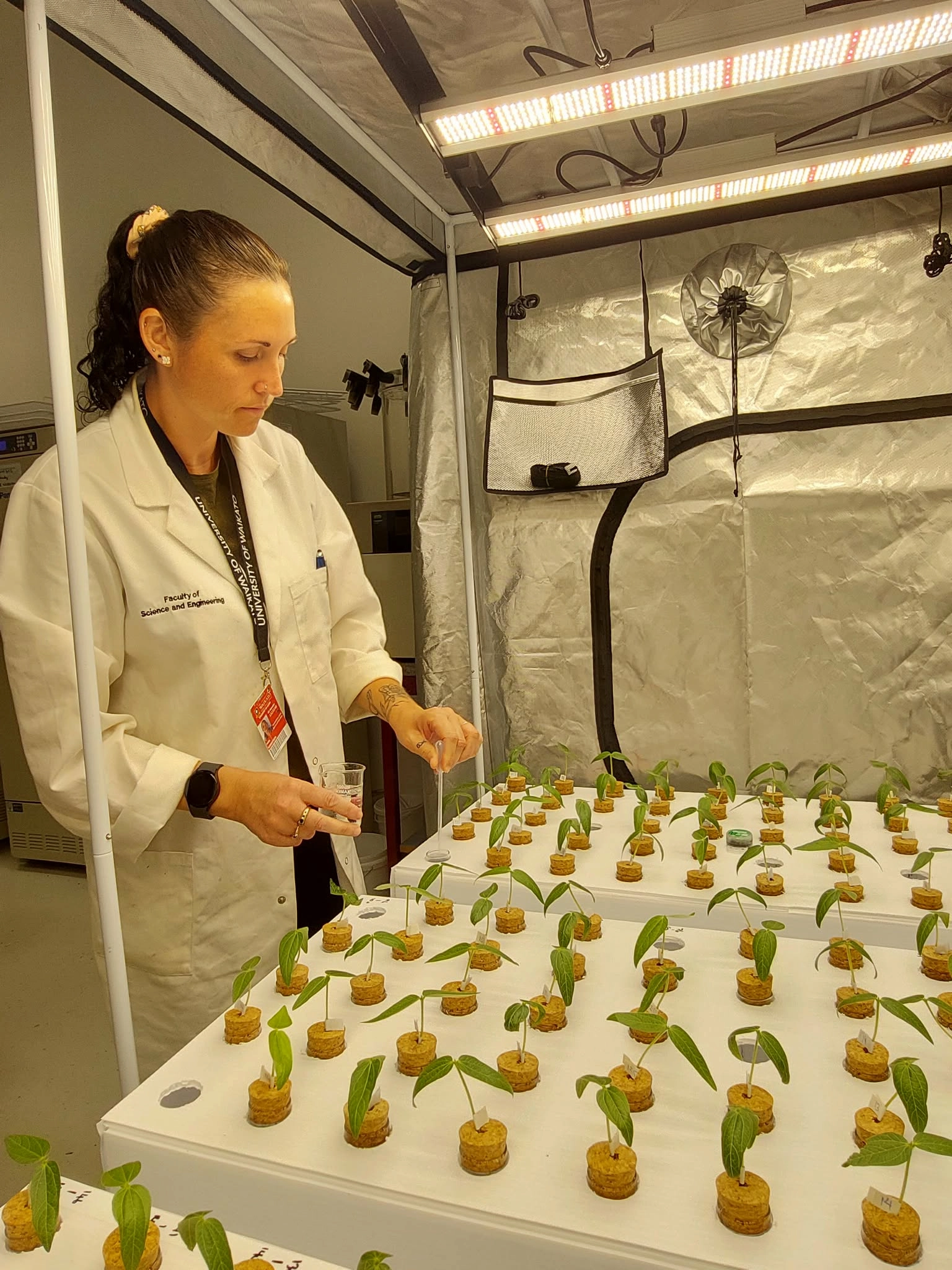
Through its Blue/Green Tech Lab in Tauranga (opens in a new tab), the University collaborates with local companies on research and development in horticulture and aquaculture. The Lab brings together expertise in robotics, automation, artificial intelligence and biotechnology to address practical challenges facing primary industries.
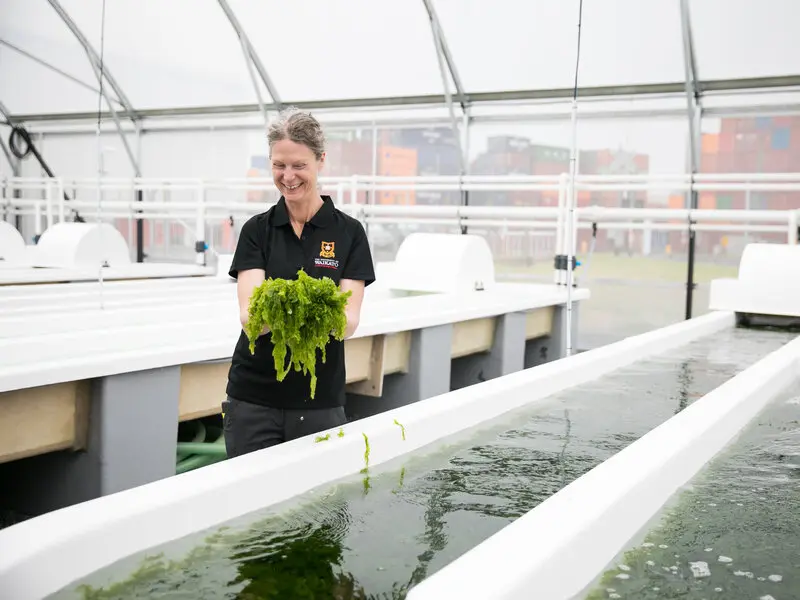
The University also works with AgriSea (opens in a new tab) to develop sustainable aquaculture and seaweed-based innovations. This partnership builds on research into native seaweed applications, including environmental restoration and the production of algal biomass for commercial products such as agricultural biostimulants.
The University shares agricultural technology with industry through initiatives such as Fieldays (opens in a new tab), where researchers have demonstrated robotic harvesting, pruning and navigation technologies designed to reduce crop losses, improve efficiency and address labour shortages in horticulture.
Through these research partnerships, technology demonstrations and industry-focused activities, the University contributes knowledge and innovation that can help local food producers improve productivity and develop more sustainable agricultural and aquaculture practices.
Connecting farmers and food producers with research and innovation
The University of Waikato participates in events that bring agricultural and horticultural industries together with researchers and technology developers to share knowledge and explore practical solutions for food production.
At Fieldays 2025 (opens in a new tab), the University showcased robotic horticulture technology in the Innovation Hub and supported the Fieldays Tent Talks programme. The talks provided expert-led sessions lasting 20 to 40 minutes, with no booking required, giving farmers, growers and other industry professionals opportunities to learn about new technologies, industry developments and emerging challenges.
The University also demonstrated horticultural innovations at Fieldays, including robotic technologies designed to handle fruit more gently and reduce damage during harvesting and packing. These demonstrations connected University research with the practical needs of the horticulture sector.
Through its participation in agricultural events, the University helps connect researchers, industry professionals and food producers, supporting the exchange of knowledge about technology and innovation in primary production.
University research facilities supporting sustainable production
The University of Waikato maintains research facilities and technology capabilities relevant to sustainable food production, horticulture and aquaculture.
The University's Coastal Marine Field Station (opens in a new tab) in Tauranga provides specialist laboratory and research aquarium facilities for marine science, environmental monitoring and aquaculture research. Its research activities include the development of knowledge and technologies that support marine ecosystem resilience and a sustainable blue economy.
The University also operates a Blue/Green Tech Lab (opens in a new tab) that brings together research expertise and specialised facilities to support projects with local companies in horticulture and marine industries. Its work includes robotics, automation, artificial intelligence and biotechnology.
These facilities provide a research and technology base relevant to the challenges faced by agricultural, horticultural and aquaculture producers. The University works with industry partners to develop applied research and innovation for these sectors.