Epidemiologist career

Kaimātai tahumaero

Epidemiologists study causes and patterns of disease and other negative health outcomes in humans and animals. They develop ways to detect and control outbreaks of infectious diseases.

Epidemiologists study causes and patterns of disease and other negative health outcomes in humans and animals. They develop ways to detect and control outbreaks of infectious diseases.

What would you do as an Epidemiologist?

Epidemiologists

  • usually work regular business hours but may work long or irregular hours and be on call
  • usually work in offices and laboratories and may travel
  • need to be methodical, work well under pressure and identify and solve problems

Tasks

  • study diseases and health outcomes
  • plan biological research
  • lead medical science or health care programmes
  • share information with government agencies
  • prepare reports and presentations
  • create standards for work processes and medical care
  • guide scientists and health staff
  • research diseases and parasites

How can you become an Epidemiologist?

You need a qualification to become an epidemiologist and experience may be useful.

You need

  • a bachelor's degree in epidemiology, public health, biological sciences, veterinary science, mathematics and statistics or similar area

You may need

  • experience in similar work
  • a master's degree in public health, biological sciences, veterinary science or similar area
  • a doctoral degree in public health (epidemiology) or similar

If you're in school

You need University Entrance to do the study or training for this job.

Studying this at the University of Waikato

View all qualifications

Waikato's Bachelor of Health includes papers in epidemiology and statistics, so you'll learn how disease spreads through communities from the start. Add Data Analytics as a second major to build strong skills in working with health data. Like all our undergraduate degrees, it includes work-integrated learning.

For a science route, choose a Biomedical Science, Data Analytics or Mathematics major in our Bachelor of Science.

Many epidemiologists go on to postgraduate study. You can continue with our Postgraduate Certificate of Health Science, or build your research skills with a Master of Science or Master of Science (Research).

View all qualifications

Epidemiologist FAQs

Scholarships

A range of scholarships are available to help with the cost of studying at Waikato. Options are available across a wide range of subjects and study levels, including scholarships for new students, current students and specific areas of study.

Find a scholarship

QS ranking

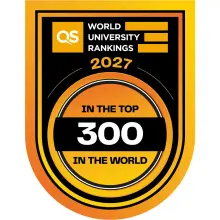
QS World University Rankings 2027

Waikato is ranked equal 293rd globally, placing us in the top 1.5% of universities worldwide, and 2nd in New Zealand by citations per faculty.