 Wednesday 02 Sep 2026
 1:00 pm - 2:00 pm
 N5.01, University of Waikato, Hamilton campus
 Te Piringa | Faculty of Law
 Free
Free
Launch event: New report findings on the economic value of Aotearoa New Zealand's for-purpose sector
Weighing up the options for a future global environmental crime treaty
- Wednesday 02 Sep 2026
- 1:00 pm - 2:00 pm
- N5.01, University of Waikato, Hamilton campus
- Te Piringa | Faculty of Law
- Free
The Waikato Public Law and Policy Research Unit is proud to host Dr Ricardo Pereira, who will give a talk on ‘Weighing up the options for a future global environmental crime treaty’.
Environmental crime is one of the most profitable and fastest-growing areas of international criminal activity. And yet, there is no consensus on a definition of environmental crime within UN bodies. In general, states tend to refer to ‘crimes that affect the environment’ or ‘environment-related crimes’ in international forums, reflecting the complex nature of these types of crimes.
Worryingly, there is currently no global environmental crime treaty introducing common standards for states to cooperate in combating environmental crime. While some multilateral environmental agreements (MEAs) call on states to introduce penal measures to sanction non-compliance, in most cases these penalties may be criminal or non-criminal in nature. They therefore tend to reflect the flexible, multi-level governance and fragmented, sectoral institutionalisation of global environmental standards that have emerged in international environmental law over the past six decades.
However, important new initiatives are starting to emerge. Notably, since 2024, there have been ongoing interstate negotiations aimed at developing a new Draft Protocol on ‘Crimes that Affect the Environment’ to the UN Convention against Transnational Organized Crime (UNTOC). Yet, so far, states have failed to reach consensus on recommendations to submit to UNODC COP-13 in late 2026.
Meanwhile, the Council of Europe adopted a convention on the protection of the environment through criminal law in 2025. However, the convention is not yet in force and can only be ratified by Council of Europe member states, as well as the two non-Council of Europe states that participated in its elaboration.
This discussion will critically assess the prospects, challenges and options for the negotiation and adoption of a future global environmental crime treaty. It will also evaluate the strengths and weaknesses of key initiatives launched at the global and regional levels to enhance interstate cooperation in combating serious and transnational environmental crimes.
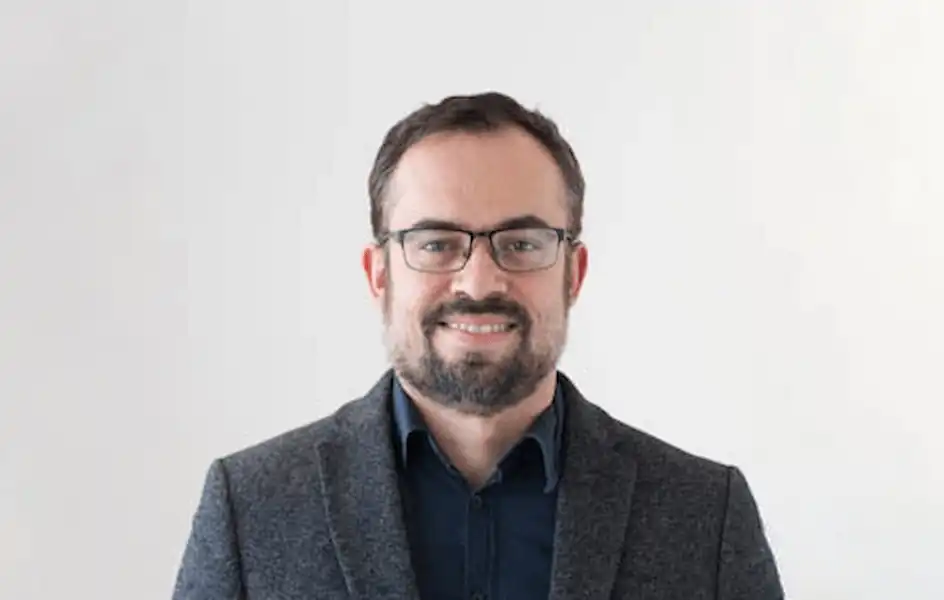
Dr Ricardo Pereira is a Reader in Transnational Law at Cardiff University, School of Law & Politics. He has held visiting or associate research and teaching positions at a number of other UK and overseas academic institutions, including University College London, Imperial College London and the National University of Singapore.
He regularly acts as an advisor to international and regional organisations and NGOs, including the UNEP, the UNODC, the IUCN and the European Commission, and gives evidence before the British devolved parliaments.
He has published widely in the fields of environmental and natural resources law, transnational and European criminal law, the law of the sea and human rights law, particularly the rights of Indigenous peoples. He is the author of the monograph ‘Environmental Criminal Liability and Enforcement in European and International Law’ (Brill, 2015), as well as articles published in leading journals including the Criminal Law Forum, the Netherlands Quarterly of Human Rights and the Melbourne Journal of International Law.
His most recent editorial roles include the books ‘A Research Agenda for Environmental Crime and the Law’ (Edward Elgar, 2025) and ‘Business, Human Rights and Natural Resource Governance: Accountability for a Just Transition’ (Hart Publishing: Bloomsbury, 2026), as well as a Special Issue on the legal protection of ‘The Amazon Rainforest’, published by the Review of European, Comparative and International Environmental Law (2021, issue 2).