Authors
For Māori, a name is intrinsic to, and linked by, our whakapapa (genealogy), often reflecting the elements observed, such as a river (awa), at the time of birth before entering Te Ao Mārama, the world of life and light.
In law, names matter too. The UN Convention on the Rights of the Child, which Aotearoa New Zealand accepted in 1993, states that every child has the right to a name. The law governs the naming of individuals as well as the changing of names.
But no such laws exist for countries. Nations can and do change their own names (such as when they gain independence), or have them changed by others (such as after a war). What worked for an earlier generation may not for later ones, as national values and identities evolve.
This is the challenge presented in a petition organised by Te Pāti Māori (Māori Party). As well as calling for Aotearoa to become the country’s official name, the party also wants to restore all original Māori place names by 2026.

What’s in a name? Māori Party co-leaders Rawiri Waititi and Debbie Ngarewa-Packer. GettyImages
Names can change
As these and other lands were colonised, so too were their original place names, with the colonisers seeking to assert their authority and versions of history.
Power, the politics of language and the naming of places are all closely related. As the old saying goes, “the namer of names is the father of all things”.
Many European explorers preferred to name what they “discovered” after something they were familiar with. New York was named by the British after they defeated the Dutch, who had named their settlement New Amsterdam, part of the region they called New Netherland.
Before the arrival of the Dutch and British, the wider area was called manaháhtaan, from the Indigenous Munsee language of the Lenape people, which lives on in the name Manhattan.
Closer to home, the Dutch name New Holland was slowly phased out in the early 19th century by the colonial authorities in favour of Australia, from the Latin “Terra Australis” (Southern Land), a reference to the mythical great unknown southern land “terra australis incognita”.
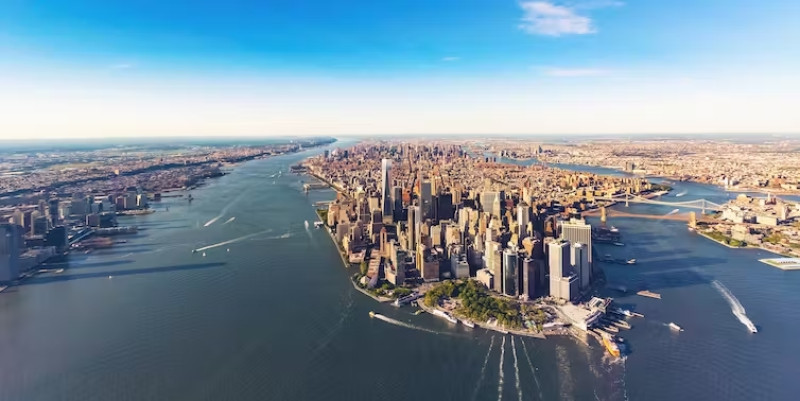
Names change: from New Amsterdam to New York, manaháhtaan to Manhattan. shutterstock
A short history of Nieuw Zeeland
Over the years there have been various petitions and attempts to change the name of New Zealand, including in 1895 a call to officially adopt “Māoriland”, already a common unofficial name for the country.
When Abel Tasman sighted these well-populated shores in 1642, he called the place Staten Land in the belief it was somehow connected to an Isla de los Estados (Staten Island) in what is now modern Argentina.
Read more:
Bilingual road signs in Aotearoa New Zealand would tell us where we are as a nation
Later, however, a Dutch East India Company cartographer conferred the name Nieuw Zeeland (or Nova Zeelandia in Latin).
“Zee” in Dutch translates as “sea”, and its English etymology is complicated. It seems to be of Gothic origin, emerging from Germany, and was adopted into the languages of Northern Europe where, for example, Sjælland (sea-land) described a place closely connected to the sea.
Māori on the first map
Our country was not named directly after the link between land and sea, but rather after the Dutch place that already had this name — specifically, Zeeland in the south-west of the Netherlands. Forts in modern-day Taiwan and Guyana were also called Zeelandia by early Dutch explorers.
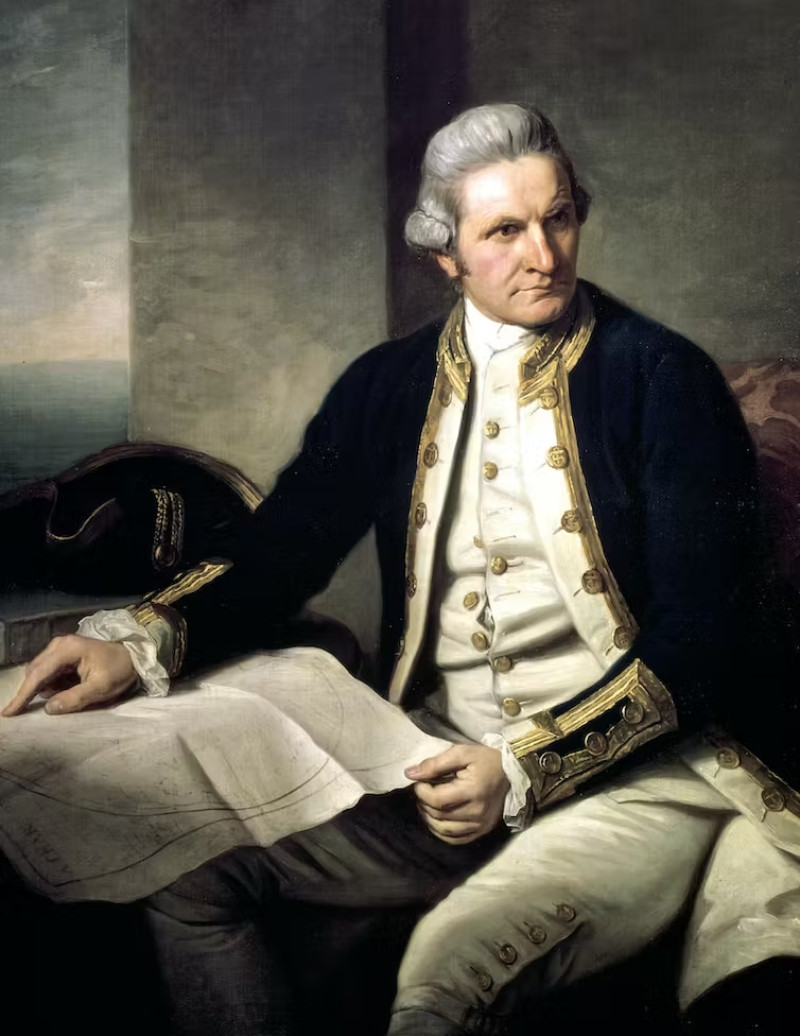
James Cook: his first map retained some Māori place names. GettyImages
When James Cook arrived in 1769, Nieuw Zeeland was anglicised to New Zealand, as can be seen in his famous 1770 map. Cook renamed Te Moana-o-Raukawa as Cook Strait, and imposed dozens more English place names.
He did, however, attempt to retain Māori names for both main islands: his map records “Eaheinomauwe” (possibly He-mea-hī-nō-Māui, or the things Māui fished up) for the North Island and “T Avai Poonamoo” (Te Wai Pounamu, or greenstone waters) for the South Island.
The first reference in legislation to “New Zealand” was in the Murders Abroad Act of 1817, passed by parliament in England in response to increasing lawlessness in the South Pacific – including the maltreatment of Indigenous sailors aboard European ships.
Paradoxically, perhaps, the act demonstrated a British view that New Zealand was not truly part of the British realm.
Read more:
Matariki: reintroducing the tradition of Māori New Year celebrations
Nu Tirene appears
By 1835, a number of iwi (tribes) engaged in international trade and politics were using the name “Nu Tireni” to describe New Zealand in their correspondence with Britain.
Nu Tirene then appeared in the 1835 Declaration of Independence of the United Tribes of New Zealand, and then Te Tiriti o Waitangi in 1840.
The Māori Legal Corpus, a digitised collection of thousands of pages of legal texts in te reo Māori spanning 1829 to 2009, contains around 4,800 references to Nu Tirene, Niu Tirani and Niu Tirene.
The translation into te reo Māori of the Maori Language Act 1987 refers to Niu Tireni, as does the Māori Language Act 2016.
Read more:
Let's choose our words more carefully when discussing mātauranga Māori and science
Locating Aotearoa
The precise origin of the composite term “Aotearoa” is not known. But if we translate “Ao” as world, “tea” as bright or white, and “roa” as long, we have the common translation of “long bright world” or “long white cloud”.
Sir George Grey used Aotearoa in his 1855 Polynesian Mythology, and Ancient Traditional History of the New Zealand Race, and in his 1857 Māori proverbs work, Ko nga whakapepeha me nga whakaahuareka a nga tipuna o Aotea-roa.
The Māori Legal Corpus mentions Aotearoa 2,748 times, with one of the earliest written references being Wiremu Tamehana’s hui invitation to other chiefs in October 1862.
The popularity of Aotearoa can be gauged from William Pember Reeves’ 1898 history of New Zealand: The Long White Cloud Ao Tea Roa.
Today, government departments commonly use Aotearoa, and it appears on the national currency. One of the commonest expressions of personal and national identity is the “Uruwhenua Aotearoa New Zealand” passport.
Time for change?
Whether enough New Zealanders want a formal change isn’t clear. A recent poll showed a majority wanting to retain New Zealand, but a significant number interested in a combined Aotearoa New Zealand.
Nor is there consensus on Aotearoa being the best alternative, with some debate about whether the name originally referred only to the North Island and Aotearoa me Te Waipounamu being used in the south.
At the same time, there is a growing awareness of te reo Māori (as an official language, including among Pākehā) and understanding of our national names and their significance. This allows us to better understand where we have come from and where we want to go.
By also acknowledging Māori names, we give substance to our distinctness as a nation. In time, perhaps, it will lead to us embracing a name that better reflects our history, our place in the world and our shared future.
Claire Breen, Professor of Law, University of Waikato; Alexander Gillespie, Professor of Law, University of Waikato; Robert Joseph, Associate Professor of Law, University of Waikato, and Valmaine Toki, Professor of Law, University of Waikato
This article is republished from The Conversation under a Creative Commons license. Read the original article.