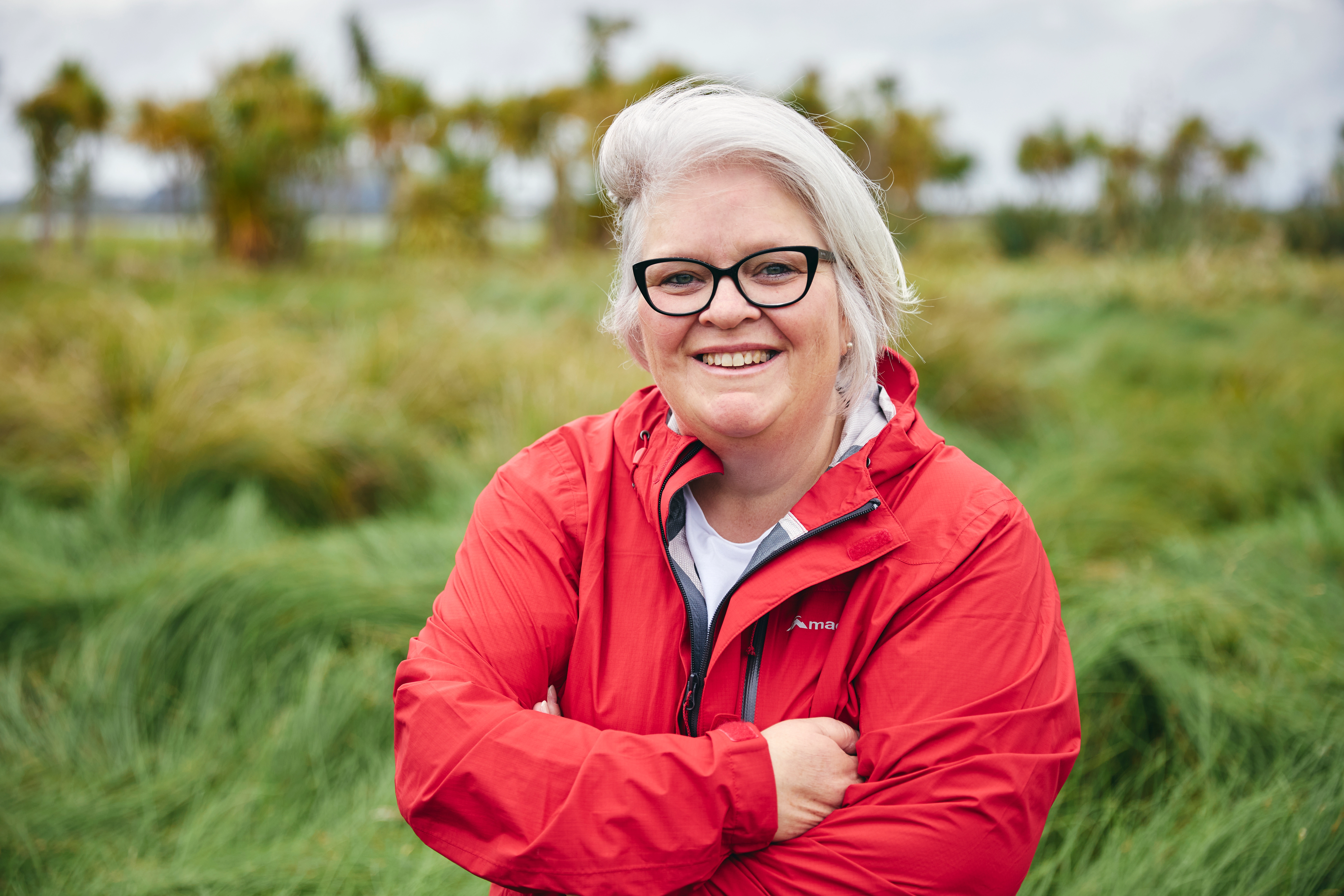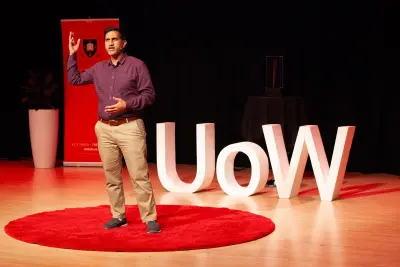
Muhammad Omer, PhD candidate at the University of Waikato
When engineers make something from metal, knowing how and when that material might fail is critical.
That becomes more complicated when the metal has been 3D printed.
One of the most important things engineers need to understand is fatigue: how a material responds to being repeatedly loaded and unloaded over time. Think of bending a paperclip backwards and forwards until it eventually breaks.
For conventional metals, engineers have decades of data about fatigue performance. With 3D-printed metals, different manufacturing parameters can affect the final product, so engineers need to understand how a newly printed material will perform.
Traditional fatigue testing can take four or five weeks. My PhD research at the University of Waikato is investigating whether useful answers can be found much faster by looking at something invisible to the human eye. Heat.
Thermal cameras detect infrared radiation and allow us to observe tiny temperature changes in a material.
When metal is repeatedly loaded and unloaded, its temperature changes slightly. When a specimen is stretched, its temperature decreases, and when compressed, it increases. Beyond a certain point, this thermoelastic response becomes nonlinear.
At the same time, heat begins to emerge as the metal moves from elastic to plastic behaviour.
My research brings these two effects together to investigate whether they can help identify the transition associated with a material’s fatigue behaviour.
I’m also combining two separate ways of analysing the thermal data – harmonic analysis and heat-source reconstruction. Results so far have indicated the two techniques are complementary and support one another.
Another important difference is how the stress is applied.
Other thermographic approaches increase stress step by step and can still take one or two days. By continuously increasing the stress amplitude, it means a test can potentially be completed in around an hour.
For industries working with metal 3D printing, that speed could be valuable. Manufacturers experimenting with different approaches could assess fatigue performance more quickly and use that information to help decide whether to continue with a particular printing recipe.
When I began the research, I did not know whether the idea would work.
One challenge was getting the fatigue-testing machine to apply the loading pattern. It took time to understand the theory, manufacture specimens, refine the experiment and work through the early problems.
About a year and a half into the work, I began seeing results that made me realise the research had real potential.
Seeing the two analysis techniques support one another in the data was an “aha” moment. Until you perform the experiment, you do not know whether one theory will support the other. Seeing that they did was a proud moment.
My interest in thermography began long before my PhD.
After completing my bachelor’s degree in Pakistan, I worked with Siemens Energy repairing and maintaining gas turbines used for power generation. That experience pushed me towards research and development.
I later completed a master’s degree in Sweden and returned to Pakistan, where I worked for the national space agency, SUPARCO, and continued developing my experience with thermographic methods.
In late 2019, I connected with Dr Rachael C. Tighe, my current University of Waikato supervisor, but Covid-19 delayed my plans to come to New Zealand. The University and my supervisor retained my PhD opportunity and scholarship until I could begin.
I am now working towards completing my PhD in June 2027.
Working at the edge of what we know has also made me think about research in the age of artificial intelligence (AI).
AI can help us find answers, but it relies on knowledge people have already created. We still need researchers willing to ask new questions, conduct experiments and generate the evidence that does not yet exist.
My own research started with an unanswered question about what tiny changes in temperature could tell us about metal fatigue. Finding the answer still required experimentation, persistence and, ultimately, creating new knowledge for others to build on.
Originally published in the Sunday Star-Times Brainwaves feature. Read the original on The Post. Brainwaves: Testing the limits of 3D-printed metals | The Post