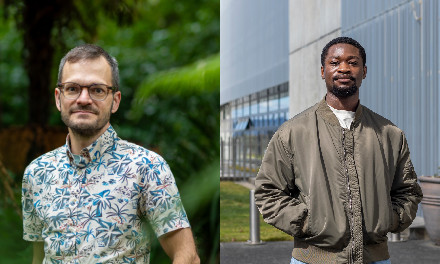
With newly announced funding, University of Waikato researcher Dr Andrew La Croix will explore whether carbon emissions from power stations could be safely stored underground to help reduce climate change.
Dr La Croix (opens in a new tab), a senior lecturer in Earth Science at Te Aka Mātuatua School of Science, has been successful with his Catalyst Fund proposal, being awarded $300,000 over three years for his project.
His research, in collaboration with experts from China’s Chengdu University of Technology, will focus on the Huntly Power Station, which, while being one of New Zealand’s largest single sources of emissions, also plays a critical role in the national electricity grid, providing backup during dry years and periods of low renewable supply.
Dr La Croix says there are important gaps in our understanding of how impurities in carbon dioxide emissions will behave underground.

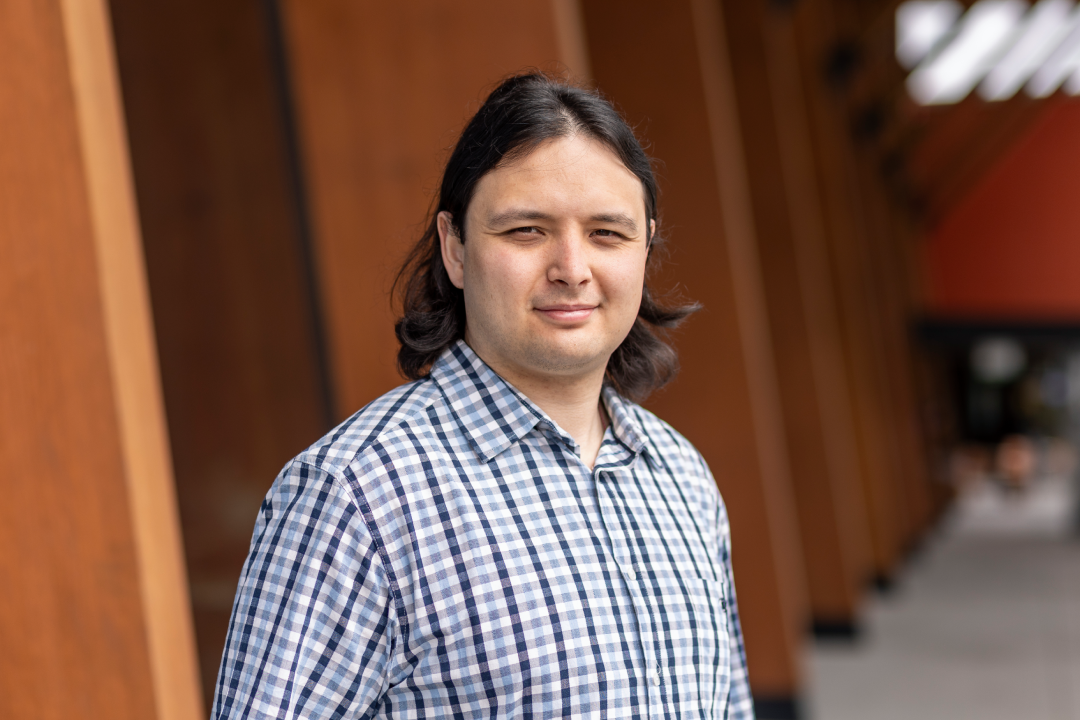
Dr Andrew La Croix
“Most research has focused on pure carbon dioxide, but emissions produced by power stations are more complex. We want to understand how these mixtures behave underground,” he says. “If we choose the right location, the carbon dioxide can stay underground for millions of years.”
The process involves injecting gases into tiny spaces between rock grains, like how water soaks into a sponge. Over time, the gases can dissolve, react with minerals, become trapped within the rock, or even create new minerals.
Dr La Croix notes that New Zealand committing to reaching net-zero emissions by 2050 is a goal that might be achievable in some sectors, but that will unfortunately see other sectors face greater challenges.
These are often referred to as “hard-to-abate” industries, where switching to electric or low emissions is not straight forward.
“The trucking industry, for example, isn’t going to have electric fleets next week. Therefore, finding a way to remove that carbon dioxide and do something with it will benefit them.”
Dr La Croix says the research could have wider relevance beyond New Zealand.
“Many regions face similar challenges with energy costs and infrastructure. This approach could be used in other remote or constrained areas to improve reliability and reduce emissions.”
The research Enhanced CO₂ sequestration from coal-fired power plants in deep saline aquifers, will involve advanced lab experiments, field data and numerical modelling to understand how impure CO₂ interacts with underground rock and water under real-world conditions, based in mātauranga Māori and environmental stewardship.
Dr La Croix says they will assess the Hamilton Basin as a potential storage site due to its deep reservoirs, low seismic risk and proximity to Huntly.
He welcomes the government funding awarded as it signals the importance of what is happening.
“That makes me excited because the science and engineering are interesting and unique. But from a social point of view it shows we’re becoming more open to applying novel methods because of what we are seeing happen due to climate change.”
Dr La Croix’s funding comes after the recent announcement of the Ministry of Business, Innovation and Employment (MBIE) funding extensions of the following University of Waikato projects:
-
Physically plausible record-shattering drought events in a warming Aotearoa’ led by Dr Luke Harrington (opens in a new tab)
-
‘Probiotic Inoculants for Seaweed Hatcheries and Aquaculture’ led by Dr Marie Magnusson (opens in a new tab)
-
‘Safe, solid-state hydrogen storage technology – Enabling New Zealand’s zero-carbon emissions targets’ led by Professor Fei Yang (opens in a new tab)
-
‘Smart-antigens for ovine antiviral hyperimmune milk production’ led by Dr William Kelton (opens in a new tab)
Research Programmes -
‘Restoring Urban Nature’ co-led by Professor Bruce Clarkson (opens in a new tab)
Deputy Vice-Chancellor Research Professor Gary Wilson (opens in a new tab) says these projects have significant real-world impact.
“It is wonderful to see the time and expertise of our researchers recognised in today’s competitive funding environment.”