 Throughout my journey, I heard the same three questions.
What do we do? How do we do it? And when should we act?
They came from marae around New Zealand that are facing, or already experiencing, coastal flooding. While every community was different, the uncertainty was shared.
I wanted to understand how climate adaptation could better align with mātauranga Māori and support Māori-led decision-making, particularly as sea level rise and managed retreat become increasingly pressing issues.
This included a personal journey connecting with my broader whānau to hear experiences of relocation due to the 1886 Tarawera eruption.
One question kept returning to me: How do you relocate a marae?
It's not simply about moving buildings out of harm's way. A marae is a place where whakapapa, history, identity and community come together. Any decisions about its future must recognise those cultural connections alongside the physical risks posed by climate change.
As part of my PhD, I turned to history, looking for examples of how Māori communities had responded to environmental change long before climate adaptation became part of our vocabulary.
Guided by the whakataukī Kia whakatōmuri te haere whakamua - I walk backwards into the future with my eyes fixed on my past, I highlighted 51 historical examples where marae communities either relocated or seriously considered moving in response to natural hazards.
I know this is just the tip of the iceberg. There will be many more examples from talking to people around the country and in kōrero tuku iho (oral tradition).
Those stories revealed that Māori communities have been adapting to environmental change for generations. They also highlighted the depth of mātauranga Māori that already exists to inform today's climate adaptation decisions.
The historical research was only one part of the project.
I also worked alongside iwi and hapū who are currently assessing climate risks to their marae. This included a wānanga, where participants explored the challenges they face, the opportunities ahead, and the kinds of support they need to make decisions that are right for their communities.
Those discussions directly shaped a new decision-making framework developed with iwi and hapū.
The framework uses the image of a waka hourua, or double-hulled waka. One hull represents tangata whenua and the other tangata tiriti. Two sails power the waka forward: one represents mātauranga Māori and the other Western knowledge. The framework highlights that we need all the tools available to come together to inform the adaptation decisions we make.
One finding emerged consistently throughout the research. Communities need more than funding. They also need equitable access to trusted information, technical expertise, and specialist support.
I am proud that the waka hourua model is now used by the new Aotearoa Society of Adaptation Professionals Rōpū Urutaunga and I am part of a project that has received funding from Earth Sciences New Zealand to further develop the concept.
Many hapū told me they needed flood modelling, geotechnical investigations or other technical advice, but accessing that expertise was often difficult. Strengthening those connections is just as important as developing better adaptation tools.
Climate change will continue to reshape our coastlines. My research shows that Māori communities do not need to start from scratch. The knowledge to help navigate these challenges already exists in our histories, our communities and our mātauranga. The challenge now is ensuring that future climate adaptation is designed with Māori, rather than simply for Māori.
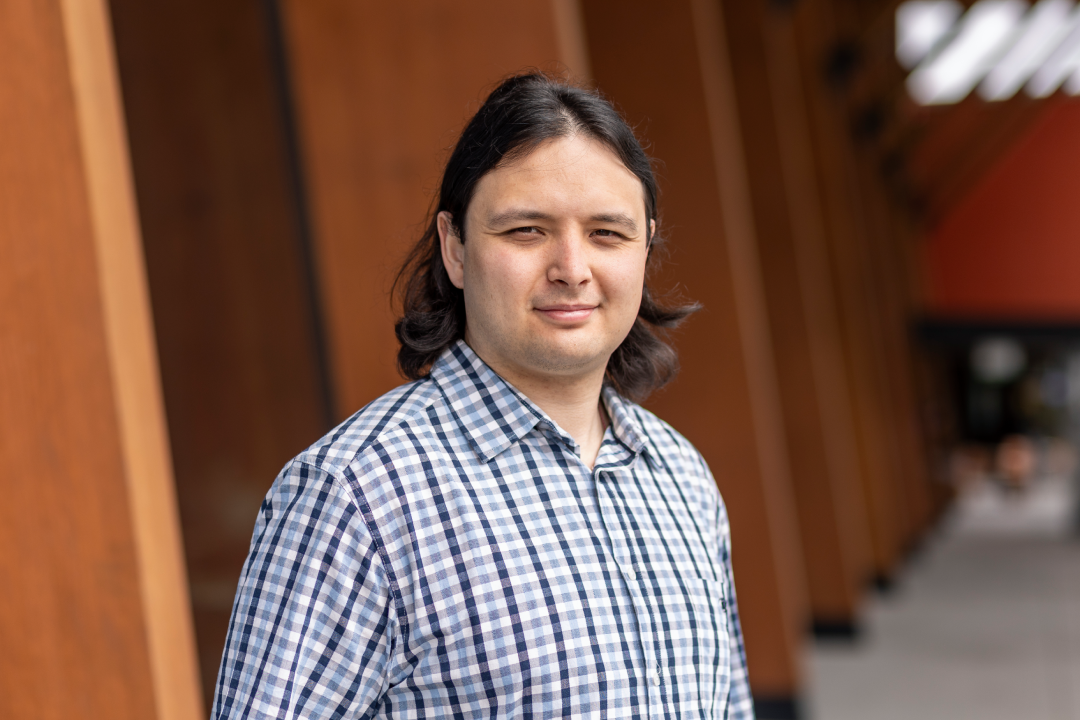
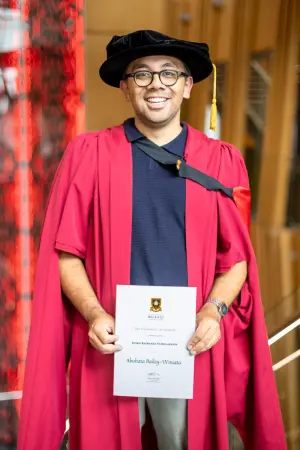
Dr Bailey-Winiata was awarded his PhD at Waikato’s Tauranga campus. He also received the University’s Koko Kairangi Prize for Best Doctoral Thesis.
Originally published in the Sunday Star-Times Brainwaves feature. Read the original on The Post. Brainwaves: How do we adapt marae? | The Post