Drawing on the whakataukī “Kia whakatōmuri te haere whakamua—I walk backwards into the future with my eyes fixed on my past,” University of Waikato PhD graduate Dr Akuhata Bailey-Winiata (Tūhourangi, Ngāti Whakaue, Ngāti Tutetawha) has worked alongside iwi and hapū to develop a framework that supports Māori-led climate adaptation decision-making.
Through his work with marae around Aotearoa New Zealand that are facing, or already experiencing, coastal flooding, Dr Bailey-Winiata says he heard the same urgent questions.
“Everyone was asking: what do we do, how, and when? Yet many existing adaptation options, processes and frameworks don’t consistently account for the cultural significance of marae or haven’t been designed to work well with mātauranga Māori and marae realities,” he says.
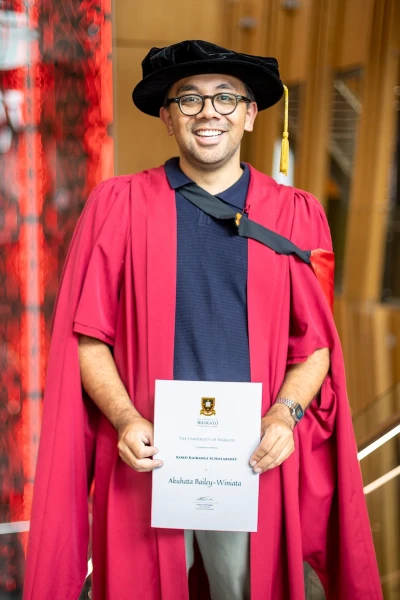
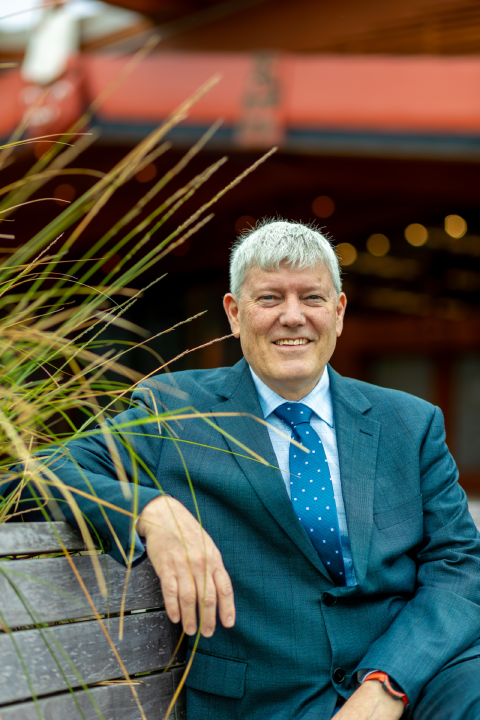
Dr Akuhata Bailey-Winiata was awarded his PhD at the Tauranga campus on 10 April
His PhD focused on how adaptation processes and decision-making tools can better align with mātauranga Māori and the lived realities of marae and their communities, particularly in the context of sea level rise and managed retreat. This included a personal journey connecting with his own broader whānau to hear experiences of relocation due to the 1886 Tarawera eruption.
“When the thesis began, managed retreat was largely being discussed at the national level. That raised a key question for me: how do we actually relocate a marae - a place of deep cultural significance and connection to land and place?” Dr Bailey-Winiata says.
“This research looked at how Māori communities are navigating climate change, and what supports are most useful for decision-making. The whakataukī ‘Kia whakatōmuri’ reminds us we need look to the past to move forward—and that’s where this work began.”
The research documented 51 historic instances where marae communities either moved—or discussed moving—in response to natural hazards, highlighting the depth of mātauranga Māori relevant to future decisions.
“But this is only the tip of the iceberg, as there will be many more examples from talking to people around Aotearoa New Zealand,” he adds.
Building on that historic information, the project held a wānanga with Māori who are currently assessing climate risks to marae, hapū and iwi, to explore the opportunities, challenges, and priorities shaping their thinking.
Insights from the wānanga informed a two-part framework developed with iwi and hapū to support decision-making for marae facing sea level rise and other climate risks.
The first part of the framework is based on partnership and uses a waka hourua (double-hulled waka) model to illustrate the concept. The second part of the framework is designed to support decision-making and incorporates Mātauranga Māori considerations such as looking to the past for guidance and considering who is on the waka to support your success.
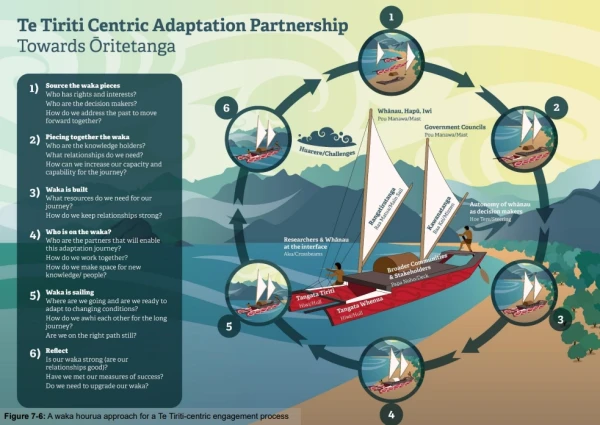
Te Tiriti-centric adaptation partnership framework
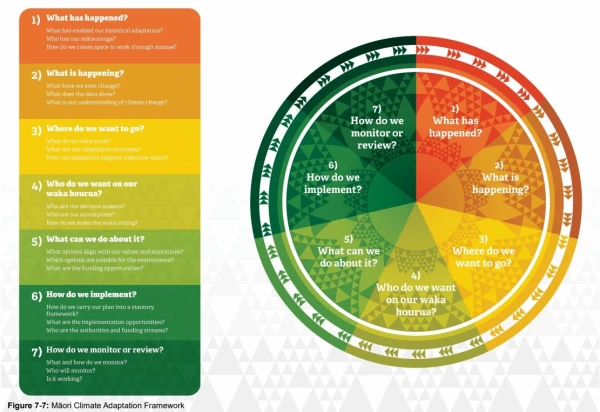
Māori decision making framework
“In the partnership framework, each hull of the waka represents tangata tiriti and tangata whenua. It has two sails: one for Western knowledge and one for Mātauranga Māori. The concept is we have sails there to power the waka.”
The waka hourua model is now in use by the recently launched Aotearoa Society of Adaptation Professionals | Rōpū Urutaunga (ASAP | RUA) (opens in a new tab) and Dr Bailey-Winiata is part of a project which has received funding from Earth Sciences New Zealand to further develop the concept.
Dr Bailey-Winiata, in his role as climate and hazard scientist at Pattle Delamore Partners, along with Lara Taylor (EOho!), Dr Shari Gallop (Beca), Milly Grant-Mackie (University of Auckland) together with hau kāinga and supported by many others are hosting a wānanga in Maketū this week to consider the tangata whenua hull. They plan to discuss whether the partnership model is something they want to pursue, and what it would look like to support managed retreat and other climate change considerations for hapū and iwi.
One challenge raised consistently through the research is resourcing—not only funding, but also equitable access to information, technical capability, and trusted expertise when it’s needed.
“Hapū I speak to often say they need geotechnical information gathered or flood modelling done, but it can be hard to access the right technical contacts and support. With the waka hourua model, we’re working to strengthen connections between tangata whenua and the expertise they choose to draw on, to support their decision-making.”
On Friday 10 April, Dr Bailey-Winiata was awarded his PhD at Waikato’s Tauranga campus. He also received the University’s 2026 Koko Kairangi Prize for Best Doctoral Thesis, in recognition of the impact of his research.
“I am so pleased to see Akuhata’s research acknowledged in this way,” says his PhD supervisor, Dr Shari Gallop (Ngāti Maru ki Hauraki, Te Rarawa).
“His PhD research combines outstanding academic rigour with real world impact, weaving together Mātauranga Māori and Western science knowledge systems. Akuhata demonstrates how historical and contemporary Māori adaptation strategies offer powerful, practical insights for responding to today's climate change challenges. His thinking moves beyond theory to provide iwi, hapū, communities, and decision makers with tools that genuinely support better, more just climate adaptation outcomes.”
Dr Gallop is an Honorary Lecturer at the University of Waikato and a Senior Associate - Climate Resilience at Beca.