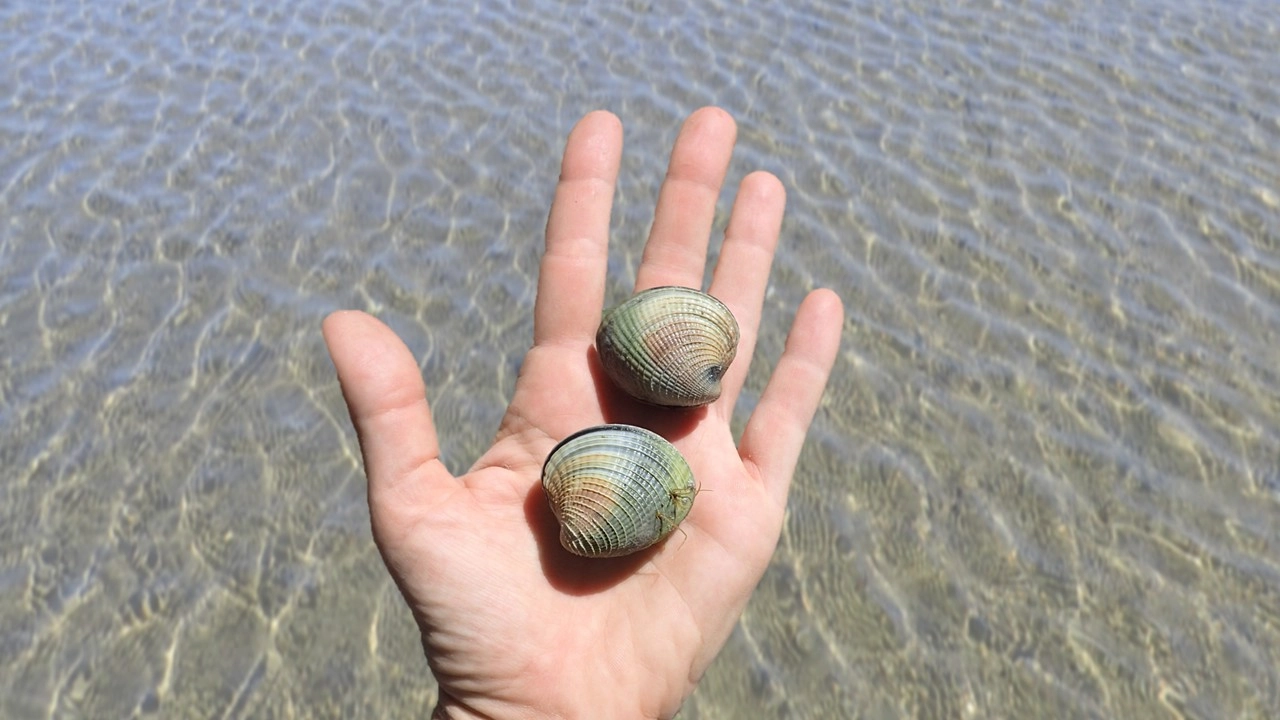
Tuangi, cockle, little-neck clam.
Whatever you call it, this taonga of Aotearoa is best known for being a tasty shellfish you can gather at low tide for your kai. Maybe you’ve watched in awe as a bucket of freshly harvested tuangi, when placed in salt water, is tricked into slowly cleaning itself as it spits out sand from its shell, unwittingly preparing itself for its own delicious demise. Or perhaps you’ve noticed the deep tracks in our estuaries at low tide, left behind by a travelling tuangi as it burrows and crawls across the sand.
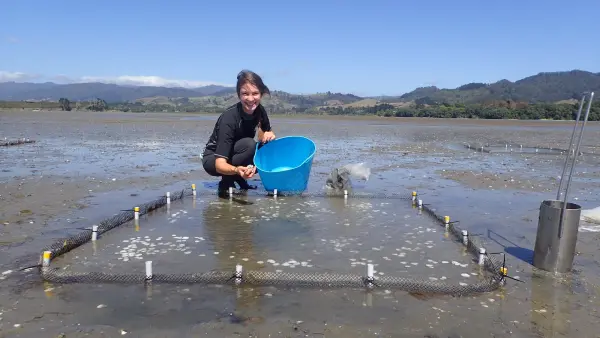
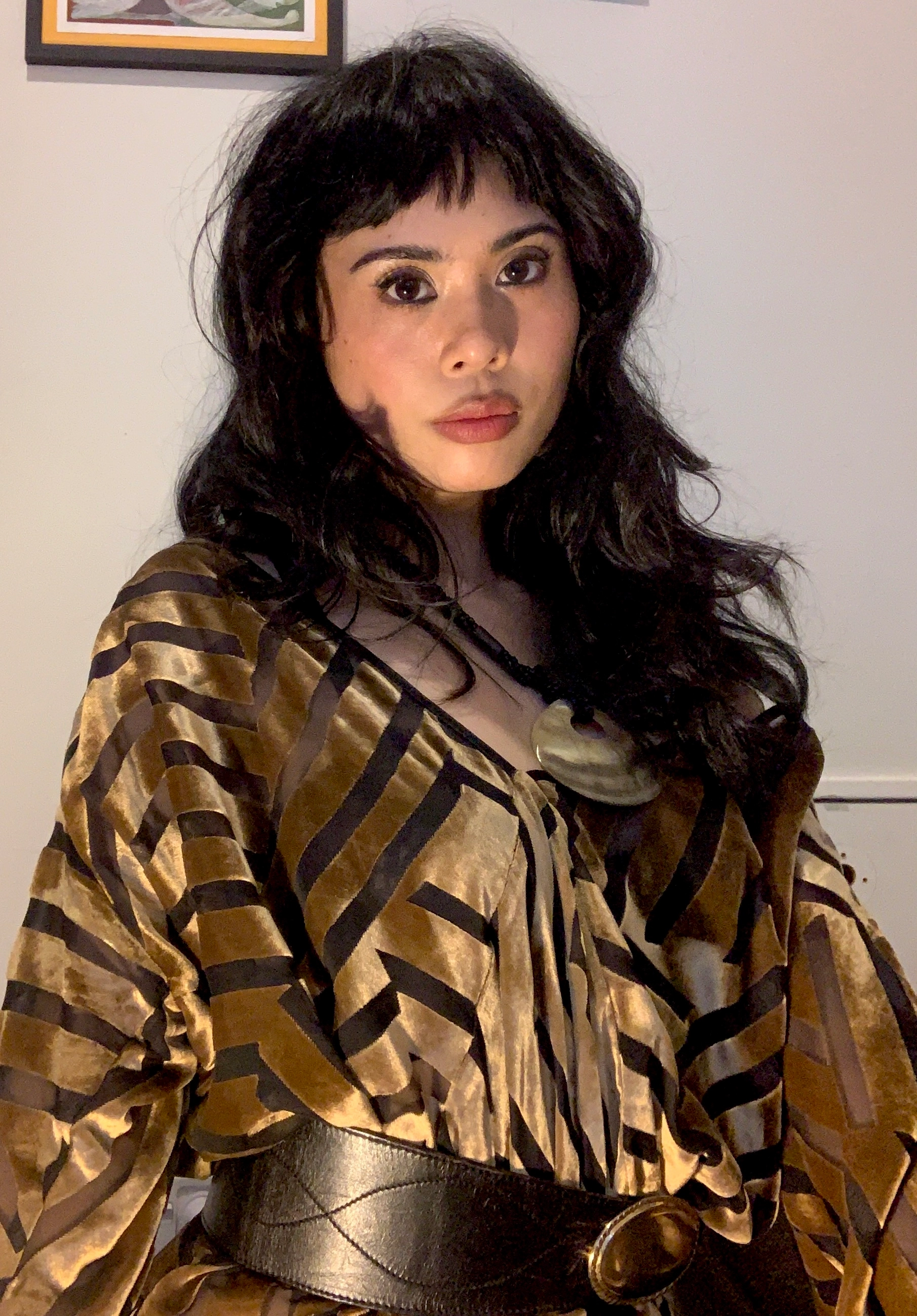
Natalie Prinz reintroduced tuangi (cockles) to parts of Tauranga Harbour
Something you may not have considered, however, is how this self-cleaning skill could be more than a simple hack for home cooks, and this movement could be more than an interesting pattern on our sandflats. They could also help save our harbour.
Research from the Tauranga campus at University of Waikato has shown that the tuangi could be a hero of Te Awanui, Tauranga Harbour, capable of altering the quality of its surrounding marine ecosystem.
Natalie Prinz, who made this discovery as part of her PhD research, says that in the space of a year, she observed the tuangi’s ability to improve the health of the seafloor in degraded parts of the estuary.
“Reintroducing tuangi meant the sediment started to breathe again, and seafloor productivity improved by 20%.
"This means the seafloor was cycling nutrients and oxygen more effectively, creating healthier conditions for marine life. This can lead to more animal life, including worms and snails, and the more different animals and diversity it has, the healthier an ecosystem becomes.
"At a larger scale, the potential flow-on effects of this could lead to improving the clarity of water, which is good for the animals living in the estuary and humans.”
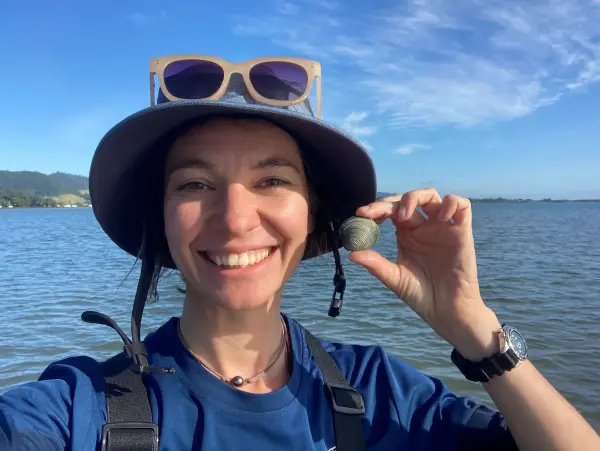
Natalie holds up a tuangi (cockle) while out in the field
She explains how the tuangi is a ‘bulldozer’ of the seafloor, and this personality trait combined with its ability to filter water is what makes it so valuable.
“Tuangi ‘bioturbate’, which means they bulldoze through the first five centimetres of the seafloor to move around. In doing so, they enhance both the amount of oxygen that goes into the sediment, and the amount of other chemicals that are expelled from the sediment. They are ecosystem engineers: they shape the sediment, interact with other animals, stir up nutrients and keep the seafloor healthy. Their presence makes a big difference to the seafloor.”
So why is this ‘bioturbating’ and movement of oxygen and chemicals necessary?
Estuaries, such as Te Awanui, form a natural point where water runs into the sea, which exposes it to external environment factors that comes off the land like silt, fertilisers, and other contaminants. These smother the sandflat, which causes the quality of the marine environment to deteriorate.
Along with their inherent ability to improve seafloor health, Natalie says it is timely to research the capabilities of tuangi, as a study from the Bay of Plenty Regional Council recently identified shellfish as being at risk to declining due to climate change in the region.
“Cockles are taonga – treasured by iwi, valued as kai, and symbolic of our connection to the coast,” she says.
Overall, Natalie says the repopulation trial was a success, highlighting that there is a clear potential to use tuangi to support the ecosystem to recover. In particular, she says estuaries like Te Awanui which are less degraded than other sites in Aotearoa, have the most potential.
This includes helping to repopulate the shellfish in degraded parts of our estuaries.
“Densities of the tuangi were higher than they had been before they were re-added, meaning they survived even in areas that were slightly less healthy. Their presence also improved the amount of baby cockles that settled.”
Community and local empowerment were other drivers behind Natalie’s research.
“I wanted any solutions to be accessible, easily implemented, and empowering for local people. My project included field work that was actively communicated with iwi and hapū, and local stakeholders, as well as outreach events to ensure the findings were communicated.”
In 2025, Natalie received the Coastal Restoration Trust Postgraduate Scholarship (opens in a new tab) to help her achieve this.
She used the funds to host a Superheroes in Marine Restoration Day during Seaweek 2025 and Sustainable Backyards event in collaboration with the local environmental charity Envirohub Bay of Plenty (opens in a new tab). She also plans to host a two-day wānanga with local iwi and hapū, scientists and community members later this year.
Natalie looks to the future of our marine ecosystems with optimism.
“In a time where bad news about the ocean and the environment prevail, I am always on the lookout for the positive. That’s why my research project centred around how we can make Aotearoa’s estuaries healthy again,” she says.
“I would love to be able to contribute to active restoration where everyone feels like they could be supporting their local estuary.”
This article was originally published in the Spring 2026 edition of Our Place (opens in a new tab) magazine.