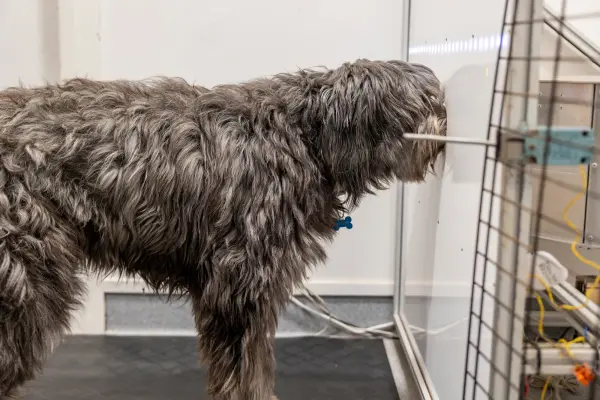
Bearded Collie Willow sniffing the sample
Scent-detection dogs at the University of Waikato are putting their noses to work to test a new way of screening for a parasitic disease affecting more than 200 million people worldwide.
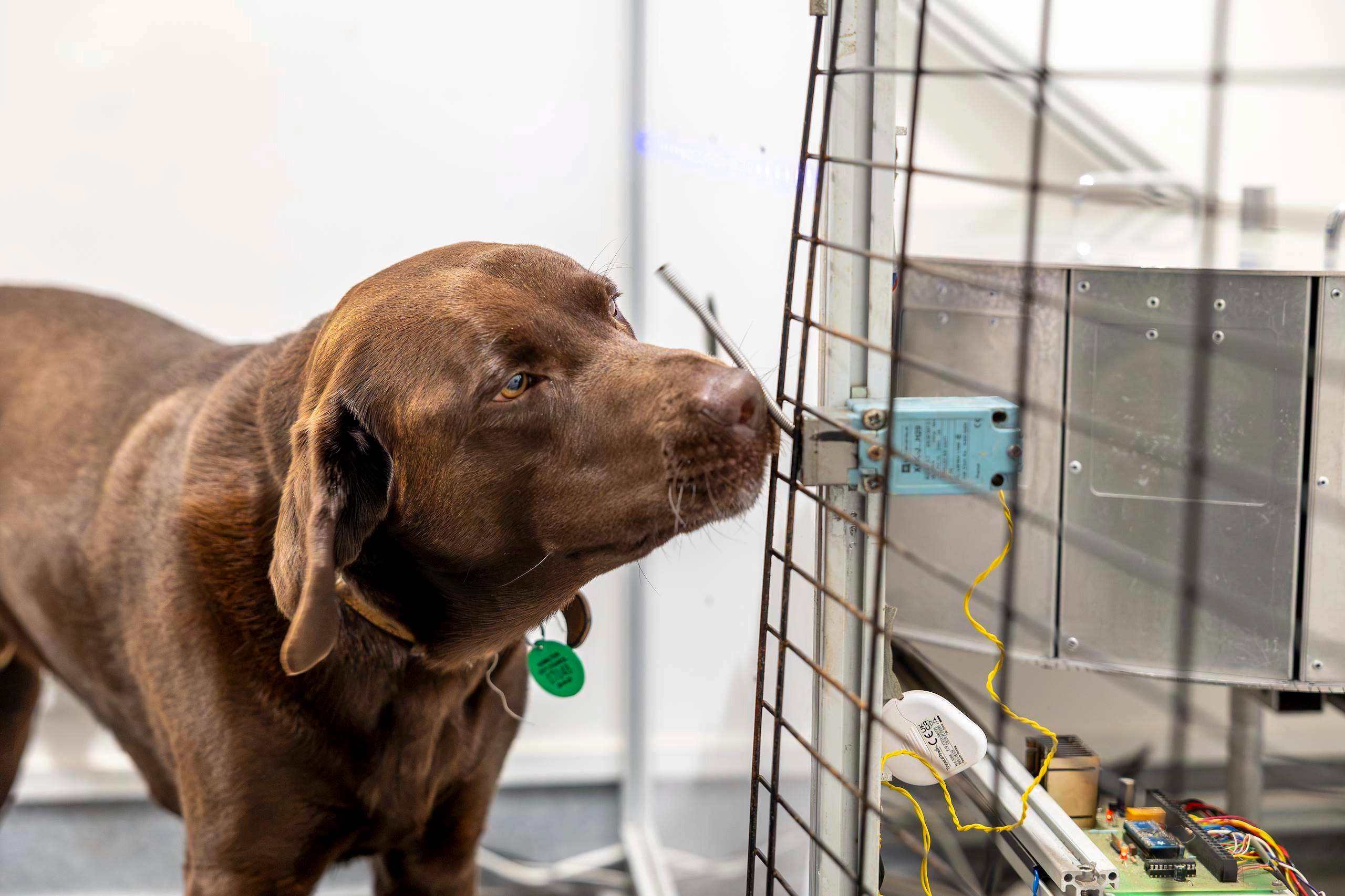
Six dogs, including Chocolate Labrador Mac and Bearded Collie Willow, are being trained to identify the scent of schistosomiasis – known more commonly as snail fever – from human urine samples as part of a proof-of-concept study led by Dr Tim Edwards (opens in a new tab) from the University's School of Psychological and Social Sciences (opens in a new tab).
The researchers want to find out whether dogs can reliably distinguish between samples from people with and without the disease, potentially paving the way for a faster, non-invasive and relatively low-tech approach to screening.
Schistosomiasis is a neglected tropical disease caused by parasitic worms and is particularly prevalent in communities where access to safe water, sanitation and healthcare is limited.

Dr Tim Edwards, Director of the University of Waikato Scent Detection Research Group
Dr Edwards says earlier and more accessible screening could make a real difference to health outcomes in affected communities across the globe.
"The idea isn't that dogs would replace existing diagnostic tests. Instead, they could potentially provide an initial screening step, identifying samples that should then go on for confirmatory testing. This could be particularly useful in places where access to laboratory testing is limited."
The study is being undertaken in partnership with researcher Carlos Graeff-Teixeira from the Federal University of Espírito Santo in Brazil, where schistosomiasis remains a significant health issue.
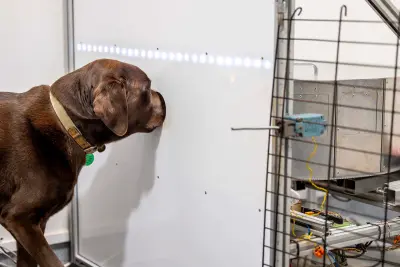
Mac is sniffing the urine samples to determine if it's a positive or negative
Urine samples from Brazil are being used to train and test the dogs at Waikato.
Inside the University's scent-detection laboratory, six dogs have learnt to operate the testing apparatus themselves.
Each dog activates a lever with its paw or nose to rotate a carousel containing samples into position. The dog then puts its nose into the device, and if it detects the target scent, it holds its nose in position. If it does not, it returns to the lever to bring the next sample into position.
Correct identifications are rewarded automatically with food.
Dr Edwards says the researchers will measure how accurately the dogs can distinguish samples from people with schistosomiasis from those without the disease.
“If we can demonstrate good accuracy, one possibility in the future could be central screening facilities where samples sent from clinics are rapidly evaluated by trained dogs,” he says.

Researchers watching the dogs at work through video recording
While relatively little research into the volatile compounds associated with schistosomiasis has been carried out, there are several possible sources of a distinctive scent.
It could come from compounds associated with the parasite itself, or from changes in the body in response to infection.
"With their extraordinary sense of smell and excellent trainability, these dogs may become an unexpected but powerful tool in the fight against parasitic disease."
A disease affecting millions
People become infected with schistosomiasis when microscopic larval parasites released by freshwater snails penetrate the skin during contact with contaminated freshwater.
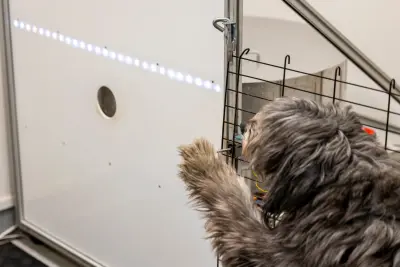
Willow moving the apparatus to the next sample with his paw
Once inside the body, the parasites develop into adult worms that live in blood vessels and produce eggs. Some eggs leave the body through urine or faeces, while others become trapped in tissues, causing inflammation and potentially leading to organ damage.
The disease is most prevalent in tropical and subtropical communities with limited access to safe water and adequate sanitation. Children can be particularly vulnerable because of frequent contact with contaminated water.
Chronic infection can cause abdominal pain, blood in the urine or stool, anaemia and damage to organs including the liver, kidneys and bladder. In children, prolonged infection can also affect growth and development. The disease is responsible for thousands of deaths every year.
The World Health Organisation has set a goal of eliminating schistosomiasis as a public health problem in endemic countries.
As part of the collaboration, a version of Waikato’s scent-detection apparatus is also being built in Dr Graeff-Teixeira’s laboratory in Brazil, supporting further research there into scent-based disease detection.

Master's student Kim Cacanindin
Master’s student Kim Cacanindin, who is studying Behaviour Analysis at Waikato, is helping train the dogs.
Originally from the Philippines, where schistosomiasis is also present, Kim says the project combines her interest in working with dogs with the opportunity to contribute to global health research.
“I love dogs and working with them. It’s a kind of therapy for me, and I’m also interested in contributing to the medical field.”
For now, Mac and Willow have an important job ahead of them – helping researchers determine whether a dog’s extraordinary sense of smell could provide a new clue in the fight against a disease affecting millions.