University of Waikato Professor Te Kahautu Maxwell
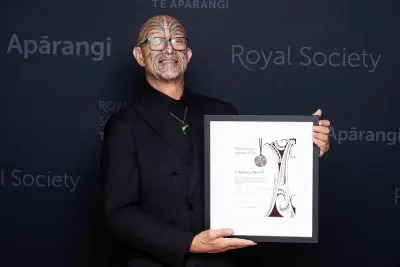
University of Waikato Professor Te Kahautu Maxwell has been honoured by Royal Society Te Apārangi with the 2026 Pou Aronui Medal, (opens in a new tab) recognising decades of leadership in advancing Māori language, performing arts and cultural leadership.
Professor Maxwell (opens in a new tab) (Te Whakatōhea, Te Whānau ā-Apanui, Ngāi Tai, Ngāti Awa, Tūhoe, Ngāti Porou, Ngāti Maniapoto), from Te Pua Wānanga ki te Ao – Faculty of Māori and Indigenous Studies, received the award at a ceremony in Auckland on Wednesday.
Professor Maxwell says the award reflects the collective efforts of the kaumātua, whānau, hapū, iwi, students, and colleagues who have shared their knowledge and supported his journey.
"I acknowledge those who have passed on and whose voices continue to guide us, and I thank those who are carrying our reo, tikanga and mātauranga forward for future generations," Professor Maxwell says.
Throughout his academic career, Professor Maxwell has focused on advancing mātauranga Māori, te reo Māori, tikanga Māori, Māori religion and Māori performing arts.
For almost 30 years, he has served on the board of Te Matatini, the national kapa haka festival, and has mentored generations of kapa haka practitioners and scholars.
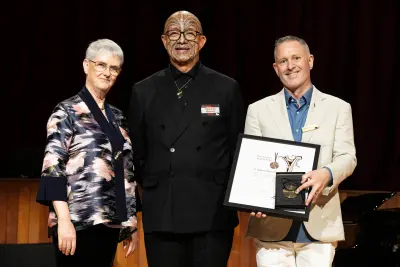
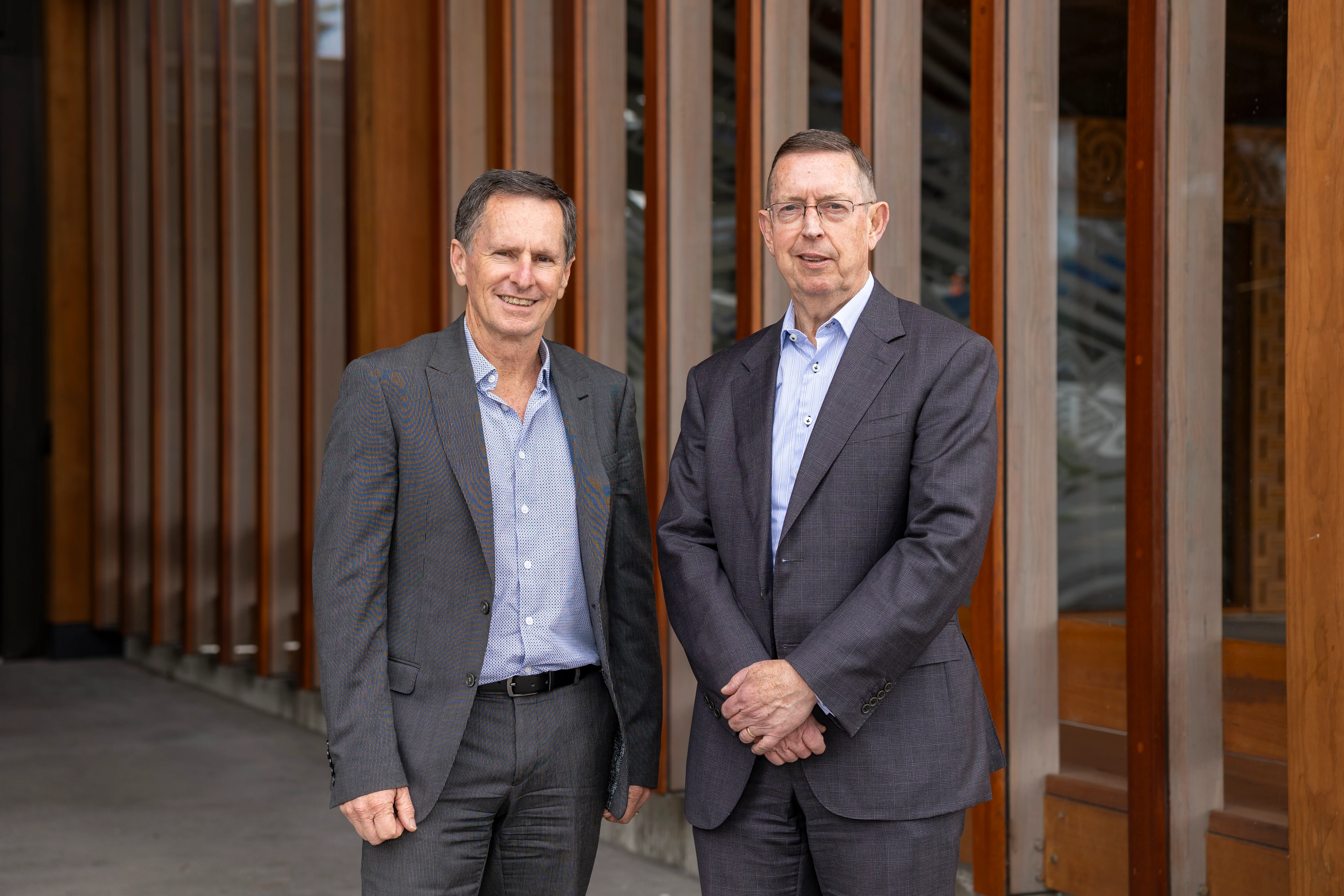
Distinguished Professor Dame Jane Harding and Professor Stephen May with Professor Maxwell
His award-winning compositions explore taonga tuku iho (cultural heirlooms), identity and constitutional relationships, while his research spans karakia, mōteatea, Māori literature, traditional knowledge systems.
He has also served on the board of Te Mātāwai and the ministerial review of the Māori Language Strategy.
As a descendant of Te Whakatōhea and an uri of raupatu, Professor Maxwell says his work is deeply rooted in the determination of his people to reclaim their language, knowledge and identity.
“The knowledge and teachings entrusted to me by my kaumātua carry a responsibility to ensure that these taonga are passed on to our mokopuna and the generations to come.
“Colonisation and raupatu disrupted the transmission of language, knowledge, and identity within our whānau, hapū, and iwi. Through initiatives such as Tohekura, Ōpōtiki Mai Tawhiti, and Ngā Taonga Tuku Iho, my work creates pathways for our people to reconnect with their distinctive reo, histories, whenua, and whakapapa.”
His 2025 book and audiobook collection of waiata, Ngā Oro me Ngā Iere a Ōpōtiki Mai Tawhiti – Sweet Harmonies in Song by Ōpōtiki Mai Tawhiti, documents this legacy.
Professor Maxwell's research also explores the relationship between Indigenous knowledge and Western science, including climate adaptation, traditional food practices, kai sovereignty and relationships between people, animals and the environment.
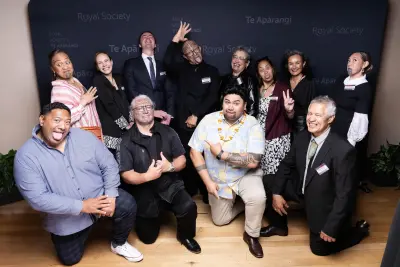
Professor Maxwell and his guests including the University's Professor Tahu Kukutai and Professor Tangiwai Rewi
“I envision a future where te reo Māori is spoken with confidence in our homes, communities, institutions, and digital spaces, and where the distinctive voices of our iwi and hapū continue to flourish.
“Aotearoa must invest in Māori-led research and free access to learning te reo, uphold the authority of whānau, hapū, and iwi over their knowledge and taonga, and support the application of mātauranga Māori in science, climate adaptation, and kai sovereignty.”
The Pou Aronui Medal recognises distinguished service to the humanities over a sustained period, including contributions to researchers, public policy and national leadership.