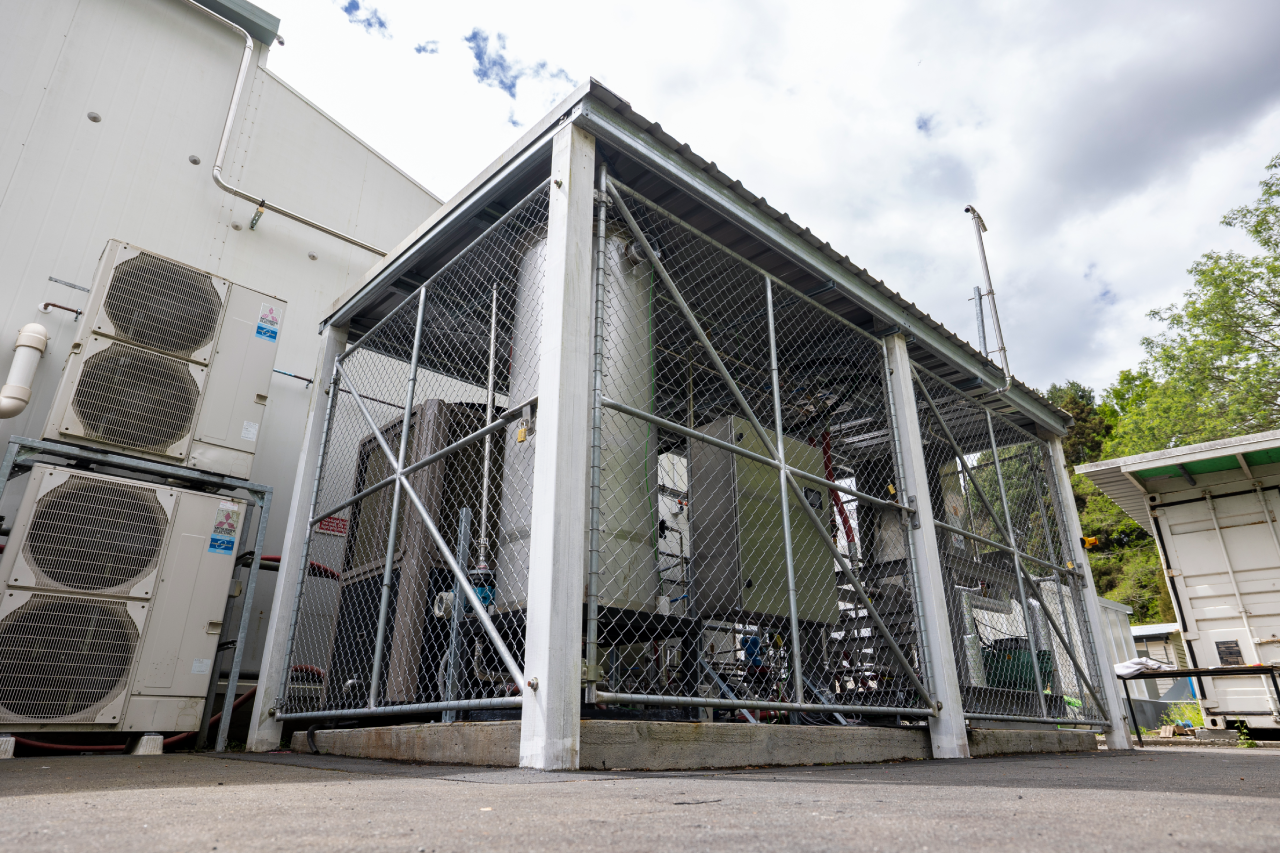
With rising energy costs and dwindling natural gas supplies threatening New Zealand’s industrial future, University of Waikato researchers could have a solution to help industry meet its energy needs and prevent further deindustrialisation
A team of Waikato engineering researchers from the Ahuora Energy Centre (opens in a new tab), in collaboration with Excel Refrigeration and Air Conditioning, have produced New Zealand's first pilot-scale heat pump capable of producing steam, offering businesses a more efficient way to cut carbon emissions from industrial heating.
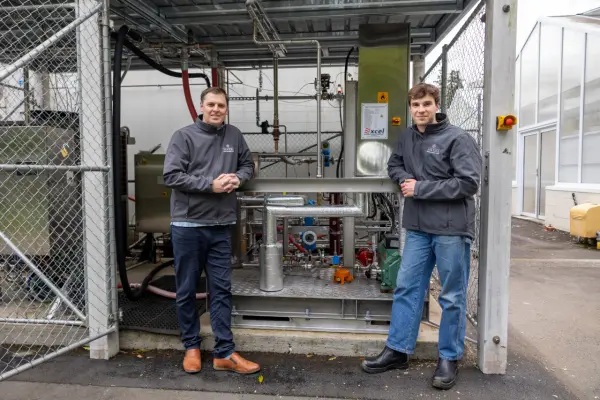
Dr Tim Walmsley and Dr Keegan Hall with the steam-generating heat pump
The system shows how high-temperature heat pumps could replace conventional boilers in industries that rely heavily on low-pressure steam, including dairy, meat, food and wood processing.
The steam-generating heat pump will be showcased at the University event, Steam Reimagined: High-Temperature Heat Pumps for New Zealand Industry, being held at The Pā on the Hamilton campus on 26 November 2026. The project and event are co-funded by the Energy Efficiency and Conservation Authority (EECA).
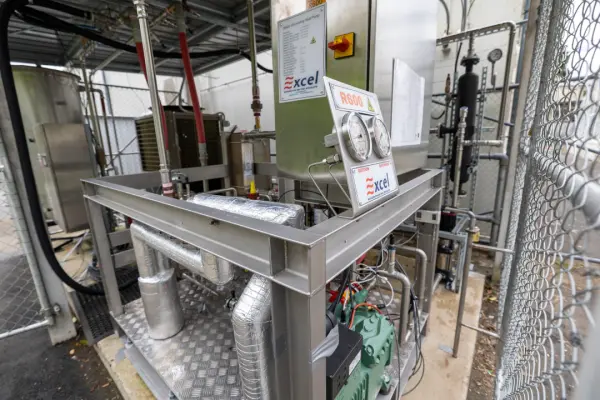
New Zealand's first pilot-scale heat pump
Project lead Dr Keegan Hall says factories have limited options when looking to reduce emissions from industrial heat.
"Electric boilers are relatively simple to install but have high operating costs, while biomass boilers require access to resources such as wood chips, for which demand is increasing."
Heat pumps capture heat that might otherwise go to waste and raise its temperature so it can be reused.
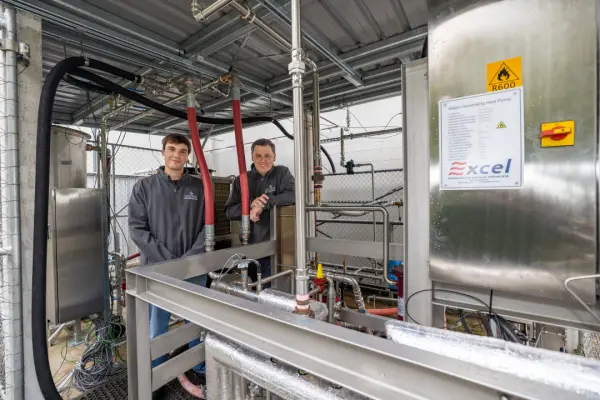
Heat pumps capture waste heat and raise its temperature so it can be used again.
“For every unit of electricity you put in, you can get three or four times the heat out,” Dr Hall says.
That efficiency can help lower energy costs for industry.
While household heat pumps typically produce temperatures up to 55 ˚C, the Waikato system is designed to generate 120˚C steam and 85˚C hot water.
It could, for example, recover heat from warm wastewater before it is discharged, producing steam to sterilise milk and hot water to clean equipment after use.
Excel Refrigeration and Air Conditioning contributed industrial refrigeration expertise to the development of the steam heat pump.
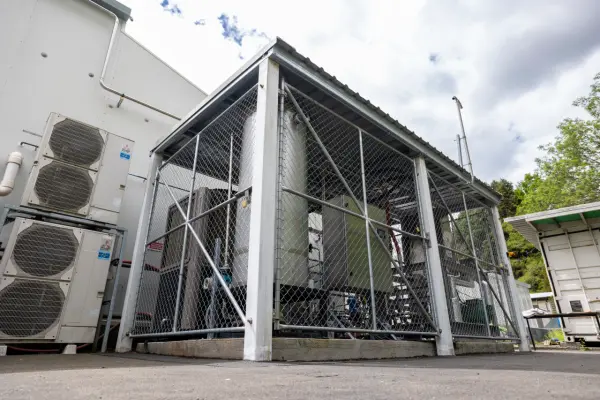
Household heat pumps typically reach 55°C. Waikato’s industrial heat pump is designed to produce steam at 120°C and hot water at 85°C.
“Working with Excel has helped us bridge the gap between research and industry. They bring experience in industrial refrigeration, which has been really valuable in making sure the system is practical, reliable and designed for real industrial use, with learnings that can be carried through to full scale applications,” Dr Hall says.
Excel Refrigeration and Air Conditioning Director Ben Noble says being part of creating this product is exciting and offers sales opportunities to apply the technology in industrial settings.
“From concept to delivery, Excel has thoroughly enjoyed the opportunity to collaborate with the University in the development and build of this exciting technology and leap forward in our industry.
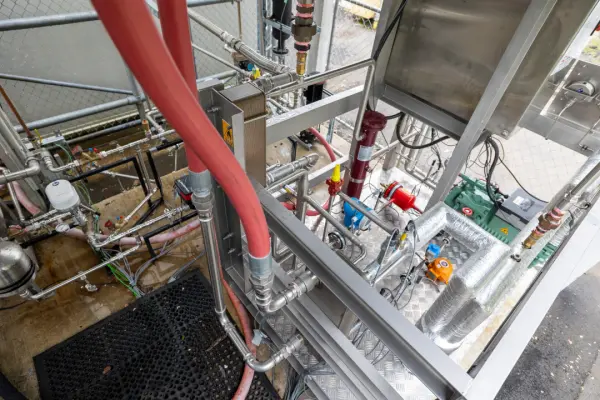
Excel Refrigeration and Air Conditioning brought industrial refrigeration expertise to the development of Waikato’s steam-generating heat pump.
“The utilisation of heat recovery technology is the way of the future and Excel, along with the University team, are excited and feel privileged to be a part of this groundbreaking opportunity.”
The project received co-investment from the Energy Efficiency and Conservation Authority (EECA) who has been supporting industrial heat pump innovation for over a decade.
“Heat pumps have already demonstrated their value for many businesses, but there are still only a handful of examples that give confidence to industries requiring very high-temperatures and steam,” says Kanchana Marasinghe, EECA’s Manager of Innovation & Technology.
“By working alongside the University of Waikato and industry partners, this project is helping to show what’s possible for industrial process heat and giving businesses that rely on gas and other fossil fuels greater confidence to explore electrification.”
Ahuora Energy Centre Director Dr Tim Walmsley is proud to see the steam-generating heat pump come to fruition after nearly two years of planning, designing, building, and commissioning.
“This project shows the value of universities and industry working together to develop practical solutions. The next step is to implement the technology on a larger scale, starting with an early adopter,” Dr Walmsley says.