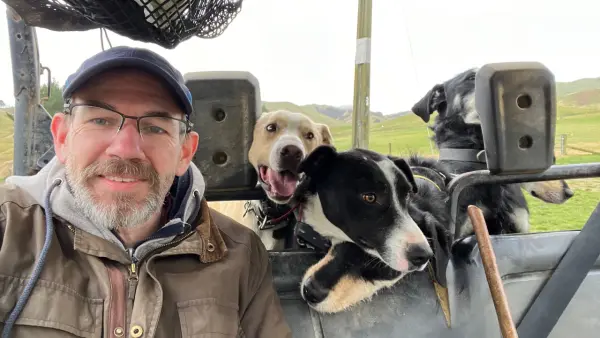
Professor Gareth Enticott
Fifty years ago, two New Zealand Huntaways named Bob and Jan became the first of their breed to be exported to Wales.
A new book by Cardiff University's Professor Gareth Enticott tells what happened next and traces the history of the Huntaway in New Zealand.
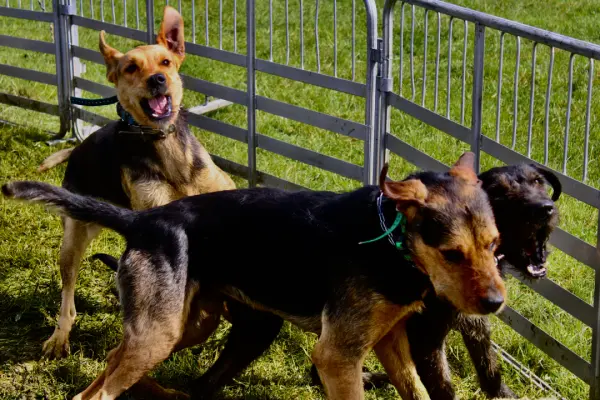
Making Sense of Sheepdogs explores how sheepdogs shaped farming and rural life around the world.
Supported by the University of Waikato through its partnership with Cardiff University, Enticott's research explores how sheepdogs helped shape New Zealand's farming identity and connect rural communities here and in Wales over 150 years. It follows the dogs, shepherds, and farming knowledge that moved between the two countries and influenced life on both sides of the world.
Waikato supported the project in 2022 through its joint Collaborative Seed Fund with Cardiff University. The fund is part of Waikato's strategic international partnership with Cardiff, helping staff at both universities build lasting collaborations in research, teaching and professional services.
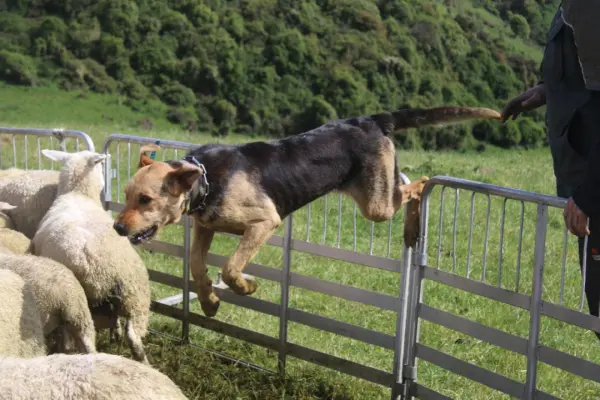
Half a century ago two New Zealand Huntaways headed to Wales
Professor Iain White at the University of Waikato explains that the project emerged after a series of discussions exploring the links between Wales and Waikato, and how people, ideas and practices have travelled between places.
The findings feature in Making Sense of Sheepdogs, the first academic book to explore how relationships between sheepdogs, farming cultures, rural identities and agriculture have evolved across the world.
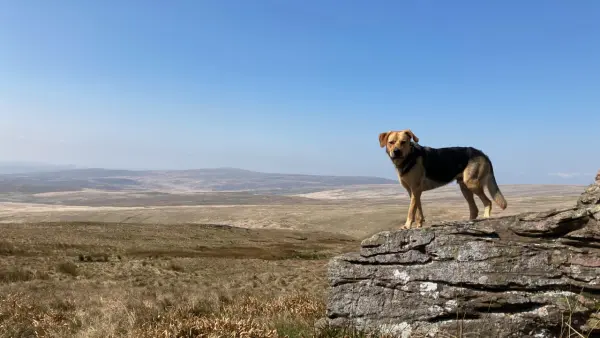
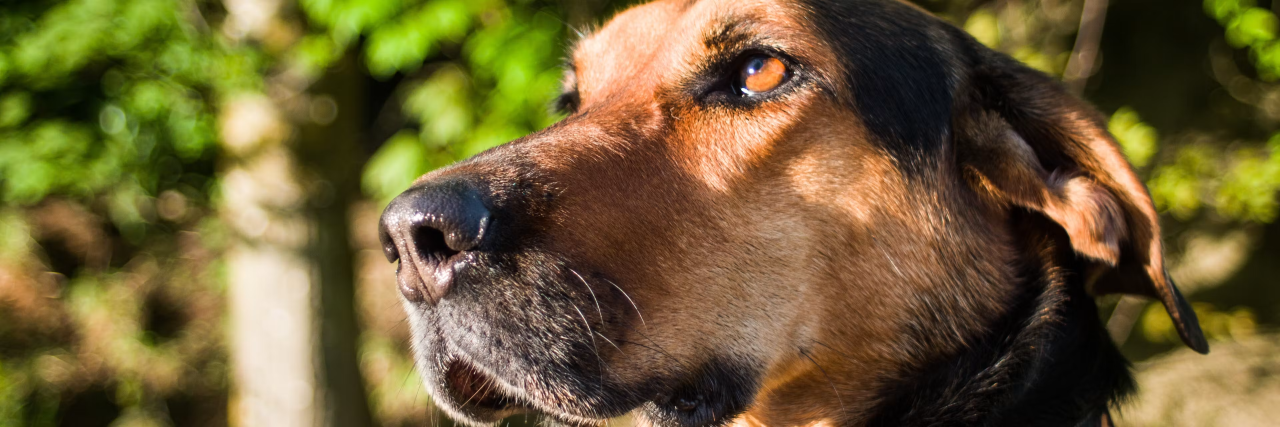
A Huntaway in Wales
Professor Enticott says sheepdogs are part of a much bigger story about migration, breeding, belonging and agricultural change.
"At its heart is a simple idea: sheepdogs do more than herd sheep. The relationships between dogs, shepherds and landscapes have helped shape distinctive farming cultures, from the silent stare of the Border Collie to the bark of the New Zealand Huntaway," he says.
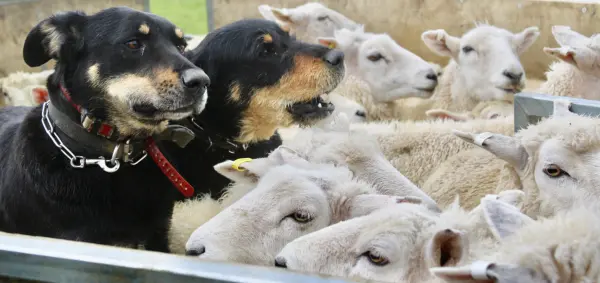
Sheepdogs, shepherds and shared farming knowledge have linked New Zealand and Wales for 150 years.
The book traces how nineteenth-century British sheepdog trials helped establish the Border Collie as the ideal working dog, reflecting Victorian ideas about beauty, order and improvement. The International Sheep Dog Society helped spread that vision across the British Empire.
New Zealand shepherds, however, questioned whether imported dogs suited local conditions.
"This is the first global history of the Huntaway. It's a story of generations of shepherds trying different approaches and using their experience to develop a dog that suited New Zealand farming," Professor Enticott says.
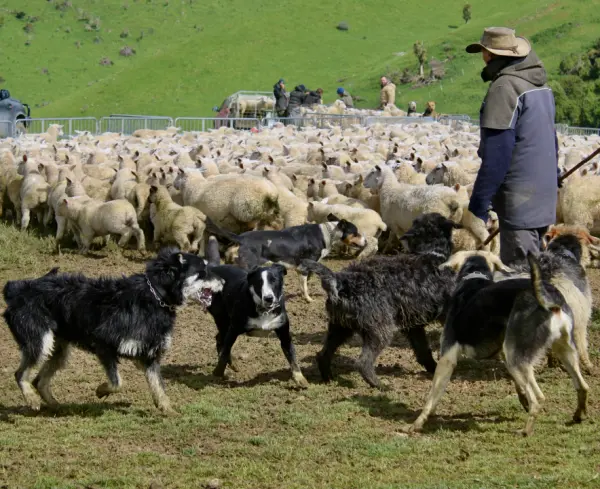
Waikato supported the project in 2022 through its joint Collaborative Seed Fund with Cardiff University.
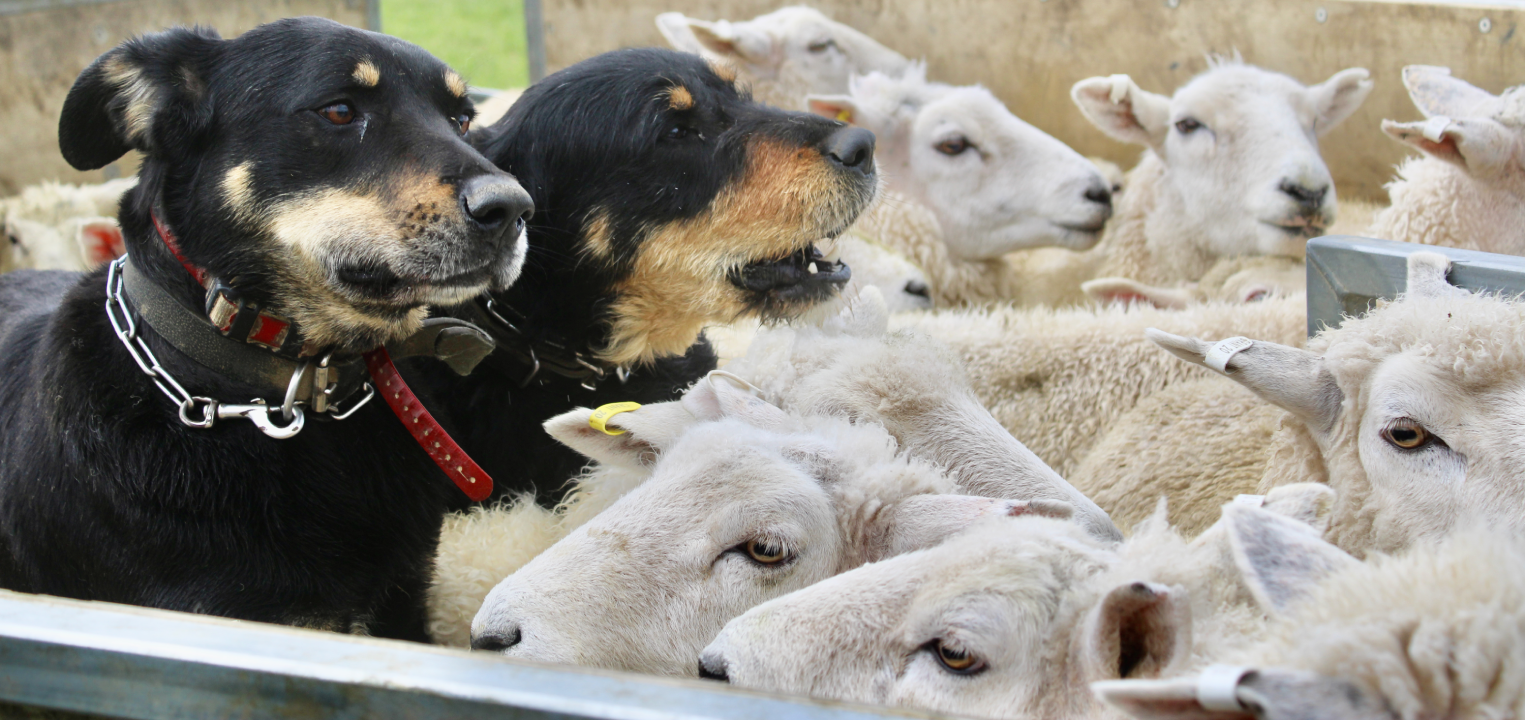
The book also examines the Huntaway's defining feature: its bark. While modern bark-up competitions reward volume, shepherds and breeders have long held more nuanced views about what made an effective working bark.
"A good Huntaway is not simply noisy, but uses its bark effectively, applying pressure at the right time, in the right way and with the right intensity," he says.
"Yet many shepherds now worry that the Huntaway's natural noise is giving way to more uniform and ‘robotic’ dogs, raising questions about what might be lost as breeding priorities continue to change."
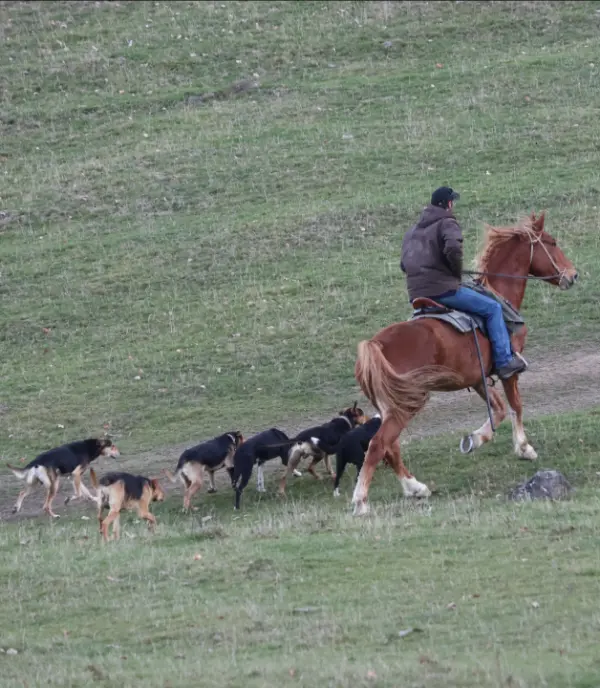
Sheepdogs and shepherds helped shape rural life in New Zealand and Wales.
The research also raises questions about the future of the landscapes and communities that working dogs have helped shape, as forestry and carbon markets put pressure on sheep farming in both countries.
"For many, the issue is more than land use. It is about the future of rural cultures, skills, and ways of life that have developed alongside working dogs for generations,” Professor Enticott says.