Boots, helicopters and field equipment could be helping tiny organisms travel between some of Antarctica's most isolated environments, new research suggests.
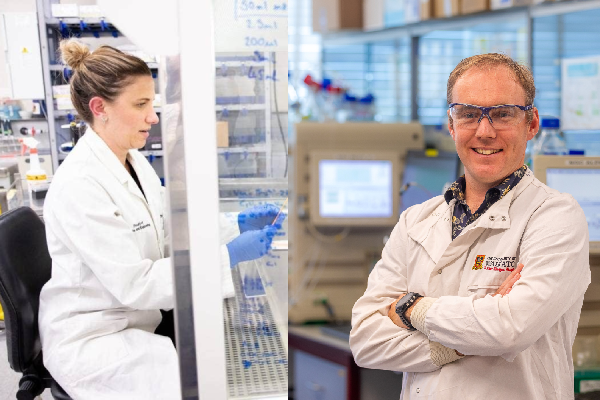
University of Waikato researcher Dr Ang McGaughran (opens in a new tab) says the findings raise questions about how scientific fieldwork could connect otherwise isolated microbial communities.

Dr Ang McGaughran
The research focuses on the McMurdo Dry Valleys, where neighbouring locations can support distinct communities of microscopic life despite being relatively close together.
To investigate, Dr McGaughran and researchers Ms Ashleigh Stanners and Dr Manpreet Dhami collected samples during routine weather station servicing in the 2024–25 Antarctic summer.
Scientists’ boots could be giving microscopic hitchhikers a ride between some of Antarctica’s most isolated valleys.
While Antarctic biosecurity has traditionally focused on keeping foreign organisms off the continent, the findings suggest that moving microbes between sites within Antarctica also warrants attention.
The Dry Valleys form Antarctica’s largest ice-free region. Their cold, dry conditions, limited nutrients, and scarce liquid water make survival difficult and help keep local microbial communities separate.
Each of the Valleys hosts unique microbial diversity and our actions could be removing these distinctions, potentially resulting in overall biodiversity loss and reduced ecosystem resilience.
Scientific fieldwork creates connections between these environments as people, aircraft, and equipment move from one location to another.
To investigate whether those movements could redistribute microbial material, Dr McGaughran and her team collected samples during routine weather station servicing in the 2024-25 Antarctic summer.
Sampling covered Scott Base and 10 field locations, including Miers Valley, Commonwealth Glacier, Victoria Valley and Don Juan Pond.
The team collected soil samples and took DNA swabs from boot soles, helicopter skids, tents, and equipment boxes. Samples were transferred to the University of Waikato’s containment facilities in Hamilton for analysis.
Using DNA sequencing, researchers compared the microbial signatures found in soils with those detected on boots and equipment. They also examined whether patterns followed the order in which field sites were visited.
Helicopter skid samples showed an even greater proportion of variants previously detected at other sites than footwear samples.
Together, the findings suggest field operations could provide pathways for microbial material to move between otherwise isolated environments.
“Up to 73% of microbes detected on footwear were also detected at sites that had been previously visited on the same operational route. That suggests that human field operations are indeed moving microscopic DNA between otherwise disconnected sites,” Dr McGaughran says.
Researchers also examined equipment before deployment, after its return and following cleaning.
Cleaning changed the microbial signatures detected and reduced some overlap with local soils but did not remove all shared DNA signatures. The results suggest cleaning can alter which microbial material remains on equipment without consistently reducing the diversity of microbial DNA detected.
Further research using methods that distinguish living organisms from residual DNA will help determine whether transferred microbes can survive, establish themselves, and potentially affect Antarctic ecosystems.
The study supports incorporating microbial monitoring into the Antarctic biosecurity programmes and improving cleaning procedures, particularly before equipment is deployed to the field.
Footwear, shared equipment, and helicopter contact surfaces were identified as key priorities.
Most importantly, the research team need to assess the potential ecological impact of the findings – does the detected DNA ultimately represent living organisms being redistributed across sites, or do the microbes not survive the journey?
"Antarctic field programmes should also test different decontamination procedures to see if the current cleaning protocols can be improved – meaning more microbial samples get removed via disinfection,” Dr McGaughran says.
Understanding these pathways could become increasingly important as climate change alters the environmental barriers that currently restrict microbial movement and survival.
The next challenge is to establish whether the microbial material travelling with field operations represents a temporary trace of human activity or could lead to lasting changes in Antarctica's distinctive ecosystems.