Most people don't expect seaweed to smell quite so... memorable.
They probably don't expect it to be fermented like kombucha either.
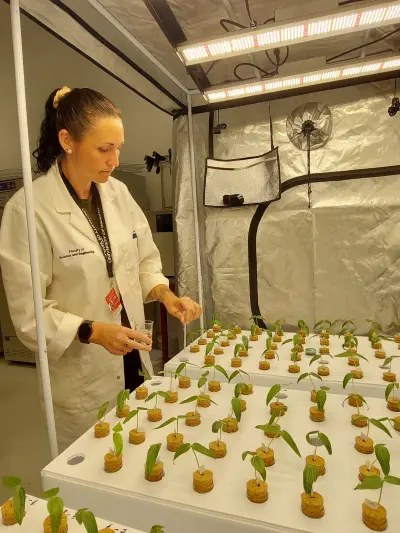
Dr Holly Robertson testing the effects of fermented seaweed biostimulants on mung beans in hydroponics
But after spending the past few years brewing green seaweed in a University of Waikato laboratory on the Tauranga Harbour, I believe fermentation could be one of the missing pieces in helping us grow more food while improving system wide health and reducing our impact on the environment.
My fascination with the ocean – and the intriguing green marine algae that lives within it – began long before my PhD. My dad, who passed away this year, inspired my love for marine science through countless days spent by the water; camping, fishing, skiing, or waiting for him to return from a dive with whatever treasures he'd discovered.
Later, when I became a mother, those memories took on even greater meaning. They reinforced my desire to pursue a career that would help protect the places that had brought me so much joy growing up.
As the world's population grows, farmers face increasing pressure to produce more food while reducing their environmental footprint. Seaweed biostimulants are emerging as one promising solution.
Unlike fertilisers, which supply nutrients directly to plants, biostimulants contain naturally occurring compounds – including proteins, polysaccharides and plant hormones – that stimulate biological processes in plants and soil.
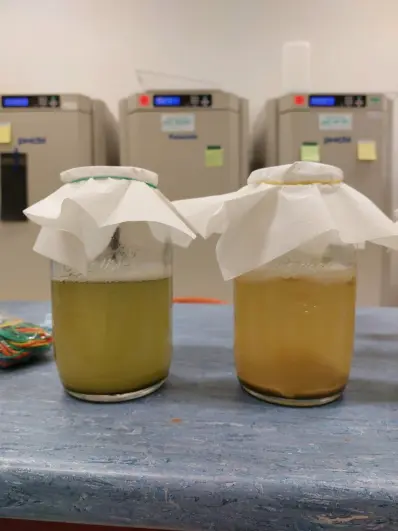
Brewing green seaweed in a laboratory to test the theory that it was one of the missing pieces in helping to grow more food while reducing our impact on the environment.
Rather than directly feeding a plant, biostimulant application improves the uptake and use of the nutrients already available, encourages stronger shoot and root growth, and primes the plant for greater resilience during drought, heat and other environmental stresses.
Most commercial seaweed biostimulants are made from seaweed collected from beaches or harvested from the wild, but supply isn't always reliable and quality varies.
Using a cultivated green seaweed called Ulva stenophylloides, I developed a low-cost fermentation process inspired by kombucha brewing. Instead of relying on harsh chemicals, high pressure or extreme heat to extract beneficial compounds, I let naturally occurring microbes do much of the work.
Much of my PhD was spent at the University of Waikato Coastal Marine Field Station, where rows of temperature-controlled cabinets fermented seaweed while I adjusted recipes, from the quantity of seaweed and sugar.
By the end, I had produced 27 different fermented extracts, each with unique chemical profiles
One recipe stood out.
When tested on mung bean seedlings, it increased plant growth by around 15 percent and produced larger, healthier root systems. Those stronger roots can help plants absorb water and nutrients more efficiently, making them cope with challenging growing conditions.

Most commercial seaweed biostimulants are made from seaweed collected from beaches or harvested from the wild, but supply isn't always reliable and quality varies.
While the research is still at an early stage rather than a finished commercial product, it opens the door to more environmentally friendly ways of supporting food production.
My Bachelor of Science and Master of Science in Ecology and Biodiversity from the University laid the foundation for my PhD. But it was the University of Waikato Summer Research Scholarship in Tauranga, where I spent my days walking along the beaches of Tauranga Harbour, mapping and collecting sea lettuce to observe how it moved over space and time, that cemented my interest in postgraduate research and joining the seaweed team.
It was a dream job, but it also introduced me to an emerging area of science exploring how seaweed could support sustainable agriculture and healthier waterways.
For me, this work has always been about more than seaweed. Healthy soil is one of our most valuable resources, yet it isn't renewable within our lifetime. If we can grow more food using less land, reduce erosion and nutrient runoff, and improve soil health at the same time, we can better protect the ecosystems that sustain us.
If humble green seaweed can help us do that, I think it's worth paying attention to.
Originally published in the Sunday Star-Times Brainwaves feature. Read the original on The Post. Brainwaves: I spent years brewing seaweed to help grow tomorrow's food | The Post