The University of Waikato community came together across its Hamilton and Tauranga campuses for Kīngitanga Day, celebrating the University’s unique and enduring relationship with the Kīngitanga.
Held each year to honour the University’s connections with the Kīngitanga, Waikato-Tainui and iwi across the motu, Kīngitanga Day provides a unique opportunity for kaimahi, tauira and the wider University community to come together and experience the cultural richness and diversity of the University.
This year’s theme, ‘Tīmatangia Te Puea: Honouring the legacy of service, excellence and collective responsibility’, drew inspiration from the vision and determination of Te Puea Hērangi, who was instrumental in the establishment of Tūrangawaewae Marae and a fierce advocate for the health and wellbeing of her people.
Te Puea understood the importance of relationships and connections across the motu and Pacific, with her legacy of service, shared purpose and collective responsibility reflected throughout this year’s Kīngitanga Day.
Across both campuses, the programme brought the theme to life through kōrero, presentations, workshops and activities celebrating mātauranga Māori, te reo Māori, tikanga, whakapapa and connections between Indigenous communities.
In Hamilton, the day began with Te Hikinga o Te Kara (raising of the flag), karakia and a mihi whakatau, followed by a programme that included kōrero on the legacy of Te Puea, the origins of Kīngitanga Day and Māori storytelling, alongside cultural activities.
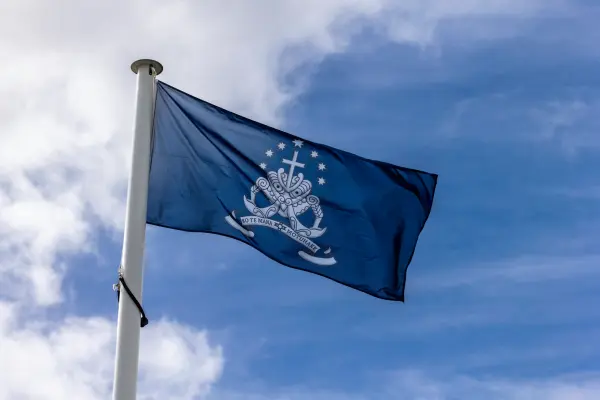
Te Hikinga o Te Kara at the University's Hamilton campus
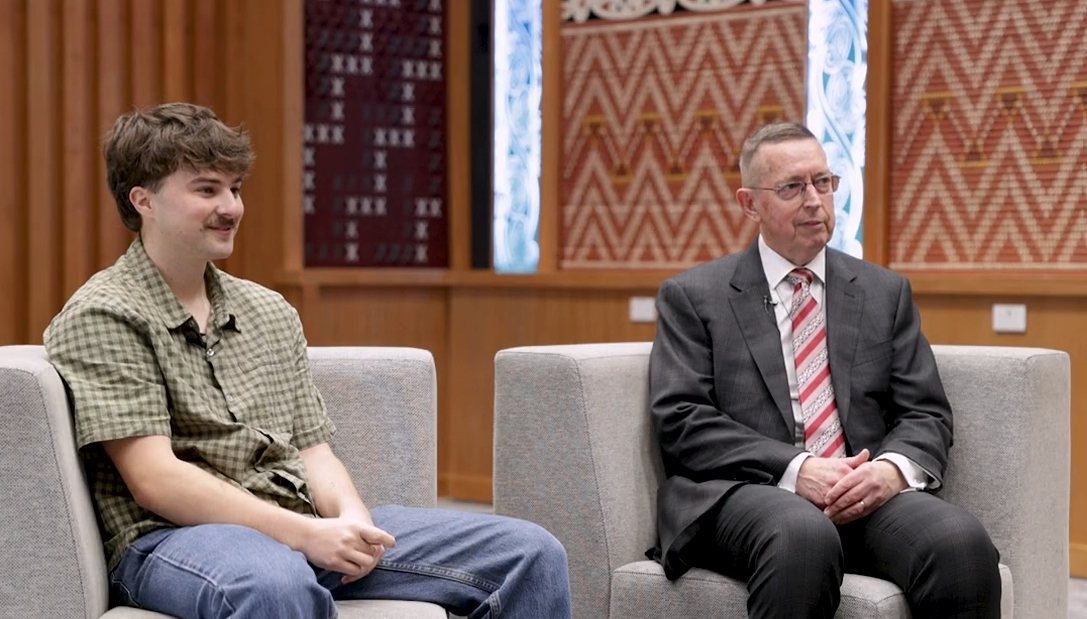
A highlight was an inaugural professorial lecture from Professor Te Kahautu Maxwell (Te Whakatōhea, Ngāi Tai, Ngāti Awa, Te Whānau a Apanui, Ngāti Porou, Tūhoe, and Ngāti Maniapoto) of Te Pua Wānanga ki te Ao – Faculty of Māori and Indigenous Studies, reflecting on more than 30 years of research, teaching and cultural leadership.
Professor Maxwell explored the connections between te reo Māori, tikanga Māori, mātauranga Māori and kapa haka, and the importance of ensuring knowledge is protected, practised and passed between generations.
He spoke about reclaiming language and identity following generations of colonisation and raupatu, including the importance of protecting the distinctive reo of individual iwi and hapū.
Looking to the future, Professor Maxwell said te reo Māori needed to be present not only in homes and on marae, but throughout education, workplaces, public institutions and digital spaces.
“Our children should not have to choose between cultural strength and participation in the wider world.”
He also highlighted the role of rangatahi as future creators and holders of knowledge, and the opportunities presented by new technologies when they are used in ways that uphold cultural authority.
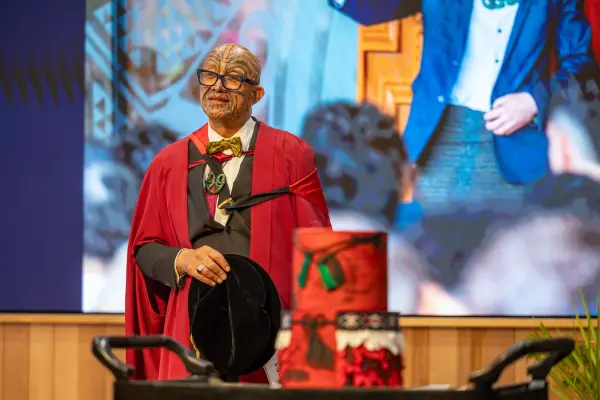
Professor Te Kahautu Maxwell
“The test is not whether technology is impressive, the test is whether it strengthens relationships, grows speakers, protects cultural authority and returns value to whānau, hapū and iwi.”
Professor Maxwell said his professorship represented a responsibility to future generations.
“We must receive taonga from those before us, restore what has been diminished, use it courageously in the present, and pass it forward with greater strength.
“This professorship is therefore not a conclusion. It is another point of responsibility for us as academics to be beacons for the future generations.”
Indigenous connections across the Pacific
Another Hamilton session reflected on the first University of Waikato student exchange with Montana State University, which saw a group of students travel to Montana in July for a two-week visit.
The exchange brought together Māori and Indigenous communities in the United States, giving students the opportunity to learn directly from communities on their whenua and explore their approaches to language, culture, knowledge and identity.
While the communities have distinct histories and experiences, students found common ground in the importance placed on whenua, whakapapa, language, relationships and reciprocity.
The visit also highlighted the diversity of Indigenous experiences. Māori represent 139 iwi and share one Indigenous language, while the United States is home to 575 federally recognised tribes and around 199 Indigenous languages.
Through experiences including learning Indigenous dialect, exploring designs inspired by whenua and the stars, visiting a food-sovereignty garden and building a tipi, students saw how learning can take place through relationships and lived experiences as much as through formal teaching.
The exchange encouraged students to consider what it means to be a good relative and how relationships with people and whenua need to be actively maintained.
The day also included kai, waiata and activities including poi and fried bread making workshops, alongside guided tours of the Library’s special collections, including the taonga Māori collection.
Representatives from strategic partner Cardiff University also shared their experiences of Welsh language revitalisation. The visiting tauira and kaimahi are first-generation Welsh speakers, reflecting the commitment of their whānau to not only recognise the language, but to live it and pass it on. As Te Wiki o te Reo Māori drew to a close, their kōrero offered a message of solidarity and highlighted the shared importance of language revitalisation across cultures.
Stories of identity and whakapapa in Tauranga
At the University’s Tauranga campus, Kīngitanga Day began with a presentation from Te Puea Winiata ONZM (Ngāti Ranginui, Ngāi te Rangi, Ngāi Tamarāwaho, Tūhoe, Tainui), Chief Executive of Māori health provider Turuki Health Care.
Te Puea shared the deeply personal story of carrying the name of Princess Te Puea Hērangi, granddaughter of the second Māori King, Tāwhiao.
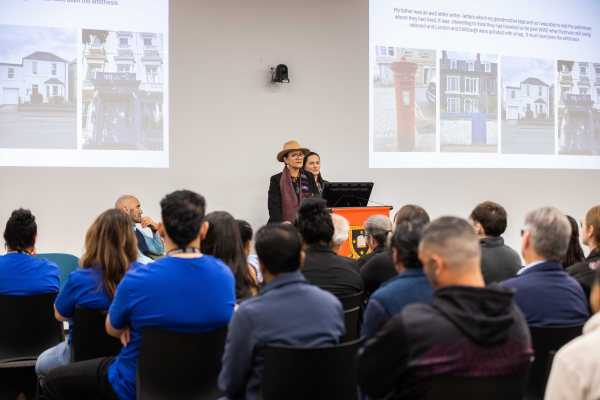
Te Puea Winiata ONZM
She described the journey of understanding her whakapapa and finding her own identity while carrying a name with such a significant legacy.
“You have to acknowledge the name and person, then find your own way in that life.”
Te Puea reflected on her parents’ experiences, her Māori and Pākehā heritage and her own search for cultural identity, including the impact of racism and generational trauma.
She encouraged those attending to remain grounded in kaupapa and to continually consider whether their actions are tika and carrying them in the right direction.
“Our greatest power is the affirmation we give to each other when in the kaupapa. The aroha we share when aroha feels rare.”
Following the presentation, kaimahi and tauira had the opportunity to connect more closely with Māori practices and experience different forms of Māori expression first-hand through taonga uku, fried bread making and mau rākau.
Tauranga Moana artist Maraea Timutimu (Ngāi Tūhoe, Ngāti Ranginui, Ngāi Te Rangi) facilitated a taonga uku workshop exploring connections between taiao, whenua and artistic expression. Working with uku gathered from the whenua, participants experimented with clays of different colours and textures while reflecting on how art can provide another way to understand and connect with the taiao.
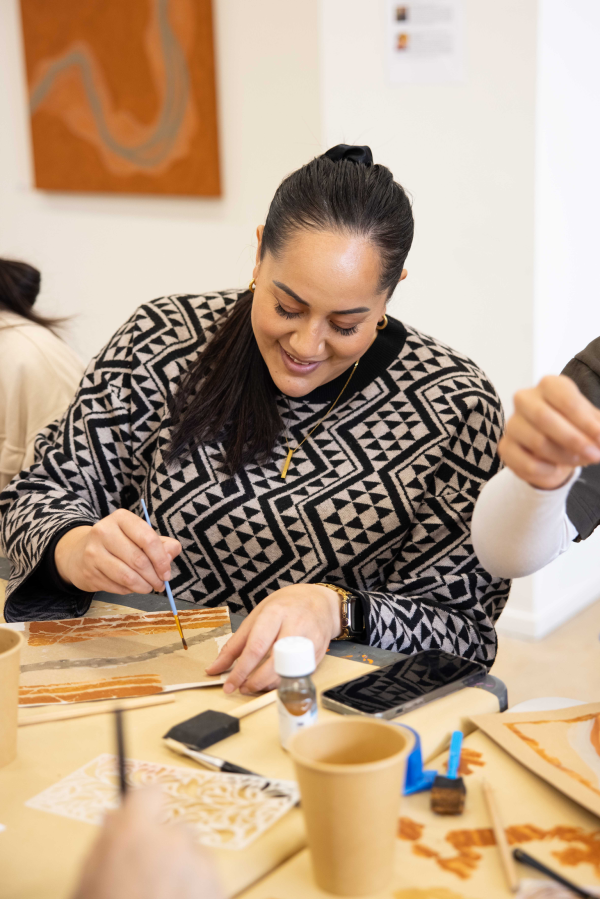
The taonga uku workshop at the University's Tauranga campus
Māori Language Lecturer Atarangi Te Awa-Bird, affectionately known on campus as Karanimā, shared the art of making fried bread, a tradition she has passed on through generations of her own whānau. Through the hands-on workshop, Whaea Ata shared not only the techniques behind a much-loved kai, but the connections between food, whānau, tikanga and mātauranga Māori.
Mau rākau kaiako Tuoi Spencer shared his knowledge of the traditional Māori art form, giving participants an opportunity to experience a practice grounded in mātauranga and te ao Māori. A former Hōtaka Hapori Māori at Tauranga City Library and now a mau rākau kaiako at Te Wānanga o Aotearoa, Tuoi is passionate about preserving and sharing mau rākau with contemporary learners.
Together, the events across Hamilton and Tauranga provided opportunities for tauira, kaimahi and communities to share knowledge, strengthen connections and reflect on how mātauranga and cultural identity can be carried forward for future generations.
At the heart of Kīngitanga Day is the University’s longstanding relationship with the Kīngitanga, and a shared commitment to strengthening those connections for generations to come.